2016 In Review

NEWS

AFN National Chief  Visits Listuguj

Issue 26, Aug. 2016National Cheif

The Assembly of First Nations National Chief, Perry Bellegarde, visited Listuguj during the Powwow weekend last year. It was his first time in the community.

Bellegarde met with people from the community, and heard the concerns of various organizations. He spoke at the Powwow, and sat down with  Nujignua’tegeg for a video interview that can be found online.

Read More

In-Community University Graduates

Issue 24, July 2016
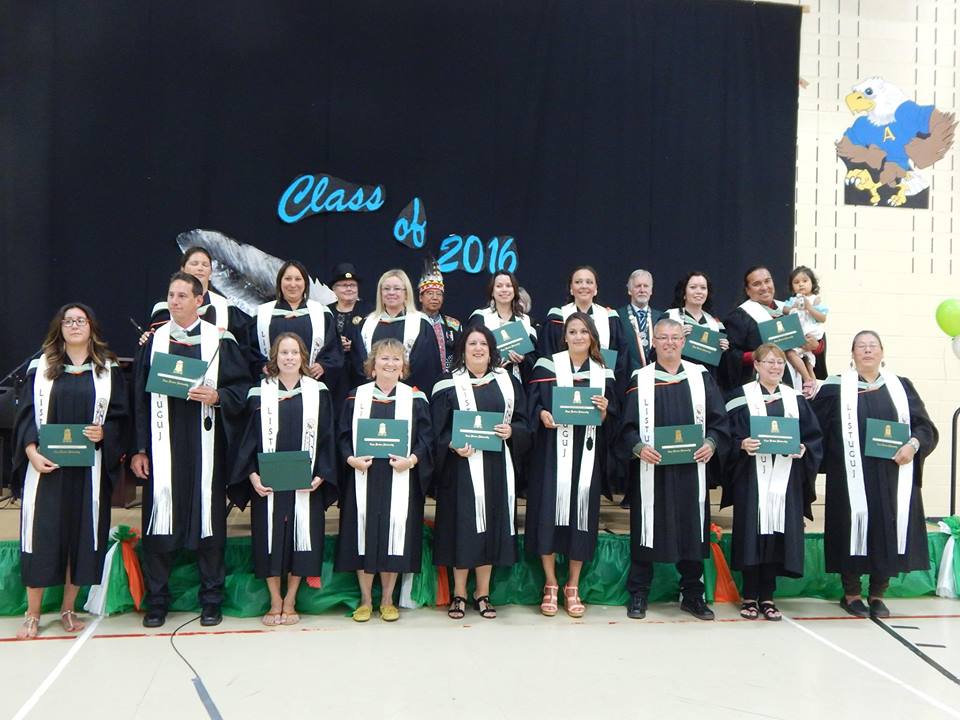
First Ever Graudation

 The first-ever university course offered in Listuguj graduated 19 students on June 30th. The Bachelor of Arts in Community Studies (BACS) was offered through the Cape Breton University. It began in 2013.

“This program was truly a collective achievement,” said Dr. Fred Metallic, at the convocation at Alaqsite’w Gitpu School.

Many classes were taught by Listuguj teachers, and was for the community in a variety of ways.

The high percentage of graduates is proof that the model works.

Read More

Mesgi’g Ugju’s’n Wind Farm at full capacity

(Issue 30, Dec. 2016)

photos_carrousel_energies_wind2

celebration on December 1, 2016 marked the opening of the wind warm, and Troy Jerome’s resignation from the MMS.

Read More


FEATURES

‘Nnui’sultinej Let’s speak Mi’gmaq

(Issue 27, Sept. 2016)

class

Excerpt:

There is a red line at the Listuguj Education Complex that can’t be missed.  The line divides three classrooms from the rest of the building, creating the only English-free zone in Listuguj. Anyone crossing that line has to speak only in Mi’gmaq.

The line is more than red tape on the floor.  It is a compelling symbol of the protection of the Mi’gmaq language that evolved on this territory for thousands of years, but is now vulnerable.

There was never such a “language line” in Listuguj.  Maybe that’s the reason why in the last 50 years the English language had entered the homes, stayed there and with time, displaced  Mi’gmaq as the main language.  Those were the times when Canada’s assimilation policies forced Aboriginal peoples across Canada into Residential Schools and they were pushed to believe ….

Read More

Passing on Traditions

(Issue 25, Aug. 2016)
aurele-tanne-pole

Excerpt:

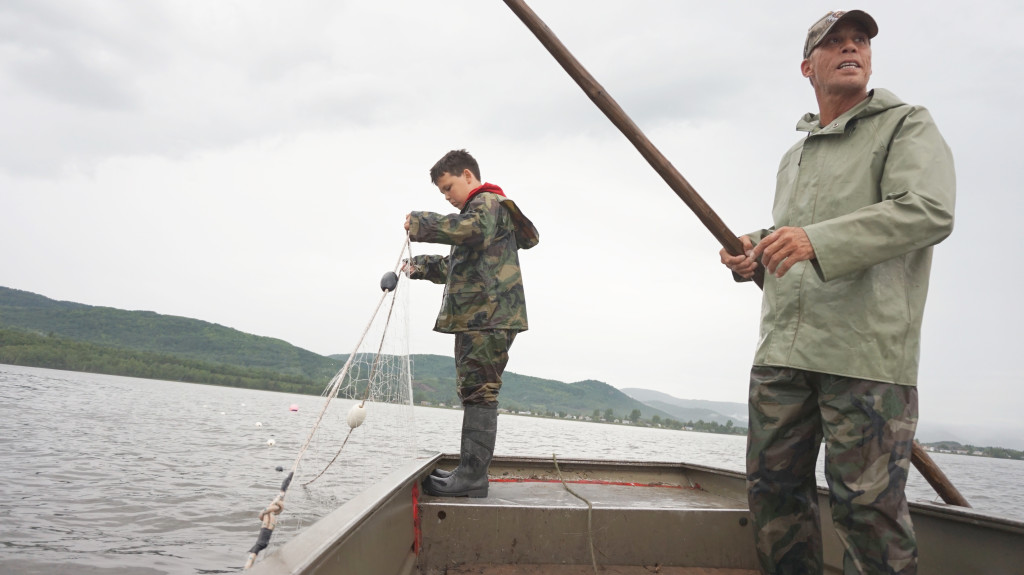
Tanner Sage Barnaby, the son of Tara Barnaby and Robby Ouellette, has been salmon fishing for the last six years and he’s only twelve. He leaves the quarry in the middle of a rainy afternoon and when he arrives to the fishing area he slows down the motor to set the net.  A very attentive boy, Tanner drives the boat with the seriousness that his tasks require.

As the rain continues to fall, he stops the boat and initiates a conversation with Aurele Isaac, his mentor.  They talk about the places where other fisherman set their nets. “We have to respect them,” he says. “If you see that one person has a good catch on his place you just can’t come the next time and occupy his location. We have laws and we have to respect them,” he says to Tanner…

Read More

Women’s voices of Mi’gwite’tm

(Issue 23, June 2016)
raid-sq-church-kid

Excerpt:

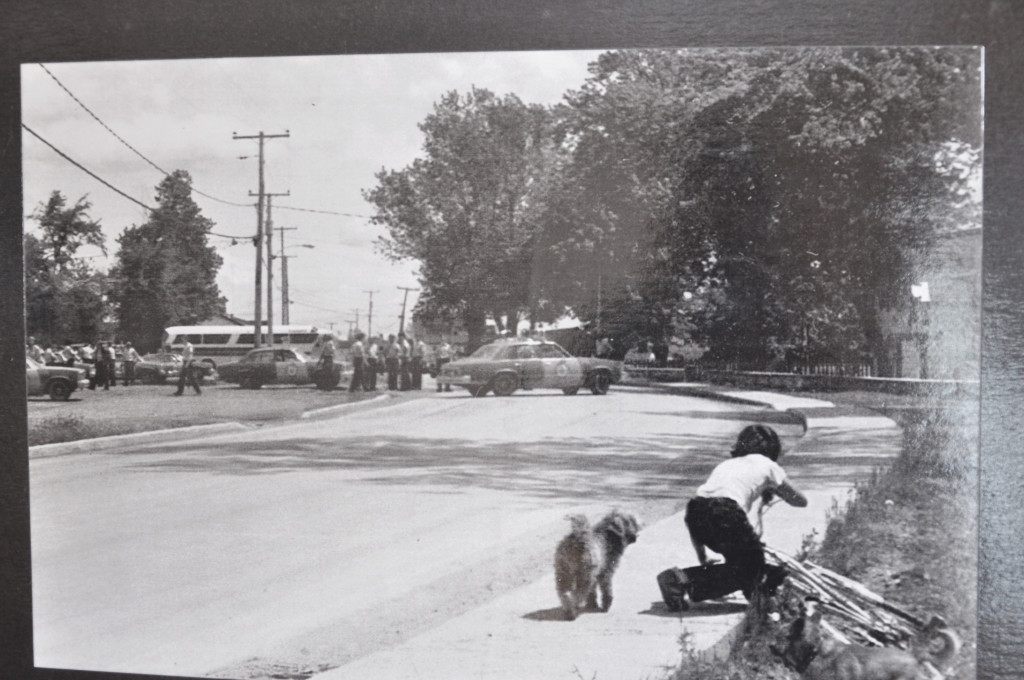
This year marks 35 years since the raids in 1981. But even after all this time, there are still “as many stories as there are people who fill this room,” as Victoria LaBillois said before the Salmon Feast at the Bingo Hall on June 11. This year – just like in 1981 – women of the community stood alongside the men.

Images of men standing up to Quebec Provincial Police are close in everyone’s mind, and stories of men from nearby nations coming to help are often retold with pride, but the fact that women came from other nations as well is mentioned less often…

Read More

Best Photo Page

Echoes of Powwow – Issue 26, Aug. 2016

Echoes of the Powwow

ARTS

Painting: A Healing Journey

(Issue 22, June 2016)

Tracey Metallic

Excerpt:

When your work is displayed around the continent, attracting the attention of famous artists, and selling within 30 seconds of being posted on social media, some people could probably call you an “artist.” But Tracey Metallic-Barnaby is still getting use to the title.

She’s only been painting for a year, but her work has clearly been resonating with others. She has shipped her work to Alaska, her prints caught the eye of a television set designer while on display in Thunder Bay, and her work has recently been commissioned to be installed in a new health center in Michigan.

All the recognition has definitely been exciting. But it’s all secondary. “I’ll never give painting up,” Tracey said. “It’s way too therapeutic for me.”

Tracey says she’s always been crafty, but she gave up drawing when her daughter was born. She was 18 at the time. She then raised two more children, until she was 31 and decided she needed to go back to school.

Three degrees later, after years…

Read More

Don Burnstick

(Issue 30, Dec. 2016)

don-burnstick

Don Burnstick was invited to Listuguj for National Addictions Awareness Week in November. He gave a few shows, and sat down with the Nujignua’tegeg for a video interview and a story.    

Read More

COMMUNITY

Listuguj Mourns death of Chief of Police Henry Vicaire

(Issue 21, May 2016)

Henry Vicaire

Excerpt:

Listuguj Chief of Police Henry “Hank” Vicaire was rushed to the Campbellton Regional Hospital on Friday the 13th under emergency circumstances, but was unable to recover.  He passed away several hours later.  He was 50.

On May 18, at around 10.30 a.m.. various delegations of Police, SQ, RCMP, Firemen, Ambulance technicians from around Listuguj, and a representatives of Henry’s Bike Club, gathered in front of his house. A solemn march to St. Anne’s church followed, where political banners were covered and painted with the number 21, in respect to the badge of the Chief of Police.

The Church was packed and the mass started with the Spirit Bear singers chanting the Mi’gmaq Honor song.  Native and non-natives families and friends of  Henry “Hank” Vicaire gathered to pay respect to a person that the eulogies described as a humorous, sensitive, respectful and a talented human being.

Henry Vicaire was born in Campbellton, N.B. in 1965. He attended the Justice Institute of British Columbia (JIBC) where he earned his policing certification in 1994. He served as a Listuguj K-9 officer from 2002 to 2010 with detector dogs Echo and then Bonzai.  He became Listuguj Chief of Police in 2012…

Read More

VIDEO: Don Burnstick

While in Listuguj, Don Burnstick sat down with Nujignua’tegeg’s Tyler Morrison to talk about his career and the power of comedy.

Don Burnstick: “laughter is good medicine”

Don Burnstick uses humour and performance to provide a holistic approach to healing. He was invited to Listuguj for National Addictions Awareness Week, to talk about well-being, sobriety and anti-violence.

His opening statements were sobering. His history with violence, drugs and alcohol shaped who he is today.

“I remembered looking at myself in the mirror, you know, and I was living on the streets, I was dirty. I just had a fight that night before, I was beat up. I was really sick, physically, emotionally, spiritually – I was just sick,” he said.

When he started considering suicide, he changed. The exact opposite happened.

“The value of my life kind of came alive,” he said “I used to do whatever it took to get high, and to get drunk. I had to shift that energy, and do whatever it took to get sober.”

Shifting that energy is exactly what he has been doing for 20 years. He’s been using his talent to bring light to issues like missing and murdered indigenous women.

While in Listuguj, he shared his own struggles with substance abuse and family violence.

“My first year was just to get myself sober and maintain it. The second year it was about training, going back to school,” he said. “The third year I was told to go and train my voice because back then there was no young sober native males.” 

Starting out Burnstick was often met with criticism. People would say, ‘You shouldn’t be talking about that stuff, not all of us are drunks.’ But he’s also found that talking about it in the open inspires others. He’s been told his words have saved lives. Even with his counselling background, he’s found comedy to be the best tool to help.

“Comedy comes from pain,” Burnstick said.  “I’ve learned how to take some of these trying thing that happened to our people (and to me) put it on stage, and if people are willing to laugh about, their willing to talk about it.”

Nta’tugwaqanminen — Our Story

More than 60 people gathered under the new LMG tent at Moffat landing for the presentation of the book Nta’tugwaqanminen – Our Story.

The book produced by the Mi’gmawei Mawiomi Secretariat is the fruit of many years of research, reflections and discussion about Gespe’gewa’gi Mi’gmaq.  A video about the importance and uniqueness of the book, was presented to the public. The video included interviews to Elder Barnard Jerome, an academic, a lawyer, a youth, a researcher and the MMS Director.

The book itself is rich in information about history, archeology, place names, legal analysis of Aboriginal Title, the Mi’gmaq vs. Canadian vision on the territory and the regional, national and international context of Indigenous struggles to reaffirms their Inherent and Aboriginal rights.

The book Nta’tugwaqanminen describes the evolution of the Gespege’wa’gi Mi’gmaq and it represents a solid source of information for those interested in knowing Mi’gmaq identity, culture, history and the roots of our rights.  There are few books available on library shelves that carry the voices of the Mi’gmaq knowledge holders and written from a Mi’gmaq perspective. This is a “must read’ for all Mi’gmaq and anyone working with the Mi’gmaq people.

For Maddie Metallic, a Mi’gmaq language teacher the book is necessary for Mi’gmaq students at all levels. “I remember when I went to Mount Allison University we were taught about our history and about our people from a non-native perspective. At that time I felt that it was wrong and we were misrepresented but I didn’t have the tools to respond to them. If at that time I had the book Nta’tugwaqanminen and I had read it, I would have the tools to respond to their misinformation.” Holding the book on her hand and with a strong sentiment Maddie concluded: “This is a great book with so much information and above all, from a Mi’gmaq perspective.”

The Nta’tugwaqanminen book is available at the MMS office and will be distributes in Listuguj, Gesgapegiag and Gespeg.

Painting: A healing journey

When your work is displayed around the continent, attracting the attention of famous artists, and selling within 30 seconds of being posted on social media, some people could probably call you an “artist.” But Tracey Metallic-Barnaby is still getting use to the title.

She’s only been painting for a year, but her work has clearly been resonating with others. She has shipped her work to Alaska, her prints caught the eye of a television set designer while on display in Thunder Bay, and her work has recently been commissioned to be installed in a new health center in Michigan.

All the recognition has definitely been exciting. But it’s all secondary. “I’ll never give painting up,” Tracey said. “It’s way too therapeutic for me.”

Tracey says she’s always been crafty, but she gave up drawing when her daughter was born. She was 18 at the time. She then raised two more children, until she was 31 and decided she needed to go back to school.

Three degrees later, after years of running two separate households in Listuguj and Fredericton, she had a career in social work. This training would prove to be helpful.

Several deaths in the family were tough on Tracey.

“I just kind of shoved everything aside and didn’t deal with it,” she said. “That’s kind of when my depression started.”

Eventually a relatively small set back ended up being the “straw that broke the camel’s back.” She took time off work.

“I decided I need to practice what I preach,” she said. “I taught a lot of classes in healing and self discovery [and] I can’t teach these classes if I’m going through this myself.”

Not long before, Tracey had begun painting. A co-worker asked her to make something for his new house. Even though the thought of painting made her “a little jittery and nervous,” she did it, and other requests soon followed.

Not only were people enjoying her work, but it was good for her too. “It’s a healing journey for me — that’s what it is,” she said.“When I pick up that brush and put that paint on that canvas, I’m lost. I get lost in my paintings, and it’s such a therapy for me.”

And once she started, she had to keep going.

“I wanted to push myself a little further,” she said. “Then I started doing more native designs.”

While she feels she still has a lot to learn and continues to explore new techniques, she tries to not be too hard on herself. She reminds herself that it’s good to have your own style.

“I often don’t ask for an opinion on my work, because it’s something that came from my heart, and my past experiences, and all the pain I’ve suffered throughout the years. I try to put that in my paintings, to become more resilient,” she said. “I want to show people that — you know what, despite where you are in your life, whether it’s good, it’s bad, you have a story to tell.”

Inspiring Mi’gmaq Writers

In an effort to promote Mi’gmaq stories — and to encourage the writing talent in the area — the Chiefs of the three communities represented by the Mi’gmawei Mawiomi Secretariat (MMS) created the Mi’gmaq Writer’s Award.

It officially started in 2008, with only one winner. Since then, the prize has been split in two — $500 for a “17 and under” winner, and $1,500 for a “18 and older” winner.

“[The Chiefs] want the knowledge of our culture to be preserved in the language, through stories,” said Juliette Barnaby, the Office Manager at the MMS.

Submissions are judged with simple criteria in mind. First of all, a story has to be written well. Writers have to be recognized band members. And the big question judges ask is, what’s the relevance? “[The goal] is to capture relevant Mi’gmaq content, such as tradition,” said Barnaby.

Barnaby used examples such as stories from elders, or traditional land use. But “relevant Mi’gmaq content” is open to interpretation. A story about a community member living in a major city elsewhere in the world could easily win. “To me that would be a fabulous story,” Barnaby said. “To explain to somebody who lives on a reserve, the struggles of people that live off reserve.”

Barnaby said the submissions over the years have been great. “I don’t know if I would say there’s one that would stick out, in particular,” she said. “Because … obviously they’re very very good, because they won.

Submissions for 2015-2016 are due April 29.

As a past recipient of the Mi’gmaq Writers Award, I feel as though that opportunity gave me the confidence to make my writing public and to share it with my Mi’gmaq brothers and sisters. It had reawakened the creative writing flame inside me, and since then I have been inspired to create and write more, specifically spoken word poetry and short stories. I have since also given myself a goal of writing a novel in the next few years. Story is powerful, and it’s up to us, as Mi’gmaq people, to tell ours.

– Killa Atencio-Mitchell,
Author of Guided by the Moonlight


When writing I am able to express the things I’ve always wanted to say and to have discussions that do not always occur naturally. The Mi’gmaq Writer’s Award gives Mi’gmaq young and old the opportunity to do that as well. My own piece “White Feather Speaks” allowed me to share my feelings and findings with my community on the seldom spoken topic of the Two-Spirit. This award carries on the long practiced tradition of story telling and allows us all to grow through the words and experiences of our people.

– Duane Isaac,
Author of White Feather Speaks

Migmaq Writers Award Poster


DJ XS7 is working hard

Alex Jerome has been building a career one step at a time. Gesgepegiac to Campbellton, to Moncton, to Halifax, to Toronto. Next – Europe, and rest of the world.

As DJ XS7, Jerome has been developing his skills for years. He now lives off his DJ career, and even won 4th place in Canada in the DMC DJ Championships in Toronto last year. It was his first year participating. He’s taking a shot at the world title this year.

He performed at Real Bar in Campbellton on March 11th and 12th — a location he’s familiar with.

He lived in Campbellton and developed a popular DJ night years ago, when “Rumours” was running. He’s also given workshops at the LMDC on entrepreneurship, and now has even more to share about his experiences developing a career as a First Nation’s artist.

“There’s tons of opportunities,” he said.

Whether it’s researching grants, or honing in on marketability, Jerome has been learning all about the industry. He’s been pitching his ideas, attending seminars, developing ideas for tours, and is even starting a record label with hip-hop artists in Halifax.

One idea of his particularly bridges traditional and modern influences.

“[It] tries to bring in a lot of the language, a lot of the dancing, a lot of the traditional heritage,” he said. “All that comes together with grass dancers and stages lights, black lights, and all such ideas. More on a futuristic level.”

He’s been working on it for three years, and says it is being well received now. This is partly due to recognizing the international appeal to an idea like this.

“Aboriginals get high amounts of respect on an international level,” Jerome said. “More than in Canada.”

Jerome sees these traditional influences as part of who he is, but also part of his competitive advantage.

“If you have aboriginal roots – try to tie that into your arts, because that’s something that nobody else can do,” he said. “That’s a part of you. That’s your heritage, and that should be a legend that you should be expressing. Within a new way. To new ears.”

A lot of Jerome’s music pulls from these influences, like “Highway of Tears.”

 But he believes it’s important to develop a modern, personalized take.

“The hardest thing is actually to introduce your past, but in a new way,” he said. “For instance, I don’t dress in leather regalia, but yet, I have elements of the regalia kind of put into a modern, flashy, dressy kind of way.”

And while Jerome puts a lot of thought into all the artistic elements of what he does, he is also very conscious of the business, whether it’s paying to attend seminars and meet the right people, or ensuring the bar that hired him is happy with the night.

“Put it this way — if you’re playing constant hits, and the bar’s not full, or nobody’s drinking at the bar — the bar’s not happy,” he said. “You could have the best night of your life, but they would still not hire you.”

Jerome has learned to strike a balance — whether it’s creating a little lull after a few songs, or giving the crowd what they want.

“It’s reading the crowd,” he said. “Every movement will give some kind of indication of whether they’re enjoying it, or whether they’re not. And trust me, they’ll let you know if they’re not.”

But now it’s time to go bigger. Working his way from club to club, and city to city, has prepared him for festivals. He started playing them last year, and plans to devote a lot of his stummer to them this year. And this time, he’s just excited.

“Going to these festivals is pretty scary,” he said, speaking of the the first ones he attended.

His first time on a big festival stage, he didn’t even look up.

“I just totally stayed focused, and tried to do what I could,” he said. “I didn’t know what to expect. But this time around, it’s like going back to a bunch of old friends.”

He knows what it’s like now, and has had time to plan.

“Last year was all experience,” he said. “This year is all conquering.”

FILM: Passing Moments

“Passing Moments” is a relatable and poetic approach to loss.

“I guess it’s kind of a little about dealing with it,” said Melissa        Girvan, the filmmaker. “Some people get so stuck in the past and things that happen. I think it’s really important to let it go sometimes. You can mourn it, but you can’t define your life [by] it.”

Girvan’s film immediately creates a powerful tone.

Deliberate cuts and other choices lend the hazy, emotional quality of memories to the film. The voice-over provides just enough context.

The stories are only hinted at. The monologue feels personal, but it’s vague. You can’t help but fill in the blanks with your own life.

The film makes you recall the feeling of loss, and it seems to hint at the dangers of holding on to that feeling for too long.

It is very unique, and affective.

Passing Moments from Wapikoni mobile on Vimeo.

FILM: LUJ 051

Mallory Metallic’s film is driven by curiosity – what is it like to work at the Listuguj Police Department, and not be from here?

The film offers a small glimpse into the lives of the officers. The cameras tag along, and learn about  the unique aspects of being new to the community. The good parts, and the bad.

The film isn’t pointing fingers, or taking sides, though. It is just helping the viewer relate to another perspective.

Relating and accepting others is an important subject to Metallic.

“I hate the whole native vs. non-native thing,” Metallic said.

The implications of these attitudes worries her. Especially when they’re passed on to kids.

“Once they’re done school, how are they going to feel when they go out somewhere else?”

This theme was also a focus in her first film, which won her an award.

LUJ 051 from Wapikoni mobile on Vimeo.

Riverside Recording their First Video

Mark Morrison and Timmy Isaac have been playing music together for 15 years. They’re making their first music video together right now, with Wapikoni. Their band is called “Riverside.”

Morrison worked on a couple Wapikoni projects last year, including a video for his own song, “Teepee’s on the Highway.” (Find a link on the online version.)

“I was really happy with [the video],” Morrison said. “It couldn’t have come out better, you know. And I have these guys to thank for a lot of it … the way they put it all together, that was the magic.”

Having been through the process before, Morrison knew what to expect. They didn’t come to the studio with a fully developed film, but they had an idea, and never everyone involved would be able to work with it.

“We had some ideas of how we wanted it,” Morrison said. “But then getting together with them and hearing their ideas, and our ideas … we’re pretty much on the same page.”

They’ve been monitoring the tides, and have only said they want it to be dark. The song is called “All or Nothing.”

Mark Morrison’s video to “Teepees on the Highway,” created with Wapikoni last year