2016 In Review

NEWS

AFN National Chief  Visits Listuguj

Issue 26, Aug. 2016National Cheif
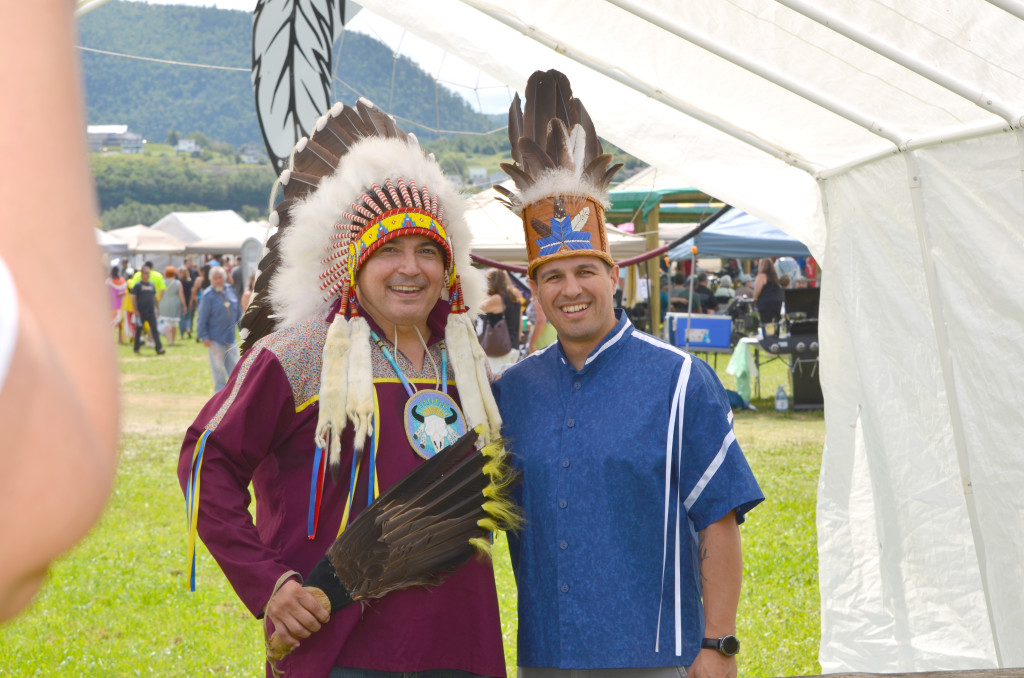
The Assembly of First Nations National Chief, Perry Bellegarde, visited Listuguj during the Powwow weekend last year. It was his first time in the community.

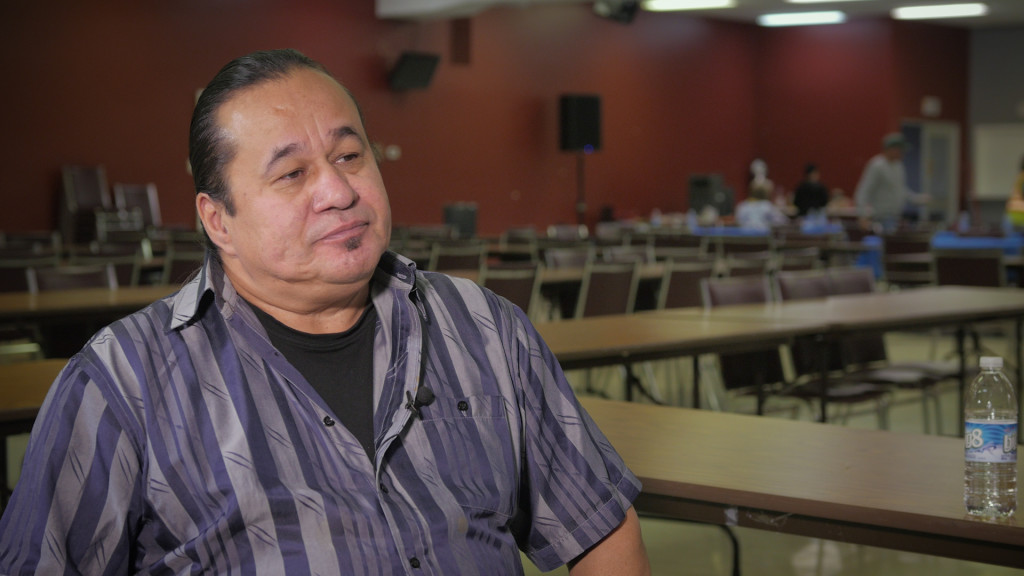
Bellegarde met with people from the community, and heard the concerns of various organizations. He spoke at the Powwow, and sat down with  Nujignua’tegeg for a video interview that can be found online.

Read More

In-Community University Graduates

Issue 24, July 2016

First Ever Graudation

 The first-ever university course offered in Listuguj graduated 19 students on June 30th. The Bachelor of Arts in Community Studies (BACS) was offered through the Cape Breton University. It began in 2013.

“This program was truly a collective achievement,” said Dr. Fred Metallic, at the convocation at Alaqsite’w Gitpu School.

Many classes were taught by Listuguj teachers, and was for the community in a variety of ways.

The high percentage of graduates is proof that the model works.

Read More

Mesgi’g Ugju’s’n Wind Farm at full capacity

(Issue 30, Dec. 2016)

photos_carrousel_energies_wind2

celebration on December 1, 2016 marked the opening of the wind warm, and Troy Jerome’s resignation from the MMS.

Read More


FEATURES

‘Nnui’sultinej Let’s speak Mi’gmaq

(Issue 27, Sept. 2016)

class

Excerpt:

There is a red line at the Listuguj Education Complex that can’t be missed.  The line divides three classrooms from the rest of the building, creating the only English-free zone in Listuguj. Anyone crossing that line has to speak only in Mi’gmaq.

The line is more than red tape on the floor.  It is a compelling symbol of the protection of the Mi’gmaq language that evolved on this territory for thousands of years, but is now vulnerable.

There was never such a “language line” in Listuguj.  Maybe that’s the reason why in the last 50 years the English language had entered the homes, stayed there and with time, displaced  Mi’gmaq as the main language.  Those were the times when Canada’s assimilation policies forced Aboriginal peoples across Canada into Residential Schools and they were pushed to believe ….

Read More

Passing on Traditions

(Issue 25, Aug. 2016)
aurele-tanne-pole

Excerpt:

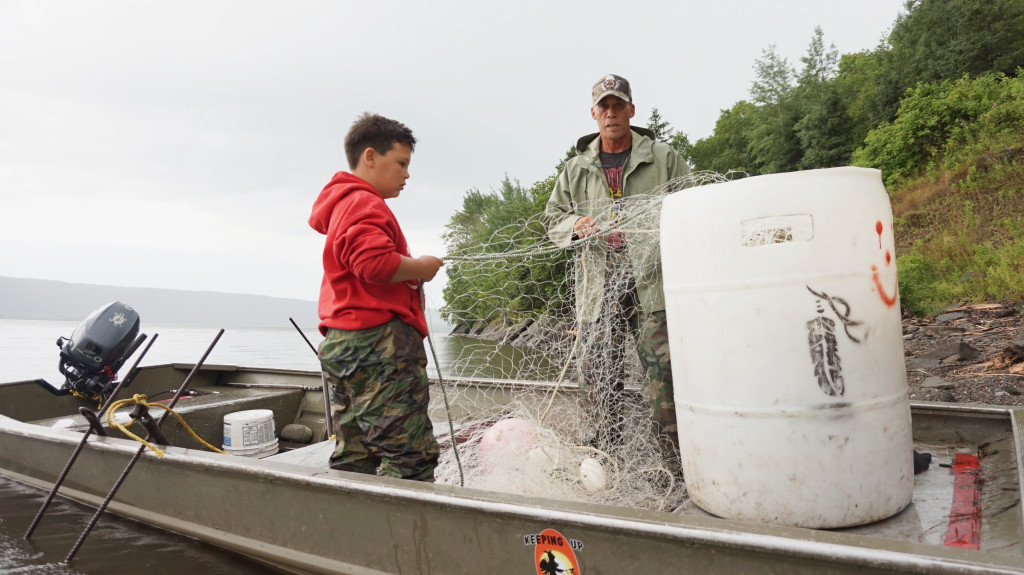
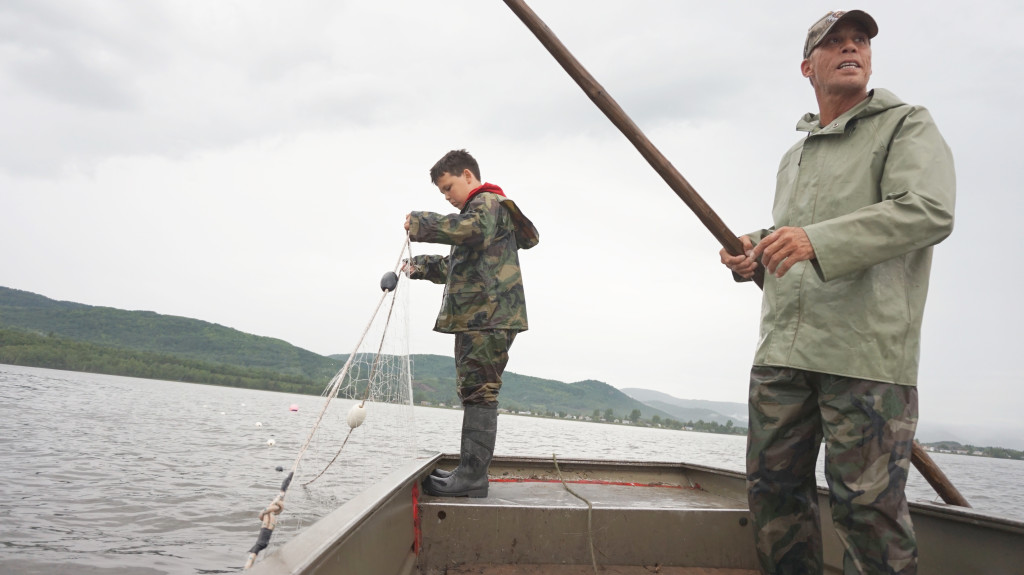
Tanner Sage Barnaby, the son of Tara Barnaby and Robby Ouellette, has been salmon fishing for the last six years and he’s only twelve. He leaves the quarry in the middle of a rainy afternoon and when he arrives to the fishing area he slows down the motor to set the net.  A very attentive boy, Tanner drives the boat with the seriousness that his tasks require.

As the rain continues to fall, he stops the boat and initiates a conversation with Aurele Isaac, his mentor.  They talk about the places where other fisherman set their nets. “We have to respect them,” he says. “If you see that one person has a good catch on his place you just can’t come the next time and occupy his location. We have laws and we have to respect them,” he says to Tanner…

Read More

Women’s voices of Mi’gwite’tm

(Issue 23, June 2016)
raid-sq-church-kid

Excerpt:

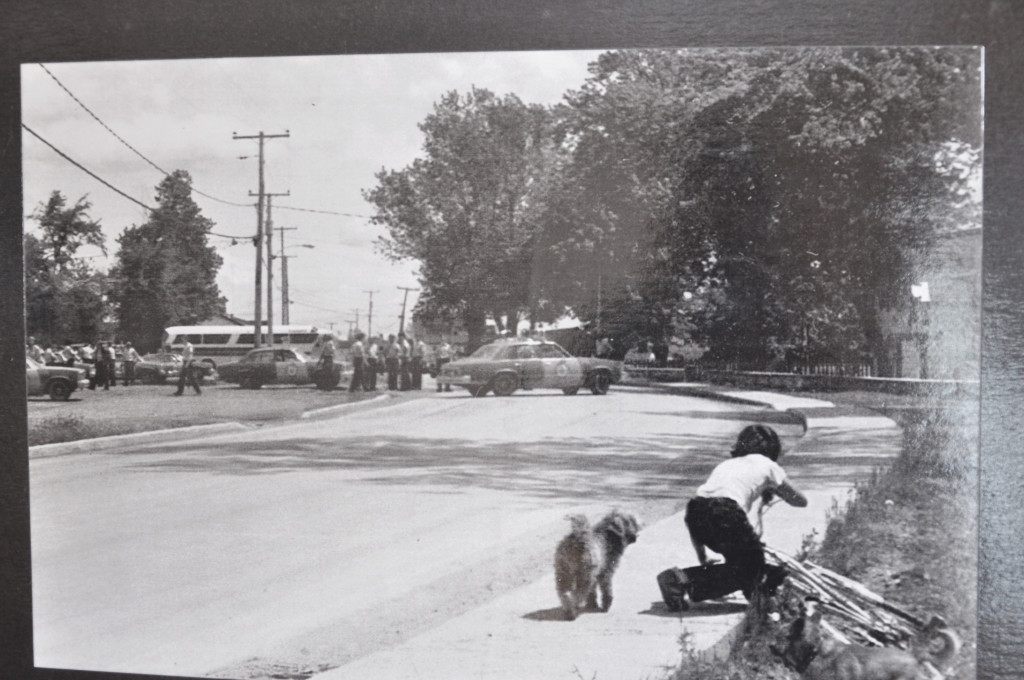
This year marks 35 years since the raids in 1981. But even after all this time, there are still “as many stories as there are people who fill this room,” as Victoria LaBillois said before the Salmon Feast at the Bingo Hall on June 11. This year – just like in 1981 – women of the community stood alongside the men.

Images of men standing up to Quebec Provincial Police are close in everyone’s mind, and stories of men from nearby nations coming to help are often retold with pride, but the fact that women came from other nations as well is mentioned less often…

Read More

Best Photo Page

Echoes of Powwow – Issue 26, Aug. 2016

Echoes of the Powwow

ARTS

Painting: A Healing Journey

(Issue 22, June 2016)

Tracey Metallic

Excerpt:

When your work is displayed around the continent, attracting the attention of famous artists, and selling within 30 seconds of being posted on social media, some people could probably call you an “artist.” But Tracey Metallic-Barnaby is still getting use to the title.

She’s only been painting for a year, but her work has clearly been resonating with others. She has shipped her work to Alaska, her prints caught the eye of a television set designer while on display in Thunder Bay, and her work has recently been commissioned to be installed in a new health center in Michigan.

All the recognition has definitely been exciting. But it’s all secondary. “I’ll never give painting up,” Tracey said. “It’s way too therapeutic for me.”

Tracey says she’s always been crafty, but she gave up drawing when her daughter was born. She was 18 at the time. She then raised two more children, until she was 31 and decided she needed to go back to school.

Three degrees later, after years…

Read More

Don Burnstick

(Issue 30, Dec. 2016)

don-burnstick

Don Burnstick was invited to Listuguj for National Addictions Awareness Week in November. He gave a few shows, and sat down with the Nujignua’tegeg for a video interview and a story.    

Read More

COMMUNITY

Listuguj Mourns death of Chief of Police Henry Vicaire

(Issue 21, May 2016)

Henry Vicaire

Excerpt:

Listuguj Chief of Police Henry “Hank” Vicaire was rushed to the Campbellton Regional Hospital on Friday the 13th under emergency circumstances, but was unable to recover.  He passed away several hours later.  He was 50.

On May 18, at around 10.30 a.m.. various delegations of Police, SQ, RCMP, Firemen, Ambulance technicians from around Listuguj, and a representatives of Henry’s Bike Club, gathered in front of his house. A solemn march to St. Anne’s church followed, where political banners were covered and painted with the number 21, in respect to the badge of the Chief of Police.

The Church was packed and the mass started with the Spirit Bear singers chanting the Mi’gmaq Honor song.  Native and non-natives families and friends of  Henry “Hank” Vicaire gathered to pay respect to a person that the eulogies described as a humorous, sensitive, respectful and a talented human being.

Henry Vicaire was born in Campbellton, N.B. in 1965. He attended the Justice Institute of British Columbia (JIBC) where he earned his policing certification in 1994. He served as a Listuguj K-9 officer from 2002 to 2010 with detector dogs Echo and then Bonzai.  He became Listuguj Chief of Police in 2012…

Read More

Passing on traditions

Tanner Sage Barnaby, the son of Tara Barnaby and Robby Ouellette, has been salmon fishing for the last six years and he’s only twelve. He leaves the quarry in the middle of a rainy afternoon and when he arrives to the fishing area he slows down the motor to set the net.  A very attentive boy, Tanner drives the boat with the seriousness that his tasks require.

As the rain continues to fall, he stops the boat and initiates a conversation with Aurele Isaac, his mentor.  They talk about the places where other fisherman set their nets. “We have to respect them,” he says. “If you see that one person has a good catch on his place you just can’t come the next time and occupy his location. We have laws and we have to respect them,” he says to Tanner.

This friendship started when Aurele met Tanner one day.  He noticed his interest in the outdoors and he asked if he wanted to fish salmon.  After Tanner accepted, Aurele talked to his mother and told him to be ready early in the morning.  When Aurele went to pick him up at 6:30 am he was there, waiting at the door.Aurele-Ariel
Six years later they are still fishing together.  “I accepted his invitation because Aurele teaches about my culture and he also speaks to me in Mi’gmaq. I like that, I want to keep our traditions going,” said Tanner with a sincere tone.

Aurele grew up fishing, working in the woods, learning the traditions with his father and everything was said in Mi’gmaw. Now it’s his turn to pass them on. “I find it important to pass on the tradition because if we don’t, who will exercise it, who will pass it to the next generation, who will defend it when threatened?” he maintains.

There are few young fishermen on the river today, but not enough to secure a wide practice and knowledge of the tradition of fishing. “Very few of my friends fish for salmon” said Tanner who seems happy on the river. “I learned to drive the boat, clean the net, grab the floats, pull anchors, check the net, use the pole, clean the salmon and to give away my first catch”, he declares.  For any young person these skills take time and practice to learn. “Now, I don’t have to tell him what to do,” says Aurele who feels content to see Tanner learning the skills that allowed the Mi’gmaq to get their sustenance from the river and to maintain the respect for Plamu.

As a kid, Aurele’s father, Isaac Isaac, “Isaacjij” taught him salmon fishing, moose and deer hunting, and ice fishing. His older brother, uncles and other adults also passed on to him that traditional knowledge.  He used to spend two weeks of the Christmas holidays in the woods. Today children have fewer teachings and it worries Aurele. “When I was a kid I had access to a lot of traditional activities and now I feel there isn’t enough of that for the children.  My father told me ‘I will not always be here so you need to learn all these things because you are a Mi’gmaq.’ So it’s up to us men to pass on our traditions,” affirms Aurele.

After the fishing season, Tanner and Aurele will team up again for partridge hunting, rabbit snaring, moose hunting, ice fishing.  “Aurele is a good friend who teaches me a lot.  He’s a good teacher,” says Tanner who is in Grade 7 at AGS.  “Most of my friends don’t go fishing. I only know one kid that goes salmon fishing with his grand-father.”

“I’m amazed by the number of kids who are interested in fishing but sadly for one reason or another their dads don’t take them to the river,” said Aurele who also fishes with his daughter Ariel. “Our traditions are getting weaker and we need to share our knowledge and bring more kids out because they will be the ones defending our rights.  They need to practice traditions to exercise rights. Some communities have negotiated their fishing rights and I don’t it want to happen it here.”

Aurele-Tanner net

Research brings community member to New Zealand

Look for a gap in research — that’s what students starting their master’s degree are often told. So Danielle Root drew from her own experience.

Root is raising her daughter while attending Mount Saint Vincent University in Halifax. When her daughter was born, the hospital waiting room was filled with people. Only a few were allowed in to see her though. The others weren’t considered “immediate family.”

“Well, yes, yes they are,” says Root.

Root is now a part of the Child and Youth Study program. She planned on getting into primary prevention for teens, but now focuses her studies on early development.  “What is better primary prevention, then working with young children” Root thinks.

She says a lot of the assumptions about family relations, and their degrees of importance, stem from the “attachment theory,” developed by John Bowlby. Root doesn’t believe it is entirely relevant across cultures, particularly in many First Nation’s communities, and indigenous cultures worldwide.

“The attachment theory falls short of our community as being family,” Root said.

She is now working on her thesis, titled “Aboriginal Families: Fostering Attachment Our Way.” Her work opened many doors, including the opportunity to present at a prestigious international conference in New Zealand this past November, known as “Healing our Spirits Worldwide” — a gathering of indigenous peoples from all around the world, with each day organized around a theme, such as “Indigenous Leadership,” and “Indigenous Solutions.”

Finding her focus

At first, finding a gap in research was a daunting task for Root.

“We were studied like specimens,” she said. “And the attachment theory — it’s been studied like crazy. But there’s no research done … barely anything — if not nothing — for indigenous people.”

Root is setting out to fill in some of that research, formally. She said a thesis is often begins with something you already know.

“We all know our sister-moms, and our auntie-moms,” she said.

The essential question to her work will be “what does attachment mean to you.” She’ll be gathering families to find out exactly.

Her work will be the very beginning, but she hopes it will lead to more.

“What I’m doing, of course, it’s going to have limitations. It’s urban aboriginals,” she said. “But that doesn’t mean that it can’t be built on.”

She can imagine the research having real-world implications. It may even lead to people being allowed to have their actual families in the hospital rooms with them.

“We all know and recognize that our families are community. But once you put it in research, there’s policy implications, and all that jazz.”

Of course, she doesn’t know exactly how her research will unfold, but she knows she would like to promote it. And she’s already started.

Going to New Zealand

Root wrote an abstract, to attend the “Healing our Spirits Worldwide” gathering in New Zealand. She didn’t expect anything to come of it.

“I just know that opportunities come when you keep pushing,” she said.

The committee had extended the announcement of successful abstracts one week due to the abundance of submissions they had to go through.  Still not expecting anything to come of it, Root was ecstatic when she found out that her abstract was among the ones chosen by the committee.  

“Ok,” she thought. “All I’ve got to do now is come up with all kinds of money.”

But she was determined, and even paid registration with her credit card.

While working with MSVU to try and develop the conference into a directed study course, she decided to write back home to Listuguj. The LMG ended up funding her entirely.

“If it wasn’t for them, I might not of been able to raise all that money to go. Either that or I would have been bankrupt doing it.” she said.

Participating allowed Root to meet some of women who have influence her work so far — women like Dr. Cindy Blackstock and New Zealand Native Indigenous scholar Dr. Linda Tuhiwai Smith.  It also allowed her to relate to indigenous people from around the world.

“I learned a lot about how indigenous people struggle,” she said. “While there’s so much variety, we’re all kind of fighting the same kind of struggle of colonization.”

She says she even made an “auntie,” there — a Māori woman. She met a lot of inspiring people, and was encouraged to continue her work, and career.

“It was a great learning experience,” Root said. “There were so many different indigenous people. But at the same time, it’s like I was so far away from home and I didn’t feel far away from home. Because indigenous people, they don’t make you feel that way.”

Glenda Wysote-Labillois

Mi’gmaq history is a complicated term for Glenda Wysote-Labillois.

“This is our history,” she said. “This is our way of life. This is how we live.”

Wysote-Labillois is an elder, owner of the Sacred Fire Healing Lodge, and a fluent Mi’gmaq speaker.

When discussing “Mi’gmaq History Month,” she says her perspective is completely different. She lives everyday as a “traditional person that’s living with culture, and practicing culture, and doing that on a daily basis for the past 24 years.”

Wysote-Labillois grew up speaking Mi’gmaq as her first language. It wasn’t until Grade 1 that she was forced to speak English, and even then, she wasn’t aware that English was her “second language.”

“I never knew that, until I went to university,” she said. “I just always thought that I had a hard time to read, or a hard time to write.”

She now travels home to Listuguj as often as she can, even if only to speak the language.

She has friends, family, and neighbors that are fluent. Speaking with them can be deeply familiar.

“I can actually hear my parents speak,” she said. “Because they spoke in the same dialect.”

She says she’s very fortunate to practice a way of life that has been practiced for thousands of years.

“We’ve been so assimilated, with the church, with the language, with all these material things – that’s not what’s important. The children need to learn about mother earth. Where the food comes from … We need to learn hunting, fishing, you know. We need to learn how to respect one another. Respect the youth, respect the elders. Again – like the four directions that I talk about, with the children, women, and men and the elders. We need to go back to that again, and respect again.”

Derek Barnaby: “Curiosity just turned into a lifestyle”

Derek Barnaby didn’t feel connected with his culture and traditions as a child.

“It wasn’t until I was 19 years-old that I realized – this is a part of who I am,” he said.

Growing up in Listuguj in the 70’s was a very different time than today. 

“If you wore  a t-shirt in school that says Mi’gmaq and pride, well back in those days – you were told to go home and change your shirt,” Barnaby said. “People weren’t ready to accept the ideas of what happened here in Canada.”

With some Polish ancestry, Barnaby said he often felt caught between two worlds at times in growing up. 

As a young man, he travelled to Ottawa, where he saw a Pow Wow.

“When I seen the dancing, and everything that was happening – I was really drawn to it.”

Barnaby says that he had always been drawn to dancing, even if it was just Michael Jackson, or Paula Abdul.

For awhile he struggled to get started, but met teachers who encouraged him. Now, him a his wife teach kids to dance and sew.

He says his connection with Mi’gmaq traditions have made him a stronger person, in many aspects.

“It’s not just about feathers and drums,” he said. “It’s about an understanding of a way of life.”

Barnaby is glad to consider himself part of the “rebirth of Mi’gmaq identity.”

“There has to be a sense of pride in being Mi’gmaq, and within that, there has to be a sense of history. And in knowing that, it creates a stronger, healthier nation.”

Riverside Recording their First Video

Mark Morrison and Timmy Isaac have been playing music together for 15 years. They’re making their first music video together right now, with Wapikoni. Their band is called “Riverside.”

Morrison worked on a couple Wapikoni projects last year, including a video for his own song, “Teepee’s on the Highway.” (Find a link on the online version.)

“I was really happy with [the video],” Morrison said. “It couldn’t have come out better, you know. And I have these guys to thank for a lot of it … the way they put it all together, that was the magic.”

Having been through the process before, Morrison knew what to expect. They didn’t come to the studio with a fully developed film, but they had an idea, and never everyone involved would be able to work with it.

“We had some ideas of how we wanted it,” Morrison said. “But then getting together with them and hearing their ideas, and our ideas … we’re pretty much on the same page.”

They’ve been monitoring the tides, and have only said they want it to be dark. The song is called “All or Nothing.”

Mark Morrison’s video to “Teepees on the Highway,” created with Wapikoni last year

20 Years of Service: Lyle Wysote

Being a police officer for 20 years in the community you were born and raised has its share of unique challenges.

Lyle Wysote was just honored for 20 years of service as a police officer in Listuguj.

“Sometimes you have to deal with family members. Sometimes you have to deal with close friends,” he said. “But the thing is, you have to try reason and let them know, explain – ‘I’m not here because I want to be here. I’m here because I have to be.’”

While it may be tough in unique ways, Wysote thinks it’s important to be working in his own community.

“The majority of us are from here,” he said. “We police our own community. I think that makes  a difference.”

Even though emotional situations can arise when running in to longtime friends or family, Wysote is careful to keep in mind the many factors that could be at play.

“You can’t take that to heart,” Wysote said. “We’re still friends.”

With brief amounts of time spent working and training outside of the community, Wysote has been settled here since 1996.

“From 2001 to now I’ve been in plain clothes, doing investigations – be it sex crimes, drugs, violent crimes.”

He has been serving for 19 consecutive years, 20 in total.

“Policing has changed a lot since 1991, when I first started, to present day,” Wysote said.

Grass Dancer: Craig Isaac

Craig was 20 years-old when he first danced at a Pow Wow. He had been watching closely as he traveled the circuit for awhile, but he hadn’t participated until one day in Nova Scotia.

“I was a nervous wreck the whole time,” he said. “I think it was like that for the first full year.”

The first Pow Wow he danced at typically takes until 11 p.m. to get to the adults.

“You know it’s coming up, It’s like a high school speech eh,” he said. “ ‘I’m next, I’m going to be next, I’m going to be next.'”

“My coordination was horrible. I was off beat. I was stiff. But I mean – that’s most people. When you start off when you’re 20 years-old, you’re not just going to come in to it. As oppose to – you see some little kids starting off for the first time, and they just nail it right away.”

There was never any question of whether to continue or not. A drummer gave him some advice. He told him to attend some of the larger Pow Wows. Once you do that, the others don’t seem like such a big deal. He went to Schemitzun – one the biggest in North America at the time.

“When you first walk out on to the dance arena – it’s a good feeling when you look around, and you see 30 other grass dancers. Especially the ones that you’ve been watching for years.”

It wasn’t long before people began approaching Isaac, telling them that they enjoyed watching him.

“Just that stuff alone makes it all worth it,” he said. “You feel good yourself. It’s like anything else, when you’re about to do it – you’re nervous. Once you’re into the song – that all goes away.”

POW WOW

“Just Pow Wow alone I think is something that’s good for your spirit, your mind, your body,” said Isaac. “Song and dance no matter what style, if it’s hip-hop, R&B, when you hear a good song, it makes you feel good, right. Same thing with Pow Wow. When you’re dancing, it makes you feel good, it makes the ones watching you feel good.”

But Pow Wows are more than just dancing for Isaac.

“It’s something that I think brings families together,” he said. “Especially for me and my daughter.”

From April onward, they spend as many weekends as they can traveling. His daughter has been dancing since she could walk. And they often travel with the same group. They call them their “Pow Wow family.”

“It’s basically a big family you know, and everyone looks out for each other, and everyone helps each other out,” he said. “The kids love it, because they get to see each other every weekend. When you come home you know you’re going to see them again in a few days.”

They attend a variety of Pow Wows, both traditional and competition.

For Isaac, he enjoys the relaxed nature of a traditional Pow Wow and dancing just for the people, but he really likes competition Pow Wows.

He places often, even as an “old style” dancer.

OLD AND CONTEMPORARY

Isaac is a grass dancer.

“It’s a dance that comes from the plains tribes. And it’s basically a dance that mimics patting down tall prairie grass,” Isaac said. “Like most of the dance styles at Pow Wows – they started to spread out across the nations.”

Like other dancers, Isaac started in the “contemporary style” and transitioned in to more of an “old style.”

“They’re both challenging in their own way,” he said.

Isaac explained that “contemporary” dancers will often incorporate all sorts of dance moves, including modern popular dance ones. It’s limited only by your creativity, he said.

“Old style is less flashy, more on the spot,” Isaac said. “Everything you do on one side, you do on the other side. It’s more smooth moving.”

And while “old style” may stay closer to a standard set of footwork, Isaac said there’s still plenty of room for individuality.

“You can transition them in your own style.”

Isaacs preference is purely aesthetic.

“I like the look of the smooth footwork.”

Isaac agreed that “old style” dances are sometimes overlooked at competitions. But an experienced judge will know what to look for. And more and more dancers are being drawn to it. He said it is “making a big comeback.”

So far this year, Isaac has placed at the majority of the competition Pow Wow’s he has attended.

The nervousness may have worn off, but the excitement definitely hasn’t. Isaac intends to keep traveling with long-time friends and family for awhile to come.

Jingle Dress Dancer: Cheyenne Isaac

You can do everything right, and still not place in a competition Pow Wow. Especially if you dance “Old Style.”

Cheyenne Isaac has been dancing since she was seven years old, and grew up traveling to all sorts of Pow Wows with her father – a champion dancer himself. She calls herself “very competitive.”

“I know when I screw up,” she said.

She dances an “Old Style” Prayer Dance – which is often called a “jingle dress dance.”

Isaac says there are two main distinctions in all the different dances at a Pow Wow – “Contemporary” and “Old Style.”

“Contemporary” is the flashier of the two. The movements draw can even from modern dance moves, and the regalia is more colorful.

“Old Style” stays closer to a set of footwork, is more subtle, and has a more reserved look.

“I feel that the old style shouldn’t go unrecognized,” Isaac said.  “It’s still just as beautiful. And really – it’s where the dance originated. That was the first raw steps of each dance form before it became something else.”

Isaac says there are also two types of Pow Wow’s – competition and traditional.

The east mostly has traditional Pow Wows, where the focus is more on dancing for the people.

Isaac enjoys both for different reasons, but enjoys the pressure from a competition Pow Wow.

“It helps me try to get better at what I’m doing. But sometimes it messes with you – if you don’t place.”

Arrested in 1981

There are still some in Listuguj who were arrested when the Quebec Provincial Police raided the community in 1981.  Rene Martin was one. You can see the police pulling his hair in the opening of Alanis Obomsawin’s film, “Incident at Restigouche.

Rene Martin and his partner Joyce Metallic — now of 43 years – were living the in the same house they live in today. Except now it’s bigger, and has electricity and running water.

They were in Campbelltown with their two children, doing laundry, when the bridge was blocked.

Determined to get home, they drove to Matapédia and made it back to Riverside Drive, where they encountered their first police officer.

“I had my second one in my arms,” said Metallic. “I remember him pointing a gun at us.”

“He pointed the gun and he said, ‘turn around, or I’ll shoot.’”

Of course, they went back, and took another way into Listuguj.

Metallic asked Martin not to go, but he wanted to see what was going on. He had no idea what to expect – he even brought along their eight year-old son.

He tried to get to the bridge, but there was a blockade near the church. He took another route and finally made it, where there were “bus loads of cops.”

“People were just standing around doing nothing,” Martin said. “These cops were marching back and forth. Then, once and a while they’d point a finger … and they’d go after somebody.”

The police were protecting game wardens as they seized and destroyed fishing nets.

The entire incident  was over how 72 hours of fishing was to be distributed each week. The Quebec government insisted on three 24-hour periods. First Nation’s leadership wanted to keep six 12-hour periods at night. So police officers and helicopters were sent to destroy fishing equipment.

In the end, 12 people were arrested, including two minors.

Martin was one of the unlucky ones.

He brought his son to his sister in-law’s, then headed back to the bridge, where joined the group.

Then, a cop pointed at him.

“We took off running.”

The police followed.

Martin kept running, and jumped down the bank. The police kept following.

He jumped in the river, and swam.

As he moved further away from shore, a helicopter circled overhead. Police officers followed from dry land. He eventually went back. Where they arrested him.

You can see photos of Martin soaking wet, with an officer leading him by the back of the head, with a handful of his hair.

He was put on a bus and brought to New Carlisle, where everyone was held in a big cage.

“They did it like how they treated the blacks in the states – just free for all, beat them up,” Martin said. “But over here, touch one, you might as well touch the whole reserve.”

Word spread, and support came from all over. Neighbours, and people from all over the east coast came, including Chiefs from Nova Scotia. There were even reports of people from as far as Alaska.

Martin and the others were let out the very next day, and all the charges were eventually dropped, even though it did take a small legal battle.

But the arrest didn’t deter Martin, or the others. He was out again two weeks later, when a blockade was set up on the Campbellton side of the bridge, for the same reason.

But It didn’t even slow Martin down the days immediately following the raid.

“I had a bingo a couple days after,” he said. “I won my money, and bough a new net.”

He went fishing.