Winter Carnvial at AGS

AGS students got to take a break, even if it was too cold for the outdoor plans.

The Winter Carnival was held on March 3rd and 4th. And while the two days included activities like watching movies and playing basketball games, the events also had other benefits for the Elementary and Middle School kids.

Jean Isaac is one of the teachers responsible for organizing the events for the Middle School students.

“We wanted to challenge them,” she said.16-03 AGS Winter Carnival21

The students all began in their homerooms, and then moved to different classrooms, for 30 minutes at a time. Some of activities required math skills, or concentration. Others had benefits that weren’t quite so obvious.

The day was deliberately planned to encourage the students. They had to interact with some of the teachers they haven’t had classes with yet. For one game, they had to get in front of the group, even if they are a little shy.

Jean has found that smaller groups helps encourage the kids to interact. A little competitive edge helps too.

Jean supervised games of “Heads Up.” The game requires one student to hold a phone to his or her forehead. The group can see a word on the screen, and they have to act it out. The person holding the phone has to guess what the word is. Guys played against the girls for “bragging rights.”

“They were laughing, they were engaged. They were sharing, they’re helping each other, which you don’t see everyday,” Jean said.

Research brings community member to New Zealand

Look for a gap in research — that’s what students starting their master’s degree are often told. So Danielle Root drew from her own experience.

Root is raising her daughter while attending Mount Saint Vincent University in Halifax. When her daughter was born, the hospital waiting room was filled with people. Only a few were allowed in to see her though. The others weren’t considered “immediate family.”

“Well, yes, yes they are,” says Root.

Root is now a part of the Child and Youth Study program. She planned on getting into primary prevention for teens, but now focuses her studies on early development.  “What is better primary prevention, then working with young children” Root thinks.

She says a lot of the assumptions about family relations, and their degrees of importance, stem from the “attachment theory,” developed by John Bowlby. Root doesn’t believe it is entirely relevant across cultures, particularly in many First Nation’s communities, and indigenous cultures worldwide.

“The attachment theory falls short of our community as being family,” Root said.

She is now working on her thesis, titled “Aboriginal Families: Fostering Attachment Our Way.” Her work opened many doors, including the opportunity to present at a prestigious international conference in New Zealand this past November, known as “Healing our Spirits Worldwide” — a gathering of indigenous peoples from all around the world, with each day organized around a theme, such as “Indigenous Leadership,” and “Indigenous Solutions.”

Finding her focus

At first, finding a gap in research was a daunting task for Root.

“We were studied like specimens,” she said. “And the attachment theory — it’s been studied like crazy. But there’s no research done … barely anything — if not nothing — for indigenous people.”

Root is setting out to fill in some of that research, formally. She said a thesis is often begins with something you already know.

“We all know our sister-moms, and our auntie-moms,” she said.

The essential question to her work will be “what does attachment mean to you.” She’ll be gathering families to find out exactly.

Her work will be the very beginning, but she hopes it will lead to more.

“What I’m doing, of course, it’s going to have limitations. It’s urban aboriginals,” she said. “But that doesn’t mean that it can’t be built on.”

She can imagine the research having real-world implications. It may even lead to people being allowed to have their actual families in the hospital rooms with them.

“We all know and recognize that our families are community. But once you put it in research, there’s policy implications, and all that jazz.”

Of course, she doesn’t know exactly how her research will unfold, but she knows she would like to promote it. And she’s already started.

Going to New Zealand

Root wrote an abstract, to attend the “Healing our Spirits Worldwide” gathering in New Zealand. She didn’t expect anything to come of it.

“I just know that opportunities come when you keep pushing,” she said.

The committee had extended the announcement of successful abstracts one week due to the abundance of submissions they had to go through.  Still not expecting anything to come of it, Root was ecstatic when she found out that her abstract was among the ones chosen by the committee.  

“Ok,” she thought. “All I’ve got to do now is come up with all kinds of money.”

But she was determined, and even paid registration with her credit card.

While working with MSVU to try and develop the conference into a directed study course, she decided to write back home to Listuguj. The LMG ended up funding her entirely.

“If it wasn’t for them, I might not of been able to raise all that money to go. Either that or I would have been bankrupt doing it.” she said.

Participating allowed Root to meet some of women who have influence her work so far — women like Dr. Cindy Blackstock and New Zealand Native Indigenous scholar Dr. Linda Tuhiwai Smith.  It also allowed her to relate to indigenous people from around the world.

“I learned a lot about how indigenous people struggle,” she said. “While there’s so much variety, we’re all kind of fighting the same kind of struggle of colonization.”

She says she even made an “auntie,” there — a Māori woman. She met a lot of inspiring people, and was encouraged to continue her work, and career.

“It was a great learning experience,” Root said. “There were so many different indigenous people. But at the same time, it’s like I was so far away from home and I didn’t feel far away from home. Because indigenous people, they don’t make you feel that way.”

DJ XS7 is working hard

Alex Jerome has been building a career one step at a time. Gesgepegiac to Campbellton, to Moncton, to Halifax, to Toronto. Next – Europe, and rest of the world.

As DJ XS7, Jerome has been developing his skills for years. He now lives off his DJ career, and even won 4th place in Canada in the DMC DJ Championships in Toronto last year. It was his first year participating. He’s taking a shot at the world title this year.

He performed at Real Bar in Campbellton on March 11th and 12th — a location he’s familiar with.

He lived in Campbellton and developed a popular DJ night years ago, when “Rumours” was running. He’s also given workshops at the LMDC on entrepreneurship, and now has even more to share about his experiences developing a career as a First Nation’s artist.

“There’s tons of opportunities,” he said.

Whether it’s researching grants, or honing in on marketability, Jerome has been learning all about the industry. He’s been pitching his ideas, attending seminars, developing ideas for tours, and is even starting a record label with hip-hop artists in Halifax.

One idea of his particularly bridges traditional and modern influences.

“[It] tries to bring in a lot of the language, a lot of the dancing, a lot of the traditional heritage,” he said. “All that comes together with grass dancers and stages lights, black lights, and all such ideas. More on a futuristic level.”

He’s been working on it for three years, and says it is being well received now. This is partly due to recognizing the international appeal to an idea like this.

“Aboriginals get high amounts of respect on an international level,” Jerome said. “More than in Canada.”

Jerome sees these traditional influences as part of who he is, but also part of his competitive advantage.

“If you have aboriginal roots – try to tie that into your arts, because that’s something that nobody else can do,” he said. “That’s a part of you. That’s your heritage, and that should be a legend that you should be expressing. Within a new way. To new ears.”

A lot of Jerome’s music pulls from these influences, like “Highway of Tears.”

 But he believes it’s important to develop a modern, personalized take.

“The hardest thing is actually to introduce your past, but in a new way,” he said. “For instance, I don’t dress in leather regalia, but yet, I have elements of the regalia kind of put into a modern, flashy, dressy kind of way.”

And while Jerome puts a lot of thought into all the artistic elements of what he does, he is also very conscious of the business, whether it’s paying to attend seminars and meet the right people, or ensuring the bar that hired him is happy with the night.

“Put it this way — if you’re playing constant hits, and the bar’s not full, or nobody’s drinking at the bar — the bar’s not happy,” he said. “You could have the best night of your life, but they would still not hire you.”

Jerome has learned to strike a balance — whether it’s creating a little lull after a few songs, or giving the crowd what they want.

“It’s reading the crowd,” he said. “Every movement will give some kind of indication of whether they’re enjoying it, or whether they’re not. And trust me, they’ll let you know if they’re not.”

But now it’s time to go bigger. Working his way from club to club, and city to city, has prepared him for festivals. He started playing them last year, and plans to devote a lot of his stummer to them this year. And this time, he’s just excited.

“Going to these festivals is pretty scary,” he said, speaking of the the first ones he attended.

His first time on a big festival stage, he didn’t even look up.

“I just totally stayed focused, and tried to do what I could,” he said. “I didn’t know what to expect. But this time around, it’s like going back to a bunch of old friends.”

He knows what it’s like now, and has had time to plan.

“Last year was all experience,” he said. “This year is all conquering.”

Exploring Mi’gma’gi (video)

Exploring Mi’gma’gi

For Sheila Swasson, finding a reason to get outside during the winters has made all the difference.

Swasson can often be seen encouraging people to join her on snowshoe treks behind her house, the former Busteed land.

“Sometimes there could just be me, or there could be anywhere between 2 to 15 of us on the trails,” Swasson said. “We can do anywhere between 2 kilometers to about 4 to 5 kilometers.”

Swasson has been heading out for the last few winters, but says it has become much more organized this year. She thinks it’s great.

The treks have been bringing her back to hidden childhood spots, like “grandmother’s field,” and the camp built by the late John Dedam, where a generator powered lights that could been seen from the highway every Christmas.

But for Swasson, being active in the winter is important for many reasons.

“Many years ago, I was suffering from seasonal depression,” she said. “The winter months seemed so long, so cold, so bleak. But now I pray for this — when it starts to snow, because I know the trails are going to get a good boost. We get to go outdoors and play in the snow, and you know, enjoy each other’s company.”

Swasson said some of the others have reported the same benefits from their winter exercise. She encourages everyone to try it.

“This is free. Just get your snowshoes and head out.”

LMDC Career Fair

Listuguj students had the opportunity to explore future plans on Feb. 24. The LMDC organized a career fair, and invited a mix of professionals to represent their fields. 

The hope was to create an event that was engaging.

“Not just to go around to the tables and pick up pamphlets,” said Bobbi Madahbee, the Re-Investment Manager with the Listuguj Education Directorate. “We wanted them to actually get interactive with them.”

NBCC had two simulators with joysticks set up. Students got to try their hand at running excavators.

“The young people are use to video games, but when they started on the simulator there was a little difficult at first,” said Constance Sewell, the Aboriginal Student Advisor for NBCC in Miramichi and Moncton. “So I could see a little frustration, but they did really well.”

A survey beforehand helped the organizers gage interests. They invited guests, and planned presentations accordingly. The second half of the visits were intended to directly address the students interests. Panelist spoke about Education and Business in one classroom, and Health and Law in another.

“We were really surprised at some of the outcomes,” said Madahbee. “A lot of the kids want to go into entrepreneurship.”

Other popular fields identified in the survey were graphic and video game design. Davinci College was present to explain some of their programs.

Fashion, and design were also identified as big interests. Whitney Dedam, from Listuguj, had a table. She works as a hair stylist in Moncton, and is now the only educator with Johnny B Hair Care in Canada. The training took her to Los Angeles.

And aside from trying to help students learn a bit more about careers they may be interested in, the organizers of the career fair also wanted to provide the opportunity to learn about other careers that may be in demand.

Representatives from the MMS offered information on careers needed for the Mesgi’g Ugju’s’n Wind Farm.

As much as the fair was for kids to learn more about what they were already interested in, it was also to help expose them to the many careers out there. Especially for those who don’t know what they want to do yet. 

“Not knowing – there’s no need to panic,” said Madahbee. “It’s just, don’t be scared to get out there and try things and take risks, and challenge yourself. I think that’s what we really want to get across to the kids.”

Mesgi’g Ugju’s’n Wind Farm

Terri Lynn Morrison and Natalia Caplin at the LMDC Career Fair speaking about the WindFarm.

Terri Lynn Morrison and Natalia Caplin at the LMDC Career Fair speaking about the WindFarm.

“When we first started working on the wind Farm, we were focused on the construction side of it. So now that we’re going to be in commercial operation December 1st, we’re now looking at the operations, the long-term opportunities for the next 20 years, and that’s why right now we’re dong a big push to have people go out to get certified as wind turbine servicetechnicians,” Terri Lynn Morrison.

Two students are in Maine right, and will have completed their program in June. They already have conditional offers of employment. But Morrison said there is room for at least two more, and potentially more than that.

“And in the area – we have partnerships with all the other developers now, they know us, we’re very well positioned in Gaspesie, so they are open to hiring Mi’gmaq Service Technicians,” she said. “So the opportunities are there for the long term. It’s careers, it’s not just a short term construction period.”

Whitney Dedam

Whiteny Dedam at the LMDC Career Fair on Feb. 24.

Whiteny Dedam at the LMDC Career Fair on Feb. 24.

“Learn the rules like a pro, so you can break them like an artist,” is one of Whitney Dedam’s favorite quotes.

“Once you know the basics, hey, it’s your own world,” she said.

Dedam moved to Moncton to become a hair stylist.

“I didn’t know anybody there. I didn’t know anybody at all, so I was scared. I moved up pretty much blind and by myself. And as soon as school startd you get to know people, it’s just a matter of putting yourself out there and just doing it.”

She is now the manager of the barber area of her shop, and is the only official brand ambassador for Johnny B hair care.

She even taught a her first class in February, at the same school she graduated from.

Dedam struggled, and says she still “lives like a student” sometimes, but she loves what she does, and believes there’s opportunities for anyone who wants it.

“You just have to learn how to – or know – and want to put yourself out there a little bit. It’s scary. Sometimes I’m still scared.”

Listuguj First Nation Community Market

Listuguj Market

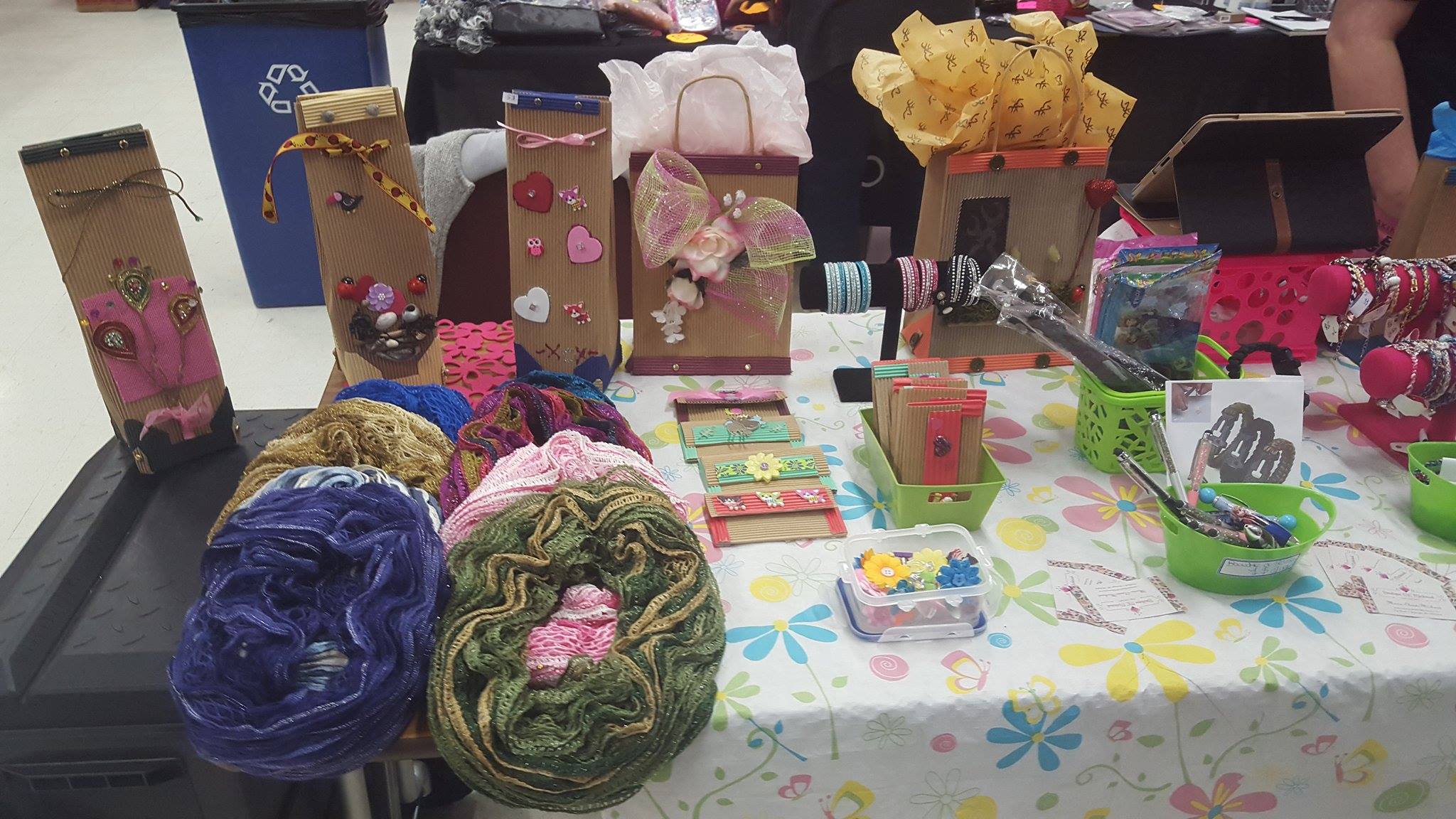
Abby Metallic moved home, but missed the markets she had gotten use to in Moncton. That’s why she started the Listuguj Market on Sundays.

Sometimes over two dozen vendors come out. Some even travel from as far as Saint-Quentin, or Big Cove.

Metallic tries to organize a market about once a month.

She holds them a little less often in the summers, when there are more things going on, inside and outside the community. The last one was on Feb. 21.

She does her best to plan it so the events can be as inclusive as possible, for the whole family.

“I always try to book it on days where everybody – like single parents can come with their kids,” she said. “I try to do different things. I try to get someone who does facepainting, you know, when that’s available.”

Essentially, anyone can set up. Tables are $10 each, or three for $25.

The markets originally started because Metallic knew a lot of people created things at home,. They often sold stuff online or at other markets. But for Metallic, anyone running any small business at all is welcome. Items don’t have have to be hand made.

“They’re more than welcome to come in and set up and show everybody what they do,” she said.

Metallic uses the table fees to pay for the facility, but when there’s extra, she takes the opportunity to promote the vendors.

“I’ll go back and buy from the other vendors. I’ll spend like $20-$30 and I’ll raffle it off on CHRQ, so that people can win it. But they have to come to the market to pick it up, and they need to go to the vendor to pick it up. So it kind of gets people to come and then go check everything else that’s going on. It’s really fun.”

Some of the items at the market

(Photos by Abby Metallic)