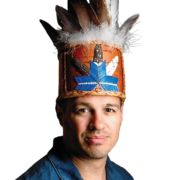
Chief’s Corner with Chief Darcy Gray – October 2022

October is Mi’gmaq History Month, and it is a month for our community to reflect on our culture, rights, and ancestors. We are grateful for all those who have kept, and are keeping our Mi’gmaq language, stories, history, culture and practices alive. They have kept the foundation strong for us to continue to build on. Earlier this month, we observed Treaty Day – a day to remind us to exercise our collective rights as Mi’gmaq, and our responsibilities as stewards of Mi’gmagi for thousands of years, whether it’s on the land or in the water – we are proud of our values and beliefs as Mi’gmaq people.

Chief’s Corner with Chief Darcy Gray – September 2022

September is an exciting time for our community as we prepare for back-to-school, our annual harvests, the completion of our Long-Term Care Facility, and Mi’gmaq History Month.  During the Fall months, community members can expect foods from our community in distribution, as well as part of our food sovereignty initiative. This includes: tiam, jagej, and other traditional foods as we move further into season.  As the leaves change and the days get cooler, I encourage you to go out and take in the gorgeous Fall scenery that Listuguj has to offer.

Chief’s Corner with Chief Darcy Gray – August 2022

In August we had the opportunity to reunite with friends and family at our 30th Annual Traditional Mawiomi.  People from coast to coast joined us to pray and celebrate, as we reopened for our first public gatherings since March 2020.  This year we saw approximately 6,000 people in attendance, making this Mawiomi one of the largest in our recent history.  On behalf of myself, Council, and our staff, I would like to acknowledge and thank the Pow Wow Committee for their hard work and dedication and for making our Mawiomi such a big success.  To all our community members and residents, I hope you had a memorable Summer surrounded by your loved ones.

“YOU CAN NEVER FINISH A DICTIONARY.”

In 1993, Diane Mitchell got the idea for the Mi’gmaq-Mi’kmaq Online Talking Dictionary when her daughter was only two years old. They were living in Southern Ontario at the time, and Mitchell realized that her daughter would not have access to their language. With the help of her tech-savvy husband, Sean Haberlin, website developer, Dave Ziegler, and database specialist, Watson Williams, she successfully recorded seven Mi’gmaq words.  Roughly five years later, Mitchell returned to Listuguj and got together with Eunice Metallic and Joe Wilmot to find out that the idea of a similar project had been brought up in the Education department prior, but no concrete work was done. In the beginning, the project was meant to be recorded on CDs, but as time went on, using the Internet for their platform seemed like the best route. To help kick off their project, they were given funding to purchase recording equipment. This is when the seven words that Mitchell had initially recorded, turned into something much more.

Mitchell said, “Initially I was just going to do it for domestic consumption – even though it was a large project, but I also recognized it would be really useful, simply because we have less and less speakers as the time goes on.” Mitchell, Metallic and Wilmot all grew up in a home where Mi’gmaq was their primary language. They felt as though their knowledge and other Mi’gmaq speakers’ knowledge of the language could be used to benefit the community to keep the language alive for future generations.

The team was determined to include more and more words, which meant doing work on evenings, and weekends. “This is what we wanted to do. Not because we were paid, not because somebody was telling us what to do. It was all just us doing the work,” said Metallic.

Eventually, the community recognized the project and temporarily employed the team to make the project even bigger. The team received various funding over the years as well. Even after the employment came to an end, and the funding was gone, they continued.

The dictionary received positive feedback and praise from the community. It is still being used frequently – whether it be by teachers, education staff, young generations of learners, or people wanting to become familiar with the language in general. The dictionary was also praised by the previous Chief and Council administration in the community. “Our Chiefs in the last 30 years have changed.  All the Chiefs have supported us. They support the language program because it’s for the community.” said Metallic.

As of today, the Mi’gmaq-Mi’kmaq Online Talking Dictionary has 6500 words. The words are in alphabetical order, defined, used in sentences, and are primarily voiced by Mitchell, Metallic, and Wilmot. The website also offers various traditional Mi’gmaq songs and stories that are voiced by people in the community, such as Roseann Martin, Simon Dedam, Roger Metallic, Theresa Mitchell, and even Mitchell’s eight-year-old daughter at the time. Mitchell has also created a Twitter account called “Pemaptoq” with over 1000 followers – where she tweets a Mi’gmaq Word of the Day. These words of the day can also be found on the billboard in front of the Listuguj Education Training and Employment office and can be heard on the radio station, CHRQ.

Mitchell has taken on a bit of a side project, that is still related to the dictionary. Over the years she has been collecting and studying work from Père Pacifique – a Priest from the late 1800s, who published numerous Mi’gmaq manuscripts and prayer books.  Included in his manuscripts is a handwritten Mi’gmaq dictionary that was never published. The primary entries are done in Mi’gmaq, but the explanations and definitions are mainly done in French. Mitchell has been working with various Mi’gmaq women in the community to extract words from these manuscripts. She is teaching them how to transliterate his work. The words that have been extracted from the dictionary, will be presented to some speakers in the community. Once these words have been approved and tested, eventually she would like to add some of these words to the dictionary. Wilmot said, “There are other projects that are going to be pulled into it. It will enhance the use of the dictionary, and hopefully, it results in people taking something from it, and learning from it.”

Even though the dictionary has come a long way, the team says you can never finish a dictionary. New words are often resurfacing and being discovered. Metallic said, “I hope somebody will be able to take over it when we’re gone.”

The Mi’gmaq-Mi’kmaq Online Talking Dictionary has gone on to be a staple in Listuguj.  The team could not stress enough that they are grateful for the help and support received from individuals who made the project possible and from the community in general. The time and effort that were put into this project are highly respected and recognized and will continue to be used as a major source for the language.

By Ann Marie Jacques

LOCAL BUSINESS OWNER SPOTLIGHT – COLE DUNKLEY

In the beginning, Dunkley’s Landscaping consisted of owner and operator, Cole Dunkley. After he completed a Horticulture program, it was just himself with one truck and one trailer, getting lawn mowing jobs from people in the community. Fast forward roughly four years, and Dunkley’s Landscaping is a well-known and respected business in the community, with multiple employees, four trucks, a tractor, and several trailers. “It came a long way, and I did it organically,” said Dunkley.

Dunkley’s Landscaping is based in Listuguj but works in surrounding areas. They’ve taken part in a number of projects in the community such as the new Natural Resources building, residential yard projects, and most recently the new Glitaw (Mijwajij) Park. Dunkley and his crew have also done work in areas such as Charlo, Flatlands, and Maria.

The company offers a variety of landscaping services such as tree trimming and removal, sod installation, hydroseeding, and much more.

Dunkley is very passionate and humble when it comes to his experience as a business owner, and it’s clear that he put in the work. In the first two years of running the business, he put in approximately 120 hours per week. He said, “If someone has a dream, and they want to put in the dedication, you can make it work.”

For now, Dunkley’s goal is to work less – he said he’s gone from working hard to working smart. In the future, he plans on having more crews on the go and is aiming to have four separate work crews.

Dunkley encourages the public to contact the company via Facebook, or by phone for all landscaping needs, inquiries, and quotes.

By Ann Marie Jacques

Truth and Reconciliation in Listuguj

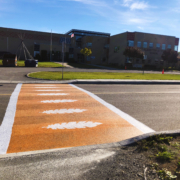
For Truth and Reconciliation, the Listuguj Mi’gmaq Government and the Listuguj Mi’gmaw Language and Culture Revitalization Program handed out vibrant orange shirts to the community, that were designed by Griffin Thomas Germain.

On September 30th, a ceremony was held at the Etlinpisulti’gw (Healing Grounds) with remarks from Roseann Martin, Chief Darcy Gray, and Councillor Chad Gedeon. Campbellton Mayor, Ian Comeau, and Pointe-à-la-Croix Mayor, Pascal Bujold were also in attendance.

It was an emotional day to reflect on and honour Residential School survivors and those who didn’t make it home.

By Ann Marie Jacques

HOUSTON BARNABY IS HELPING BUSINESSES CHANGE FROM THE INSIDE OUT

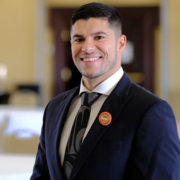
Houston Barnaby knew from a young age that he always wanted to be a lawyer. He was surrounded by family members with a strong entrepreneurial work ethic and knew that he would follow in their footsteps. Barnaby, born and raised in Listuguj, but now resides in Halifax, Novia Scotia was an Indigenous Lawyer representing the Assembly of Nova Scotia Mi’gmaq Chiefs. As of March 2021, he co-created his company, Indigenous Treaty Partners (ITP) with fellow Mi’gmaq associates, Rebeccah Slaunwhite and Corey Mattie.

The purpose of ITP is to help educate on the importance of reconciliation and provide cultural awareness to various businesses and individuals. As of right now, these training services are offered in person or can be done remotely online. Barnaby said, “The reason why we started ITP was simply as a cultural awareness training company, but now we’re slowly expanding into other consulting work.  Now we are kind of becoming an Indigenous consulting firm – owned and operated Indigenous and also serving Indigenous markets.” Barnaby also stated that no one else was offering this kind of cultural awareness training, so after working together with his business partners, they came up with the idea and put Indigenous Treaty Partners into motion.

The company offers several important training services such as the Indigenous Cultural Training Program, and a product called a Reconciliation Action Plan – which is to increase Indigenous exposure in the workplace. Barnaby said we have all been part of colonial and formal educational institutions and workplaces, and society has a lot of unlearning to do. One of the goals is to get people excited, engaged, and wanting to do more and bring them to a place of action to support Indigenous people. ITP delivers Indigenous history passionately to its participants in these training programs, in hopes this will assist society in understanding the truth and hardships that Indigenous people still face to this day. “We have to know the truth before reconciliation can happen,” said Barnaby.

To date, ITP has done over 50 training sessions. The company was created during the pandemic, and it continues to grow more successful each day. It has gained recognition and support from CIBC and other corporations. Barnaby said that in the future he hopes Indigenous Treaty Partners will become a full-term key consulting firm and will continue to offer this unique service to increase Indigenous allies throughout Canada.

INTRODUCING THE NEW LISTUGUJ COMMUNITY SOCIAL SERVICES BUILDING

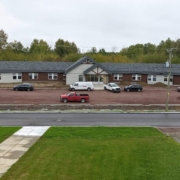
The community of Listuguj now has a new Social Services building that is located at 2 GEF St. (across from the Gignu). It is the new home to the three Listuguj Community Social Services departments: Prevention Services – Families First Support Services, Child and Family Services, and Social Assistance.

In 2019, the Capital and Infrastructure team was approached by Social Services regarding having one building that can house all departments. Once funding was received from Indigenous Services Canada (ISC), and the tender was complete, the design was finalized, and construction began in 2021.

The building is 800 square meters and has enough space for 40 occupants. The design is very sleek and modern, but also has a warm feel which will be very welcoming to Social Services clientele.

General Manager of Capital and Infrastructure, Bassem Abdrabou said, “The project will house all employees of Social Services including room for growth in the next 15 years.” The design was created with the option of expansion in the future, including two additional wings and 25 additional offices if needed.

Listuguj Social Services Director, Tanya Barnaby said, “We are transitioning our services to better serve the needs for Listuguj community members now housed under one roof.”

The building’s construction was completed in September 2022. The paving of the parking lot and GEF Street has been completed as of October 2022.

For information on current or upcoming projects in the community, please contact Capital and Infrastructure at 418-788-3022.

By Ann Marie Jacques

“If we don’t exercise our rights, then they won’t be there for us.”

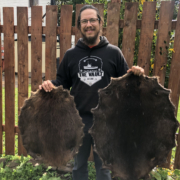
When JD Wysote isn’t fishing snow crab for the Listuguj Mi’gmaq Government, he can often be found hunting, trapping, and tanning animal hides.

He started tanning hides around three years ago when he realized that he wanted to utilize everything when it came to hunting.   After hunting or trapping an animal, he would use the meat and the skull but realized the hide could also be utilized. Wysote would eventually like to use the hides to make clothing and said, “It is the next step from hunting. You know where your food comes from, and next is knowing where your clothes come from.”  One of the main reasons for picking up this hobby is to exercise his rights as a Mi’gmaq person.  He said, “If we don’t exercise our rights, then they won’t be there for us.” While there are not many people in the community who tan hides, Wysote said he has talked to the few who do for guidance and advice.

The process of tanning hides is very time-consuming and detailed. The process differs for the type of animal and depends on if you want to keep the fur on. It also depends on the time of year and the season. Typically, in the winter, animals will have thicker fur. Winter pelt on animals will also dry lighter in color than an animal with a summer coat. Wysote talked about the process of tanning a beaver hide, “If you want to keep the fur on for beavers you don’t have to worry about shaving all the hair down, half the work is already done. You do got to skin the animal, then you got to flush it all out, get all that fat and meat off of it, until it’s just the skin itself. Then you got to dry it out, pickle it, then the final process to make it waterproof and durable is to smoke it, multiple times.” Eventually, a preservative will be added to the hide when the process is done. Some of the animal hides that Wysote has in his possession that he has worked on include, moose, beavers, and bucks.

Tanning hide is a very long process.  It’s a hobby that requires a lot of time and patience, especially if it’s just one person doing the work.  Wysote said, “Traditionally what hide work was, it was a family chore. The family got together, the men went out to hunt it and the women got together and work on the hides. It was a family activity.” His family also partake in the process, with his oldest daughter helping him set and check traps. He hopes his growing family will continue to accompany him with his hobby and fully embrace their Mi’gmaq culture.

By Ann Marie Jacques

Decolonizing Our Education

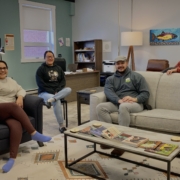
Jacob Gale is the Treaty Education Lead at the Listuguj Education Training and Employment Centre (LETE). Here he works and collaborates with a team featuring, Jeanette Henry, Paige Isaac, and Patrick Wilmot.

Often when people think of the term, “Treaty Education” they will associate it solely with learning about treaties, Gale explained it’s much more than that, “Treaties are fundamental and they’re an important part of the work that we do, but there’s also so many other pieces of work that we do under Treaty Education. It’s really about decolonizing our education here at LETE, at AGS, and at other branches of LETE. Treaty education includes our culture, our identity, our well-being, spirituality, all those pieces of who we are as being L’nu – in a way it could be called L’nu Education.”

The Treaty Education team work with teachers and educators in the community to help build a foundation that connects culture to the school curriculum through experimental learning. Gale said that it’s important to include Mi’gmaq culture in our school systems. An example that was given was the building of the sweat lodge, and how there are so many lessons embedded into that process, such as math, literacy, history, ceremony, and a connection to the community and to the elders. Another major program for our community in Treaty Education is Outdoor Education at Alaqsite’w Gitpu School.

The Treaty Education team also works with the youth in the community and helps them learn about who they are and embrace their culture.  Eventually, the youth will become leaders in our community, and it is important that they have a strong sense of belonging. Gale said, “We ask the question, ‘Whose story should we value in education?’ We’re in that business of we are a Mi’gmaq community, we are a Mi’gmaq school, and it’s important that we continue to find ways to embed our stories and our connections to our land, our elders, our ceremonies, in school – so that students understand that, “Hey I’m Mi’gmaq, I’m proud to be Mi’gmaq and I’m proud to be L’nu” They’re Learning so much about who we are in their education journey.”

There are many events and activities in the community that the Treaty Education team helps organize – a few recent events were the Cultural Night and Social Night held at Alaqsite’w Gitpu School in August. Gale mentioned that many students will be attending the Tim Hortons Children’s Camp in Tatamagouche, Nova Scotia, he also mentioned an upcoming Moose Hunt Camp in the community with the Outdoor Education program.

Gale stated that being part of the Treaty Education program is always fun and exciting and that he is proud to be part of many youths’ cultural and spiritual education journeys.

By Ann Marie Jacques