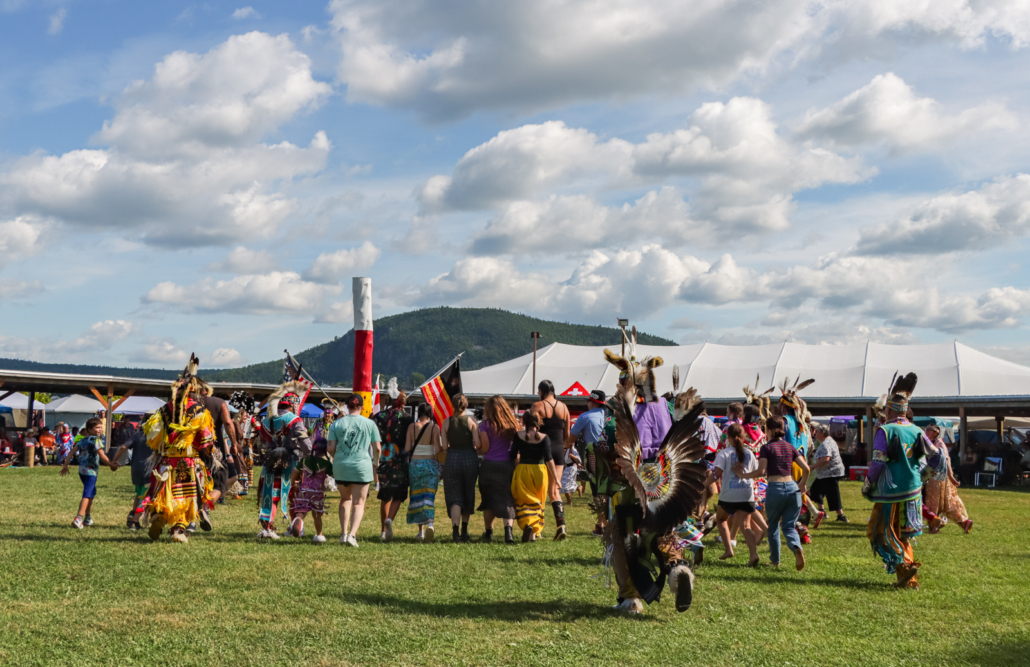
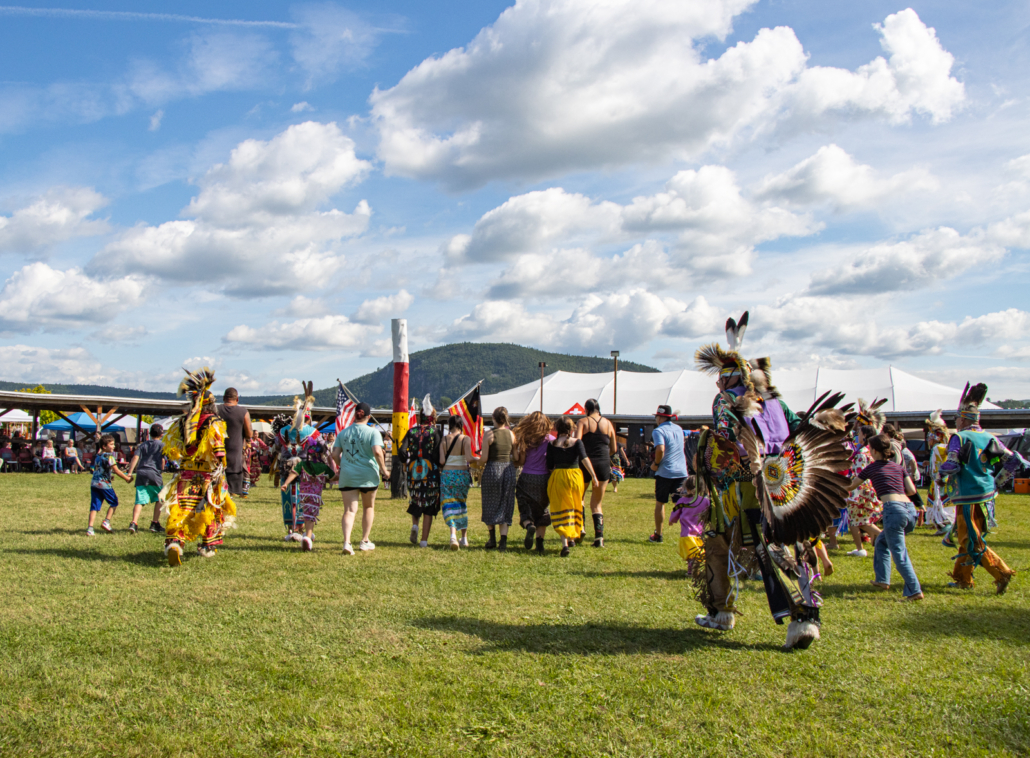
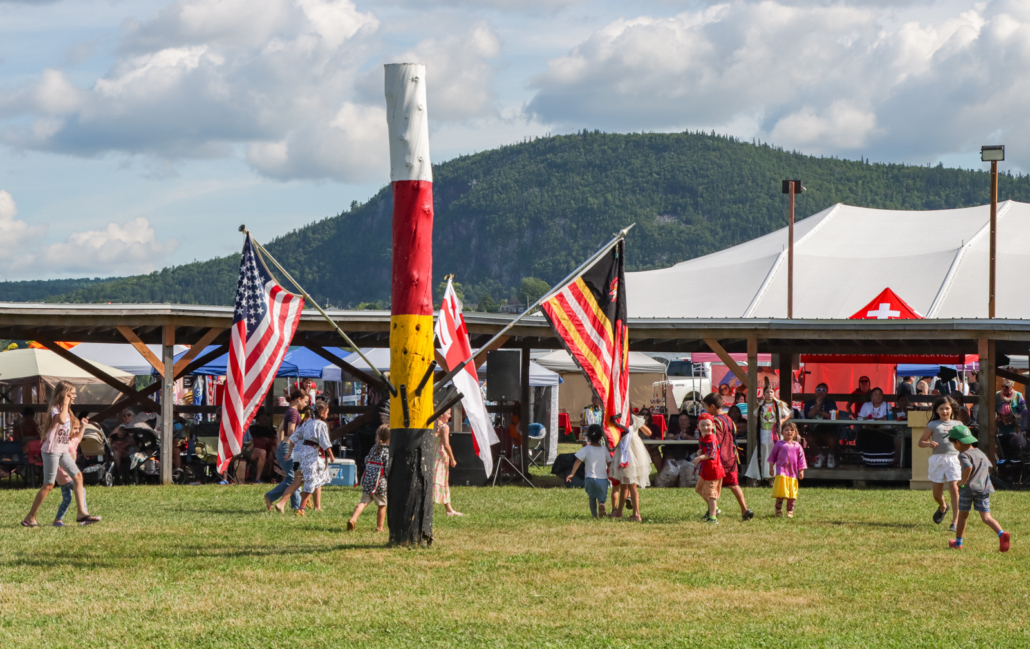
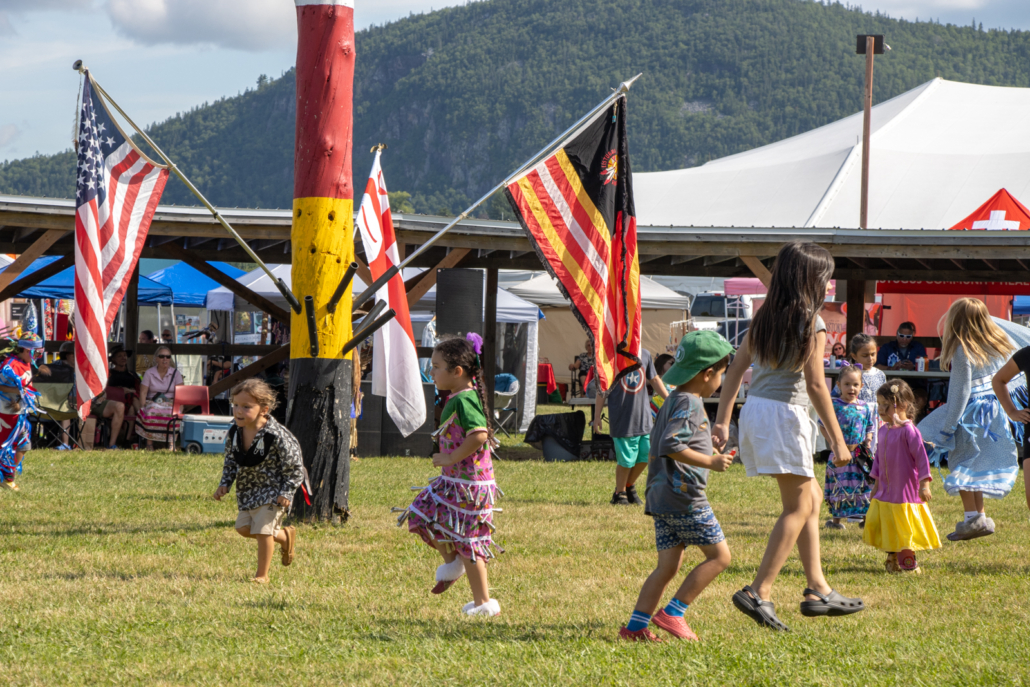
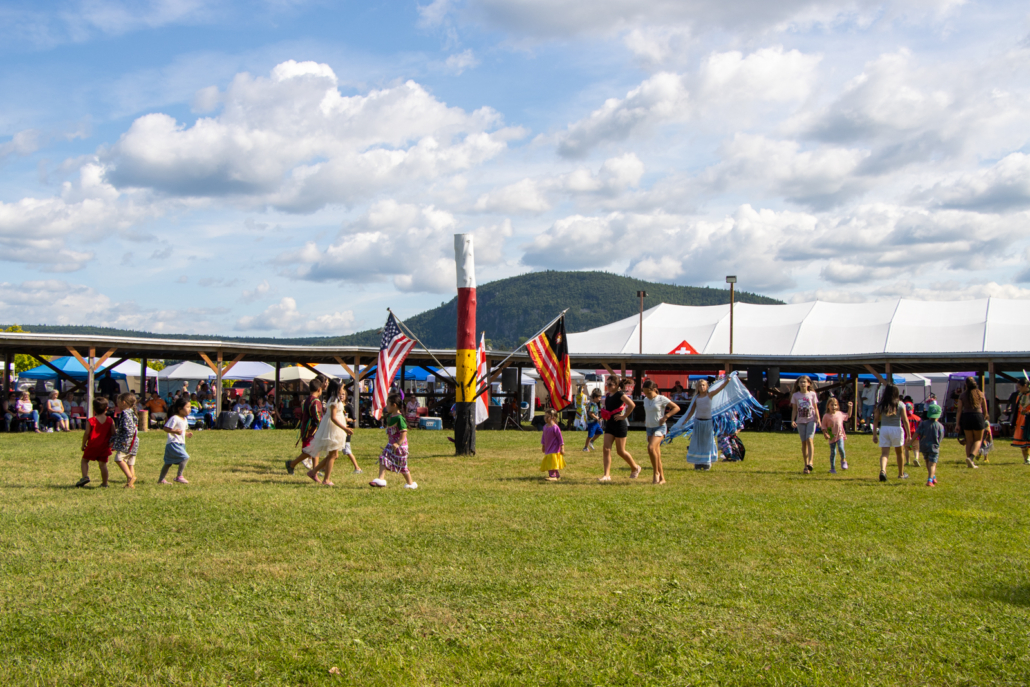
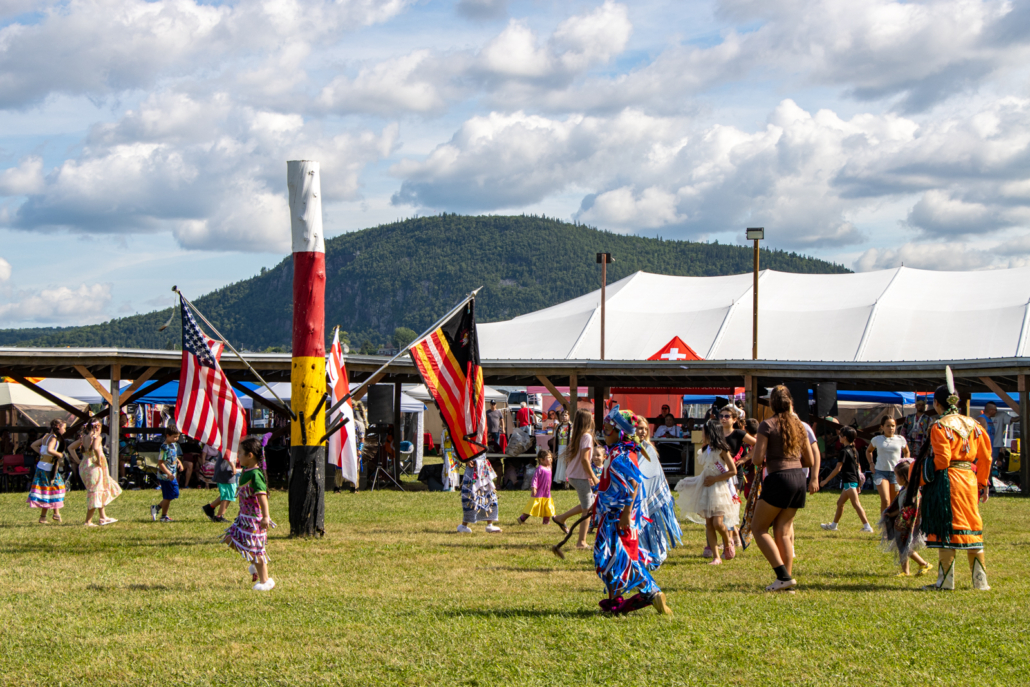
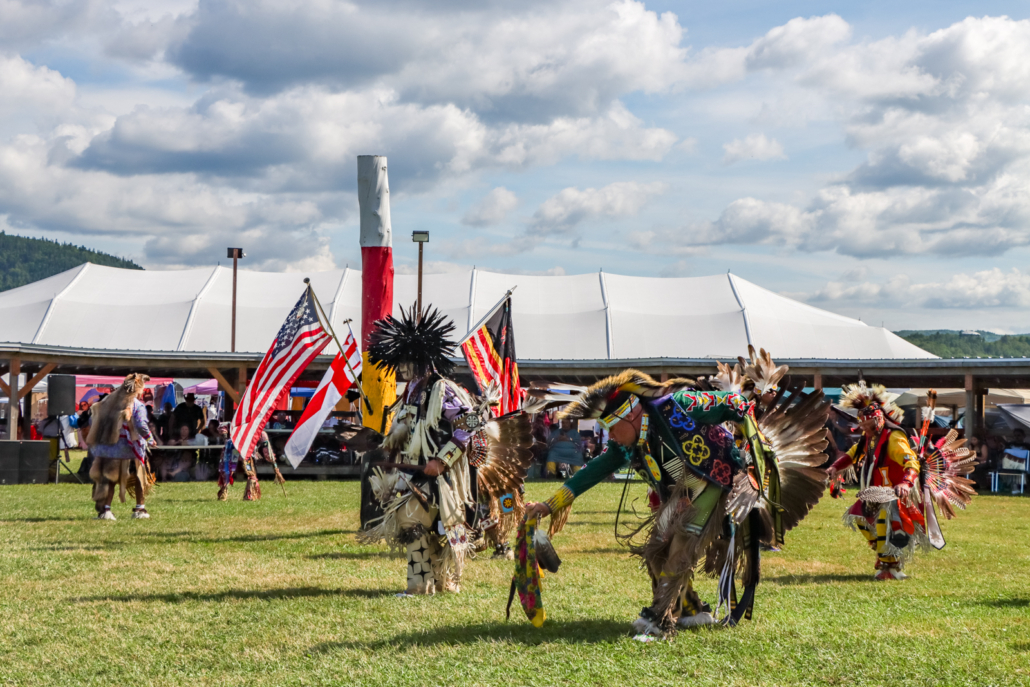
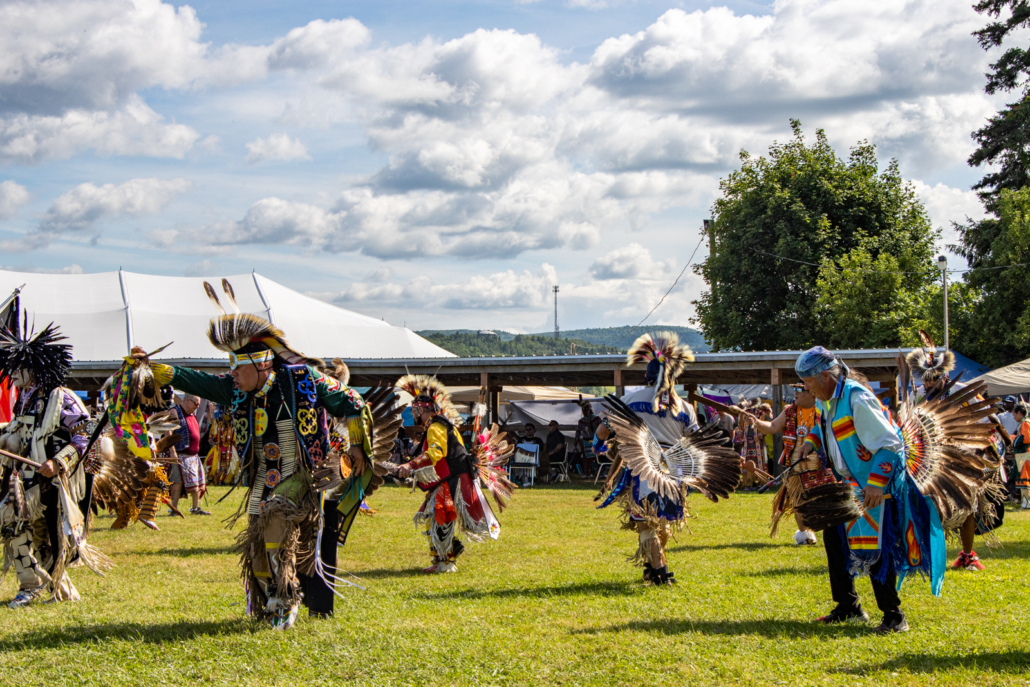
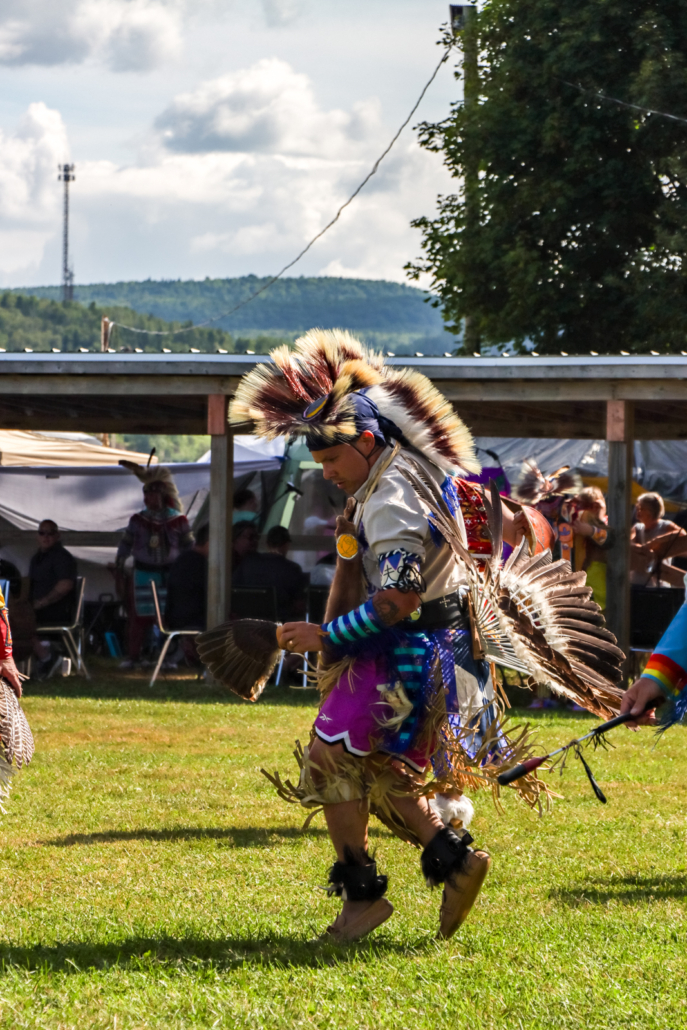
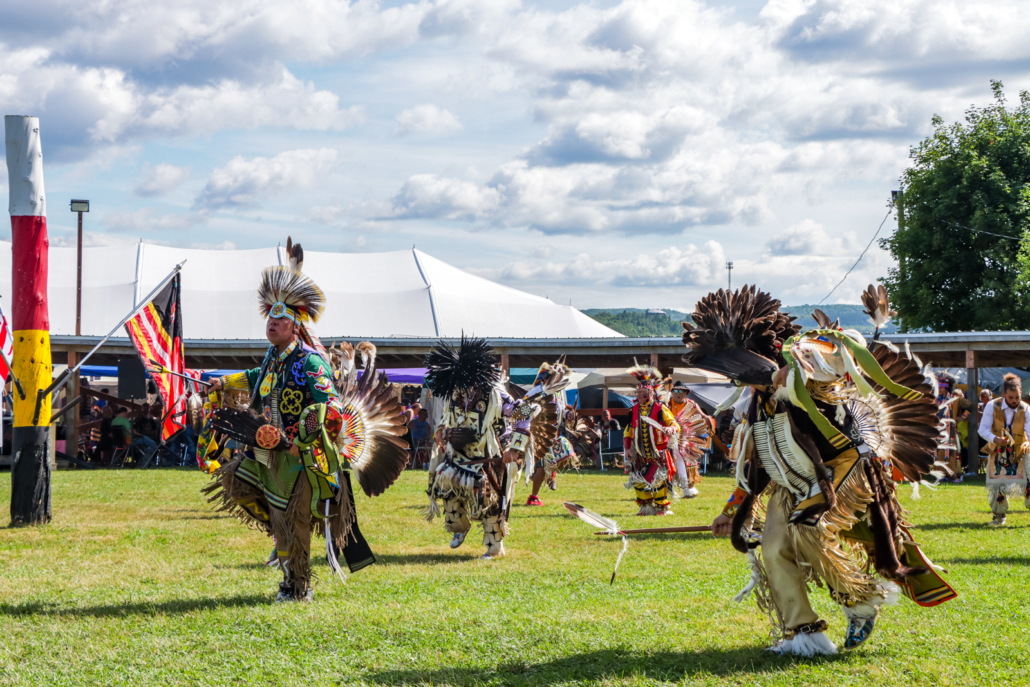
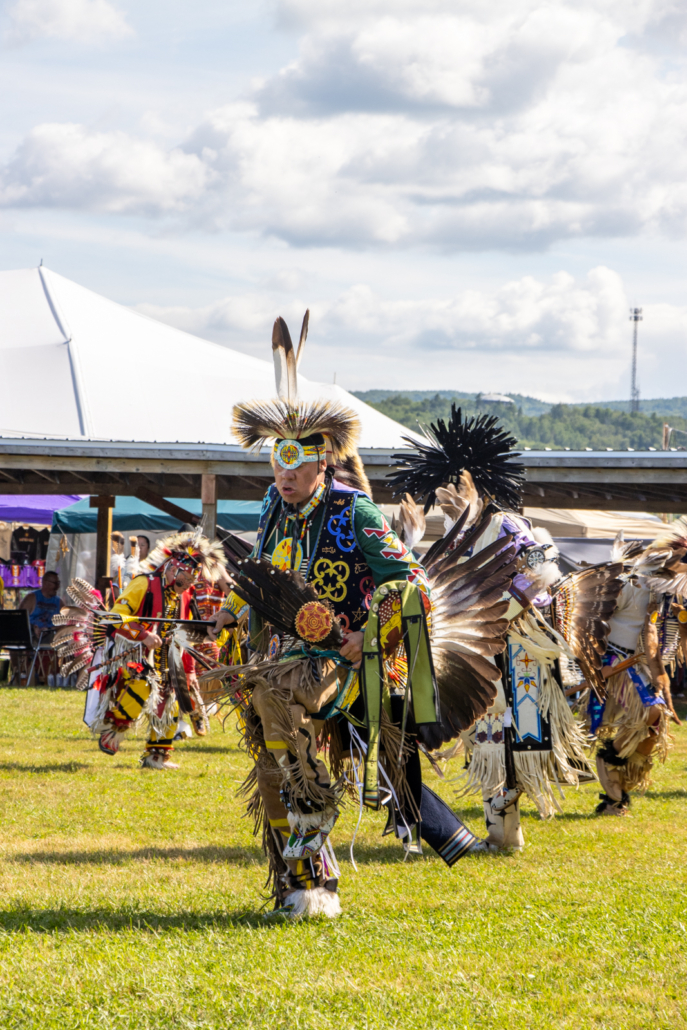
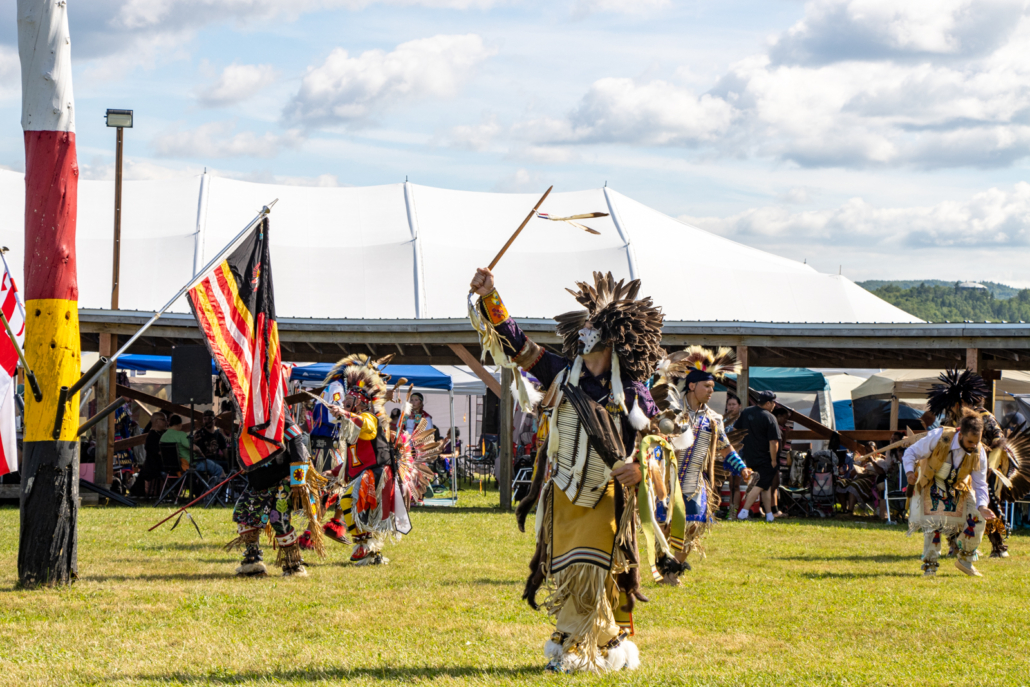
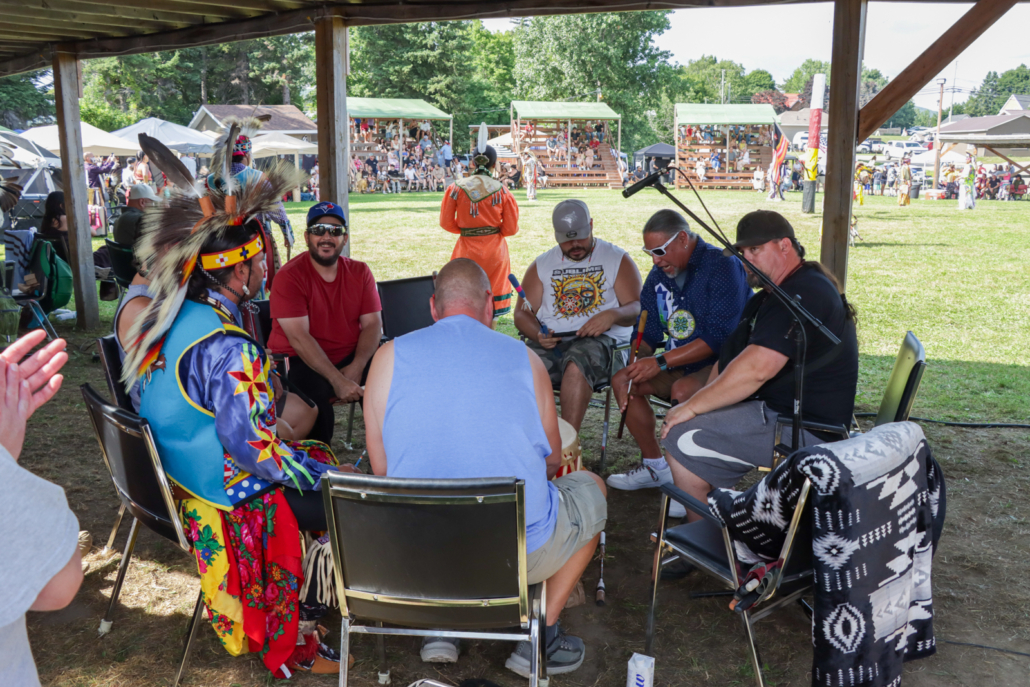
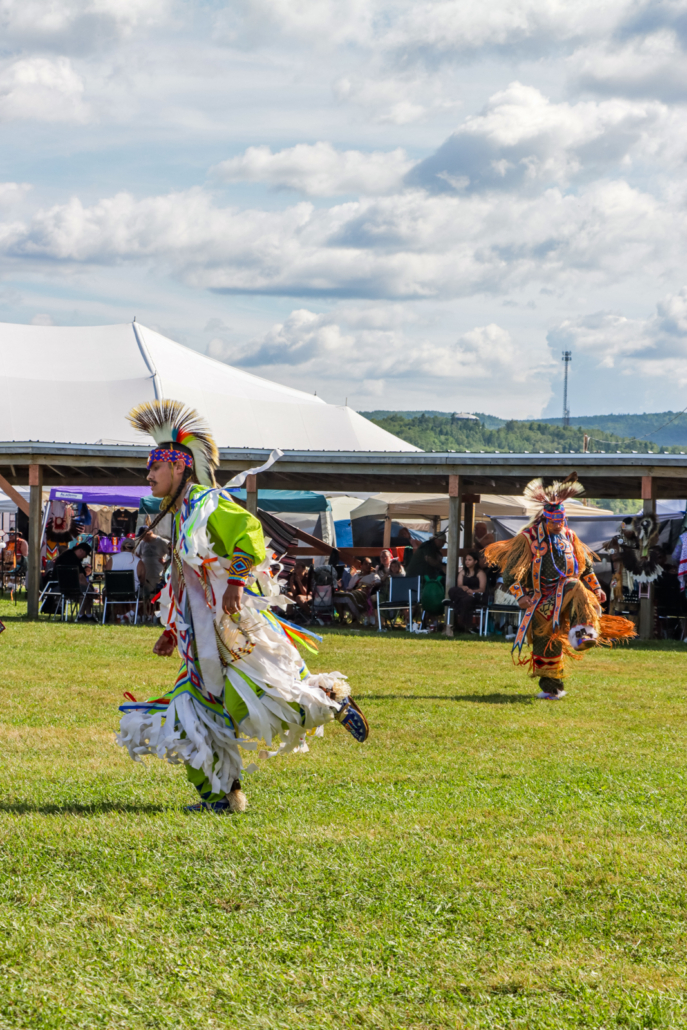
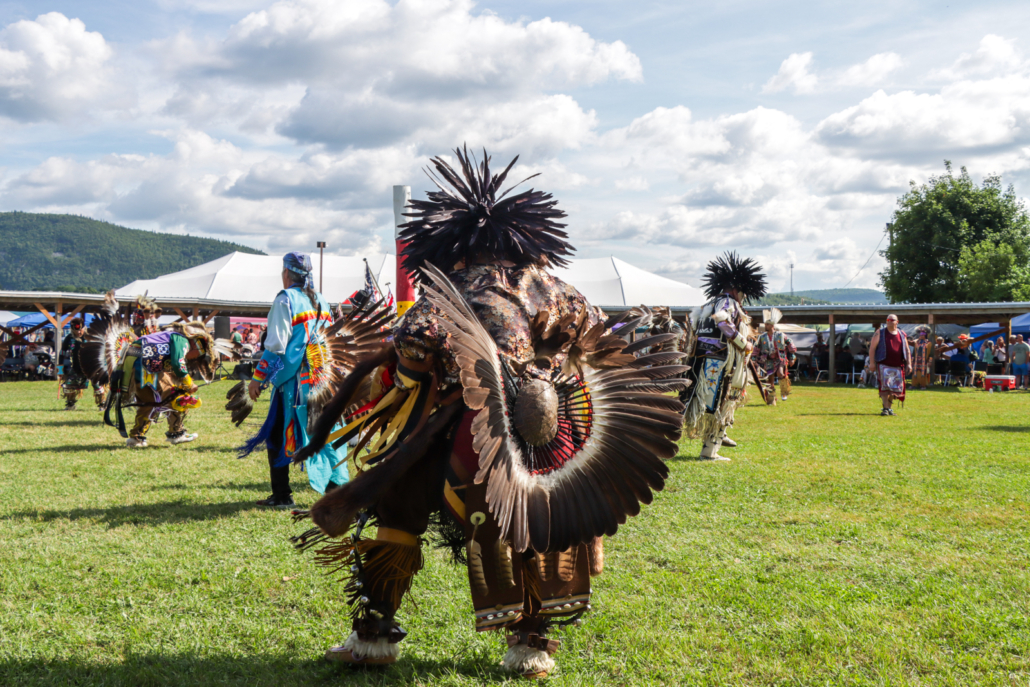
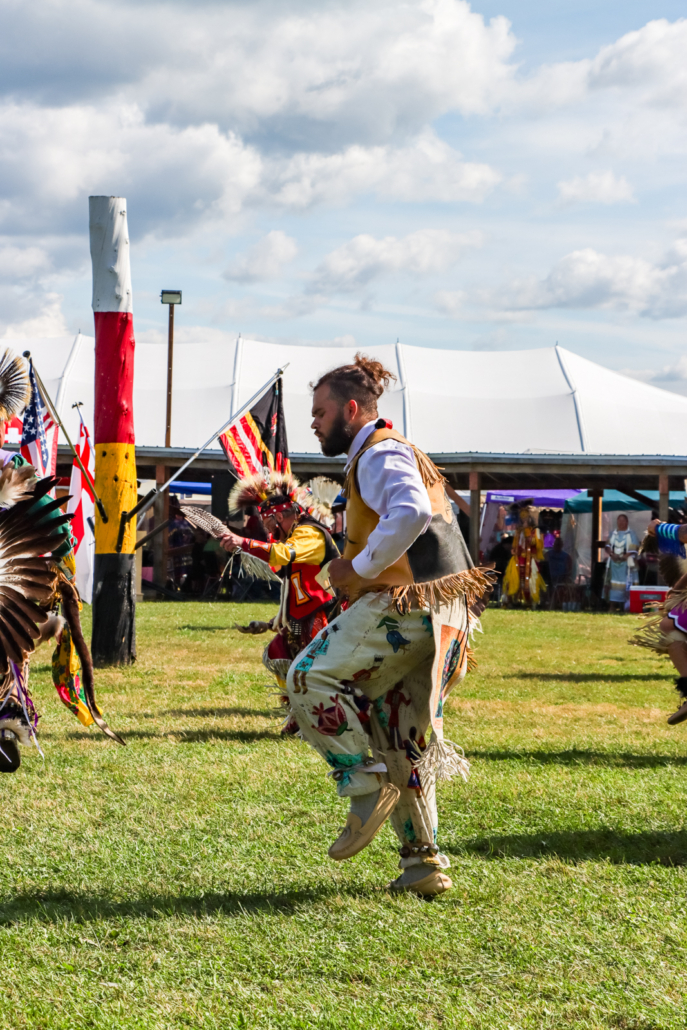
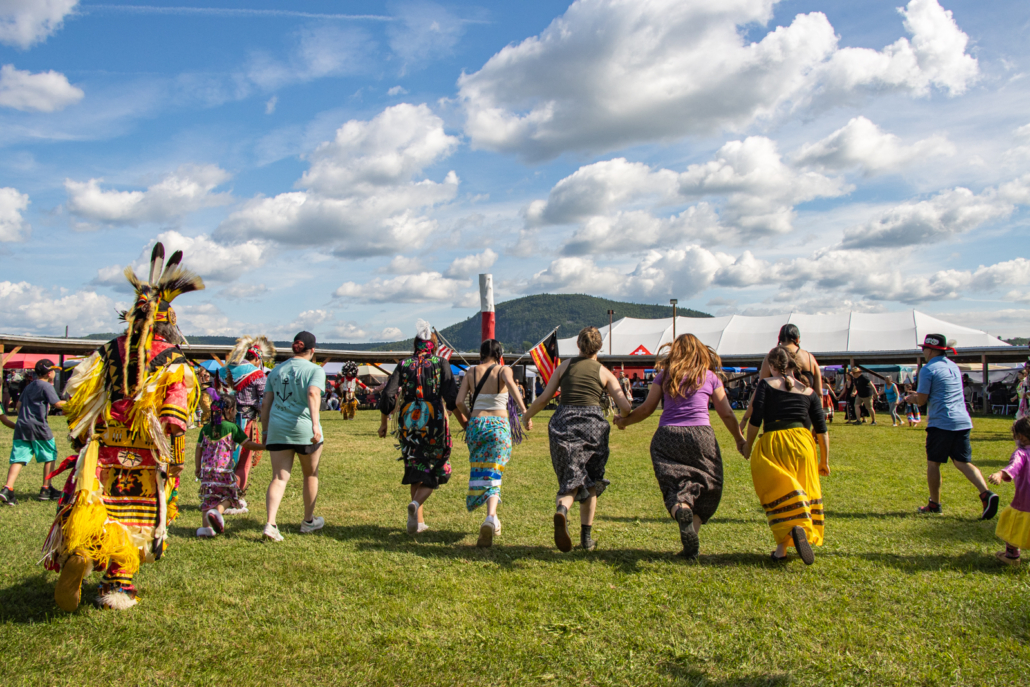
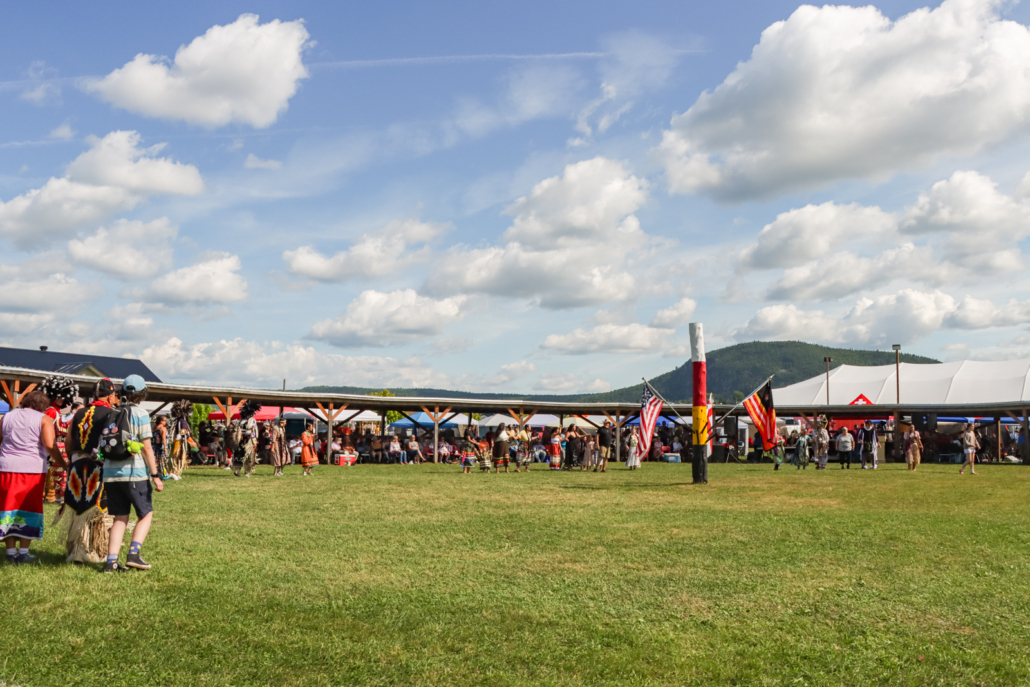
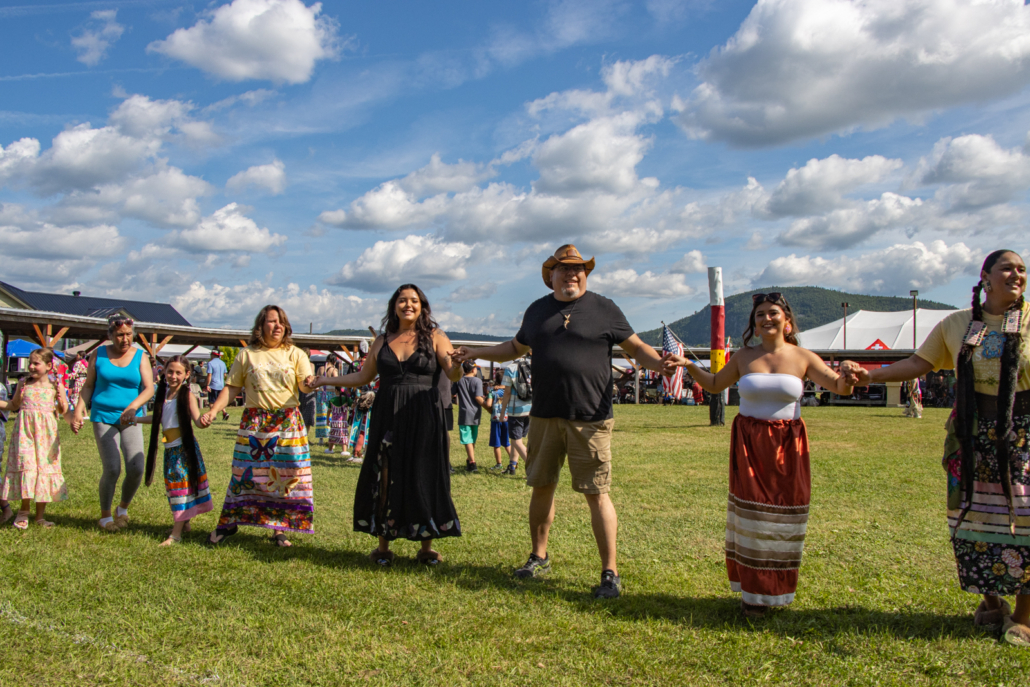
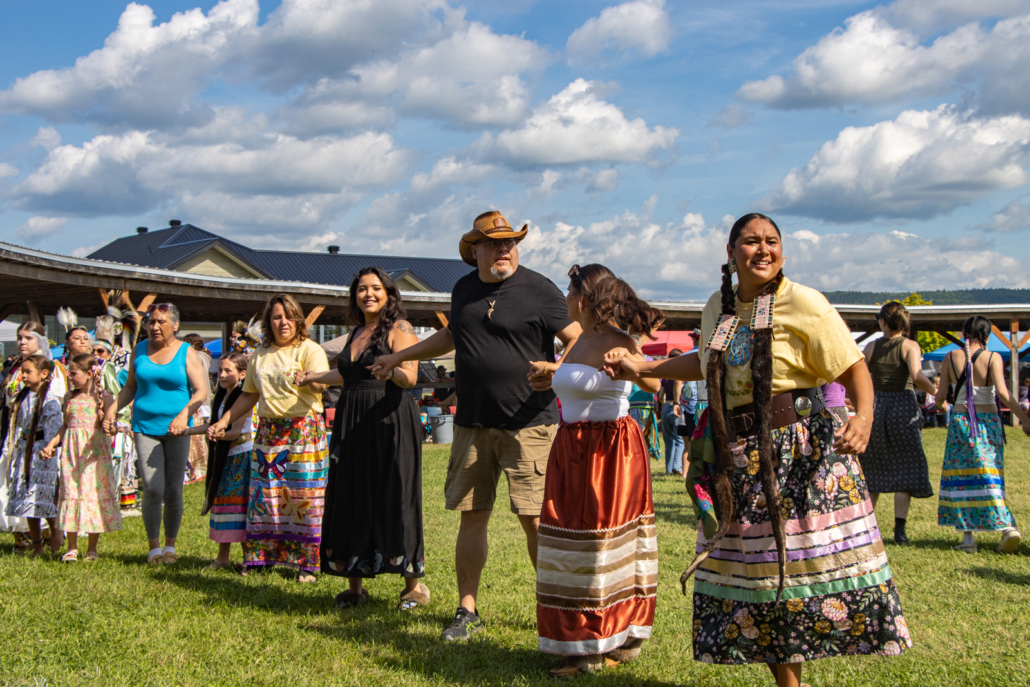
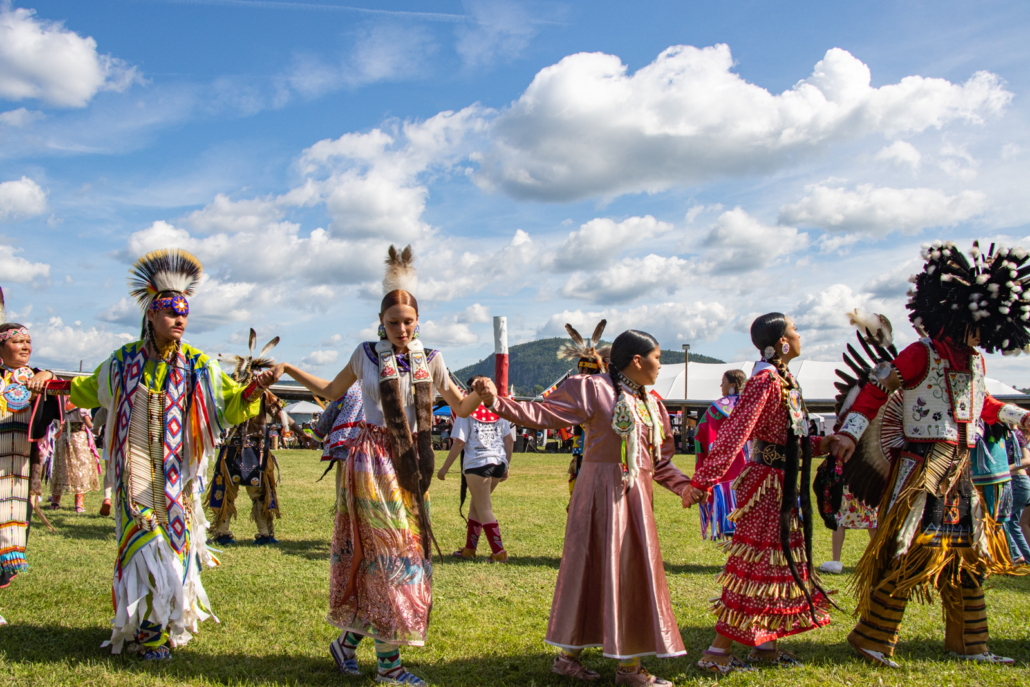
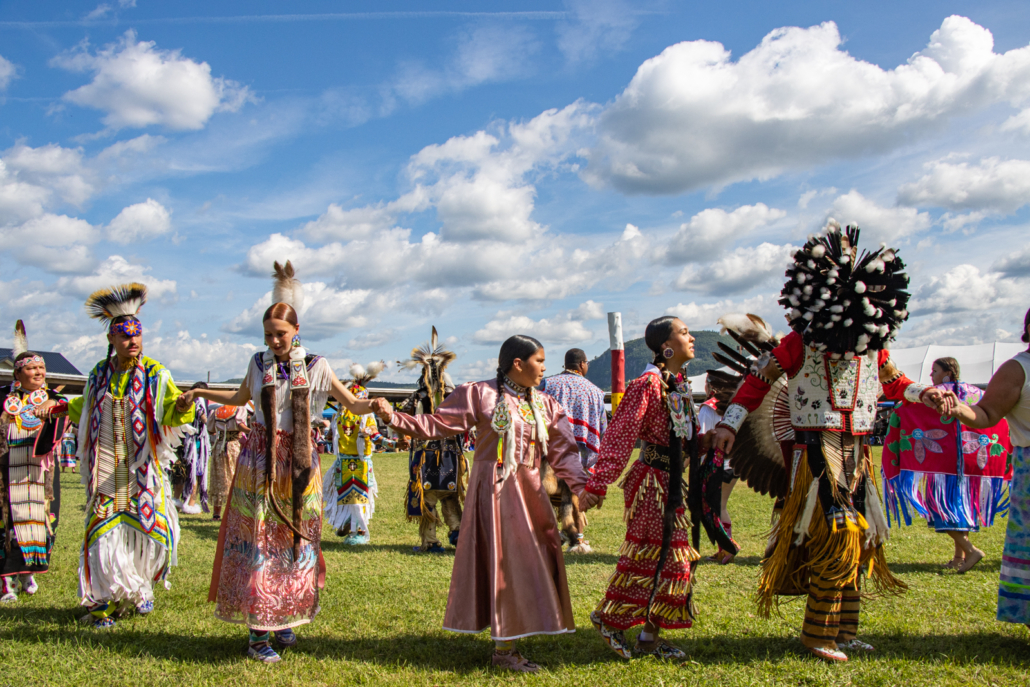
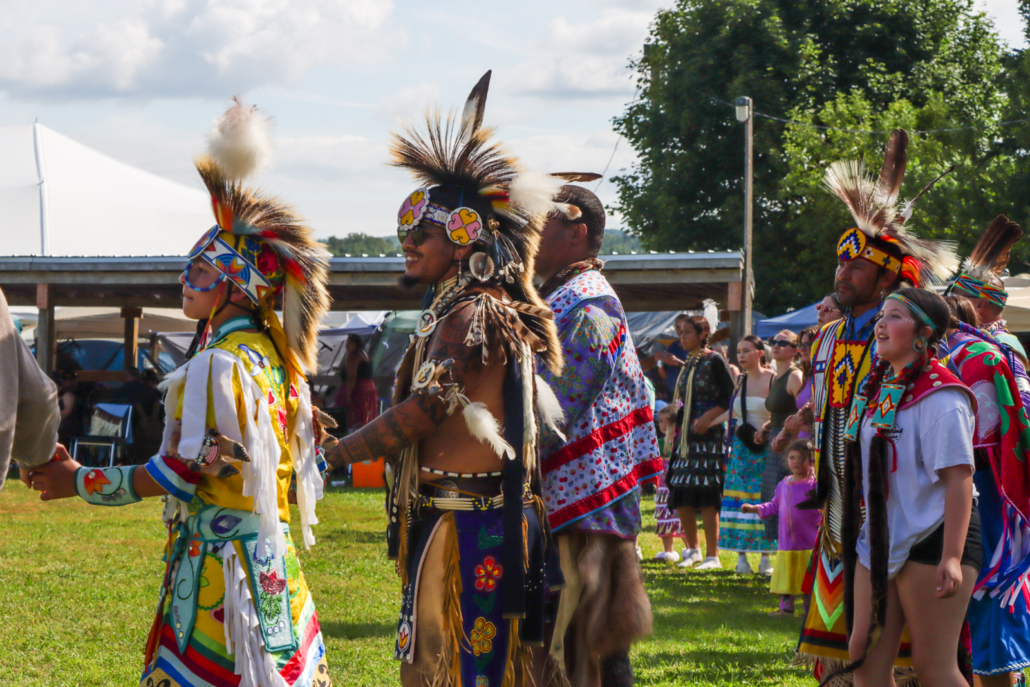
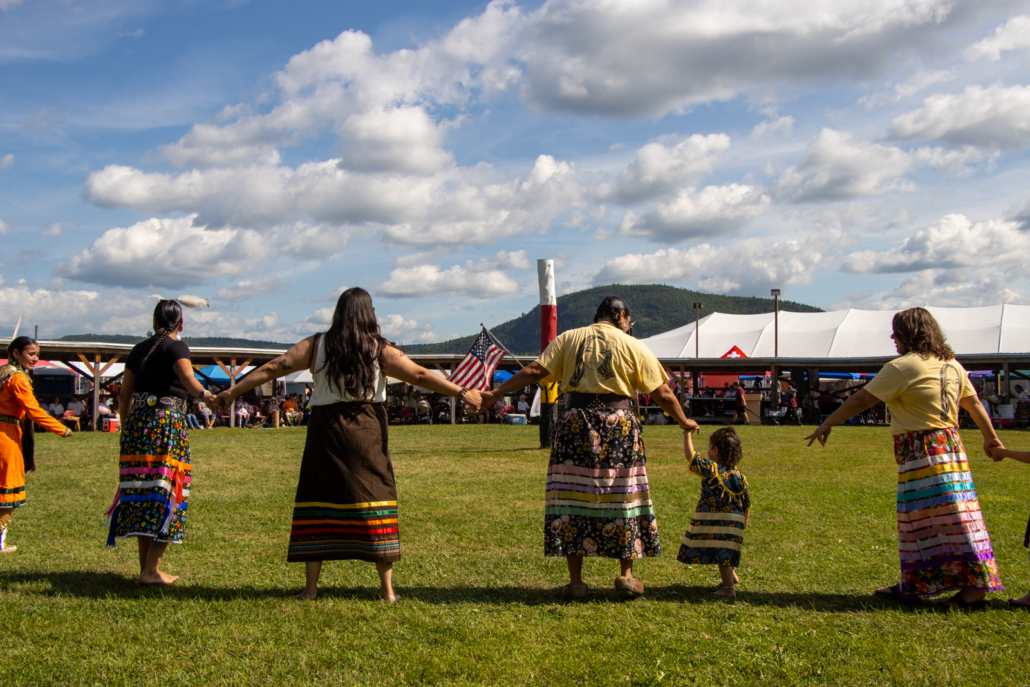
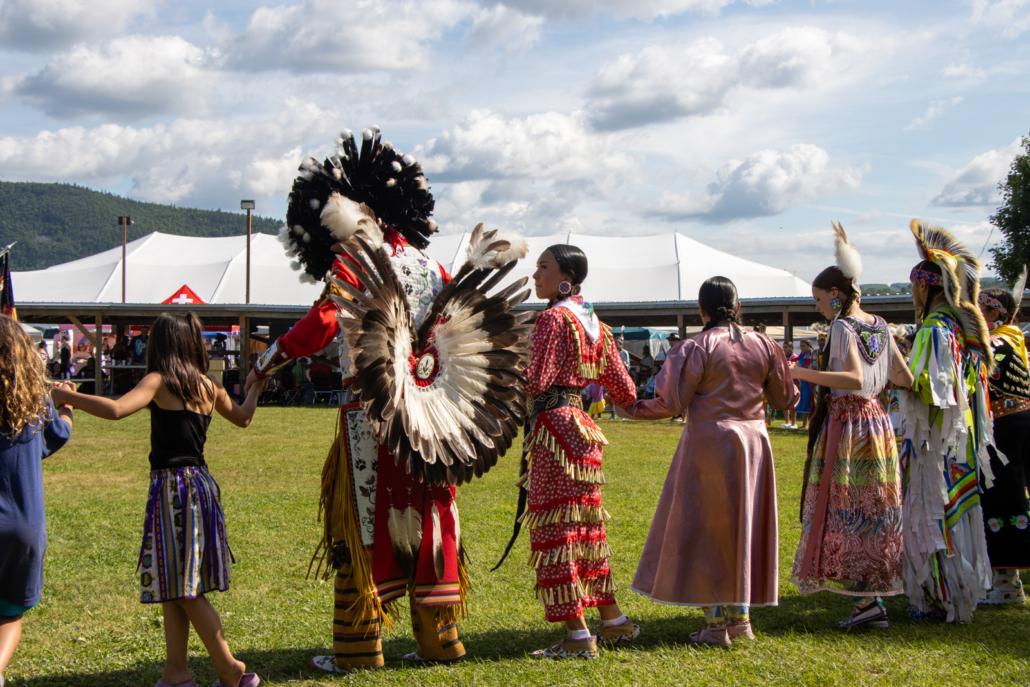
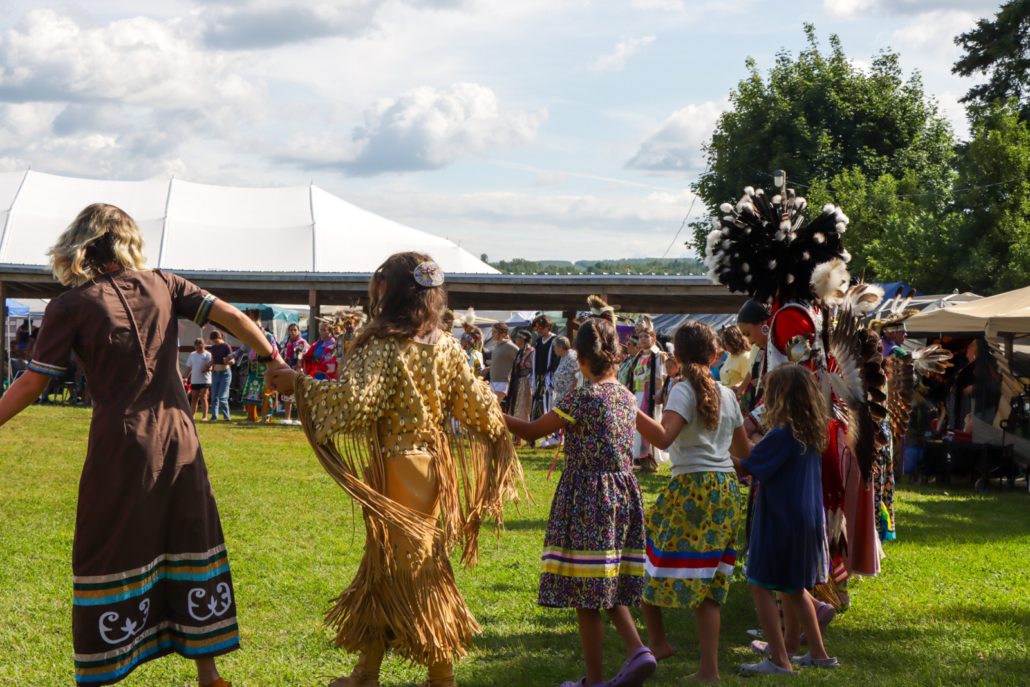
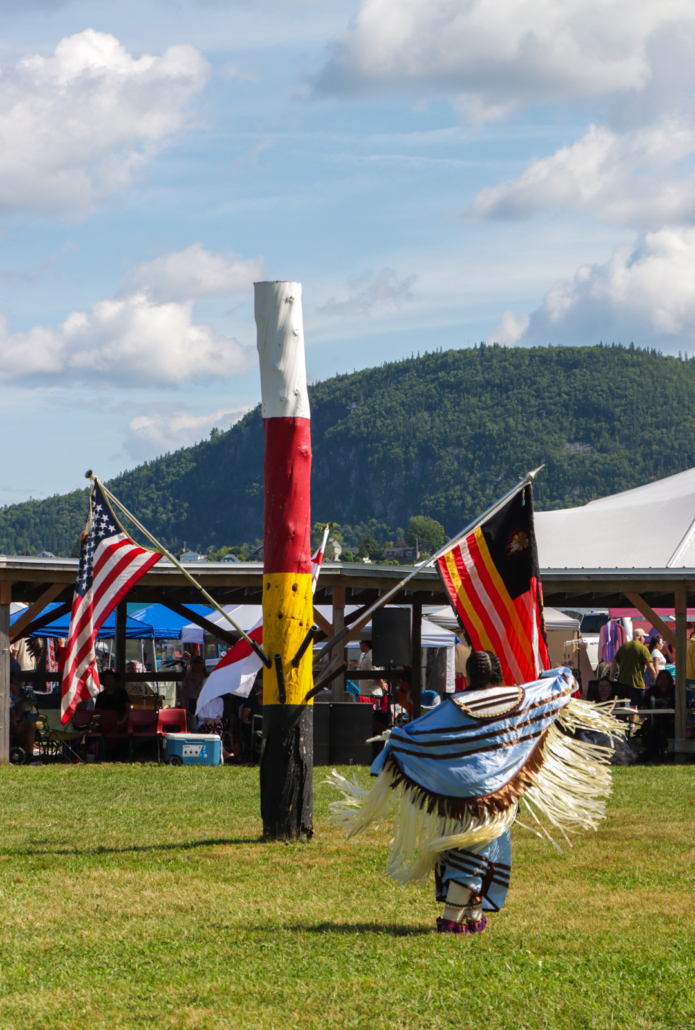
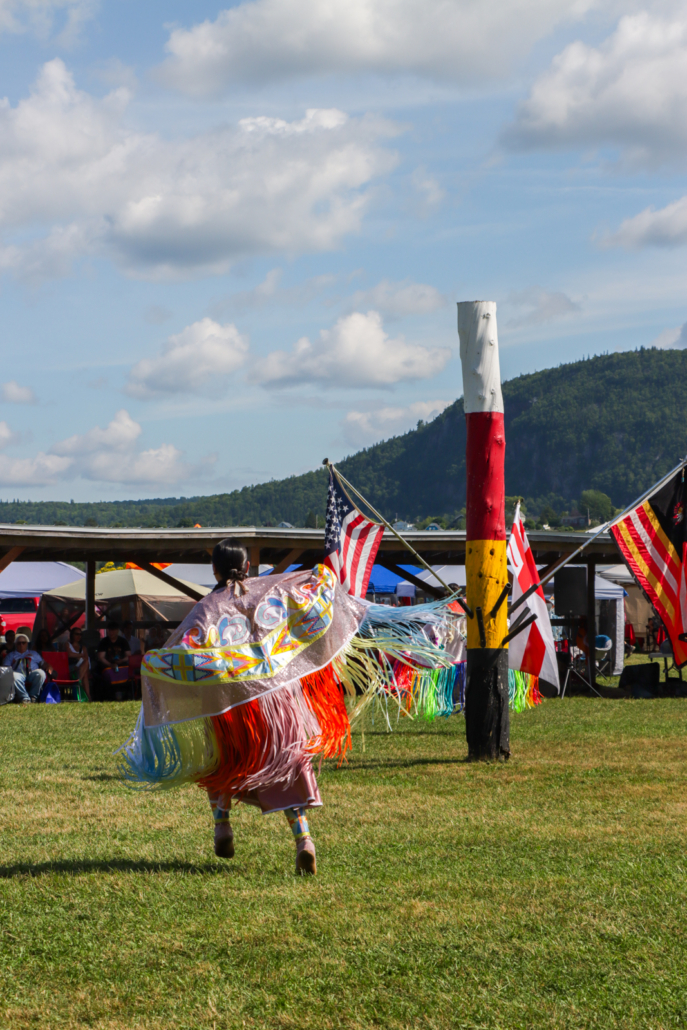
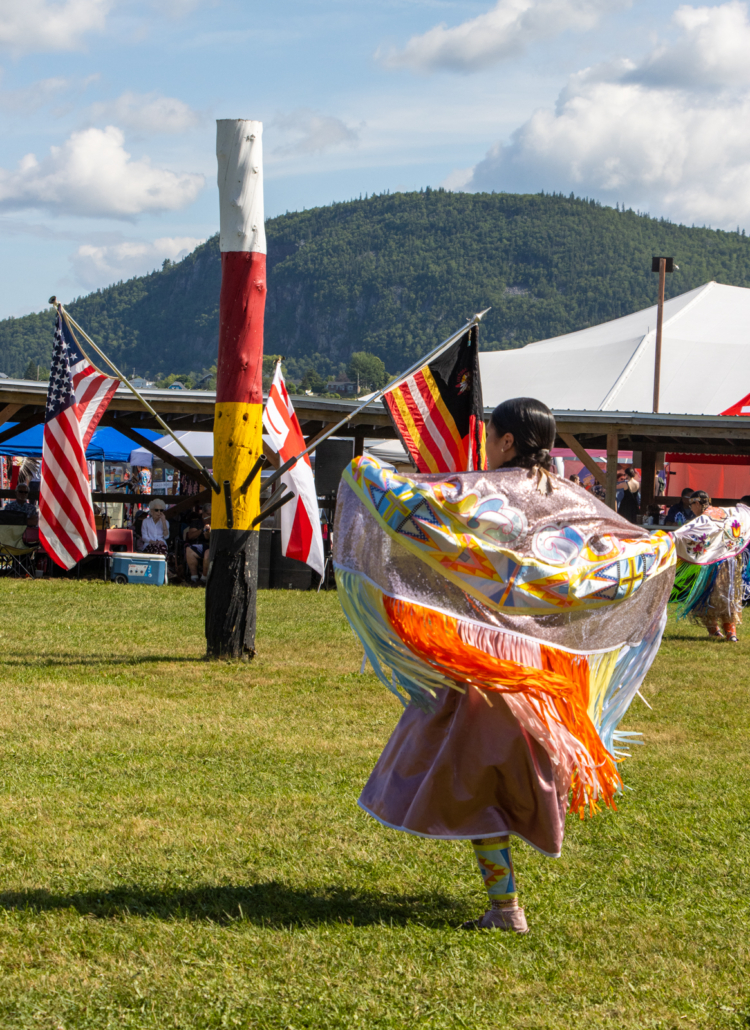
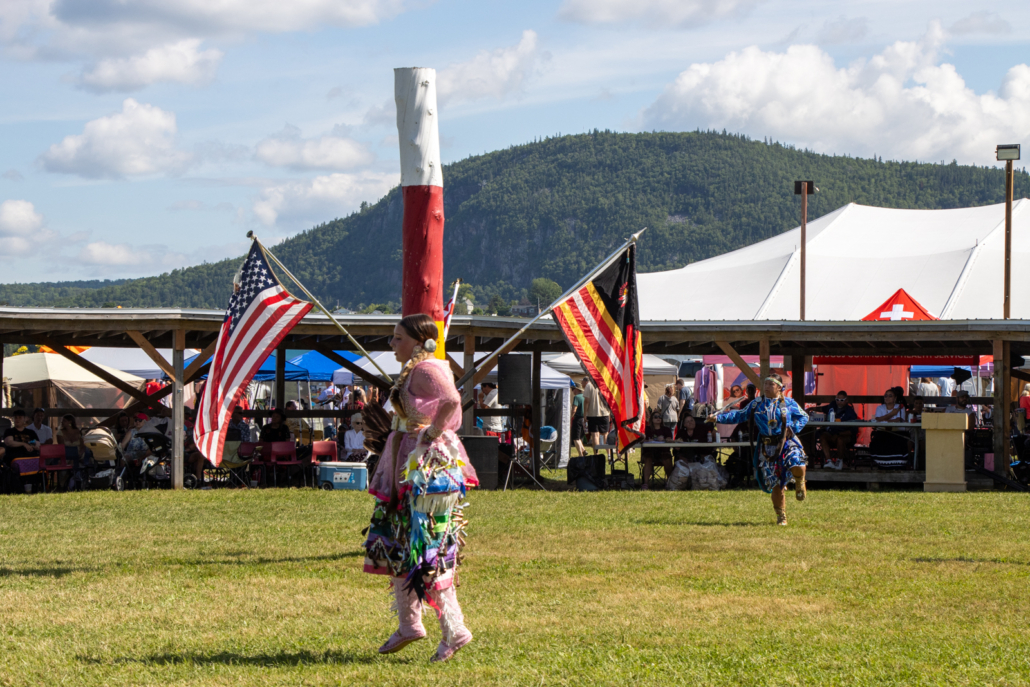
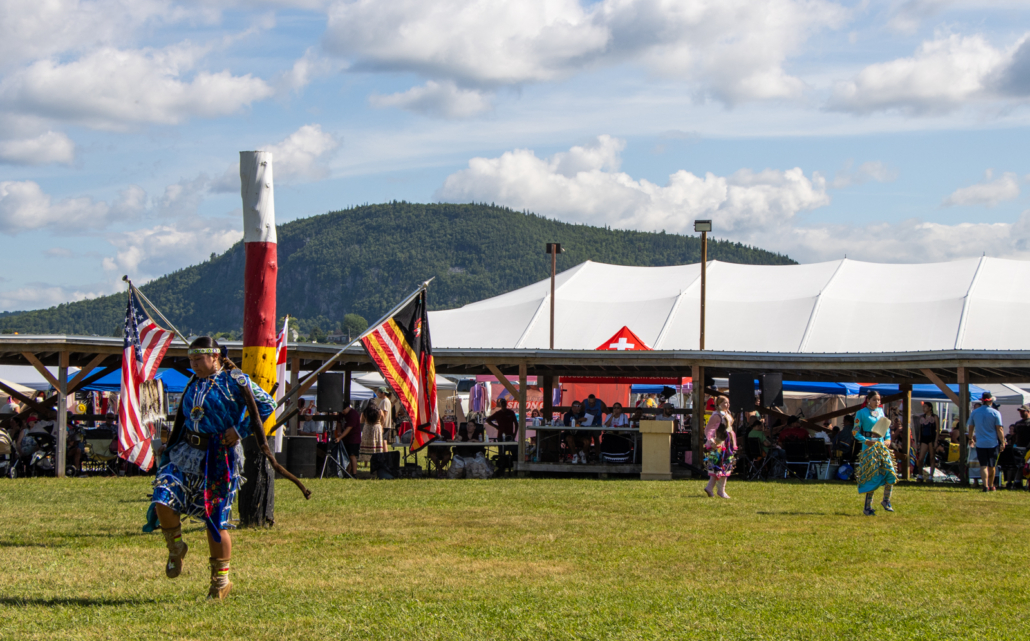
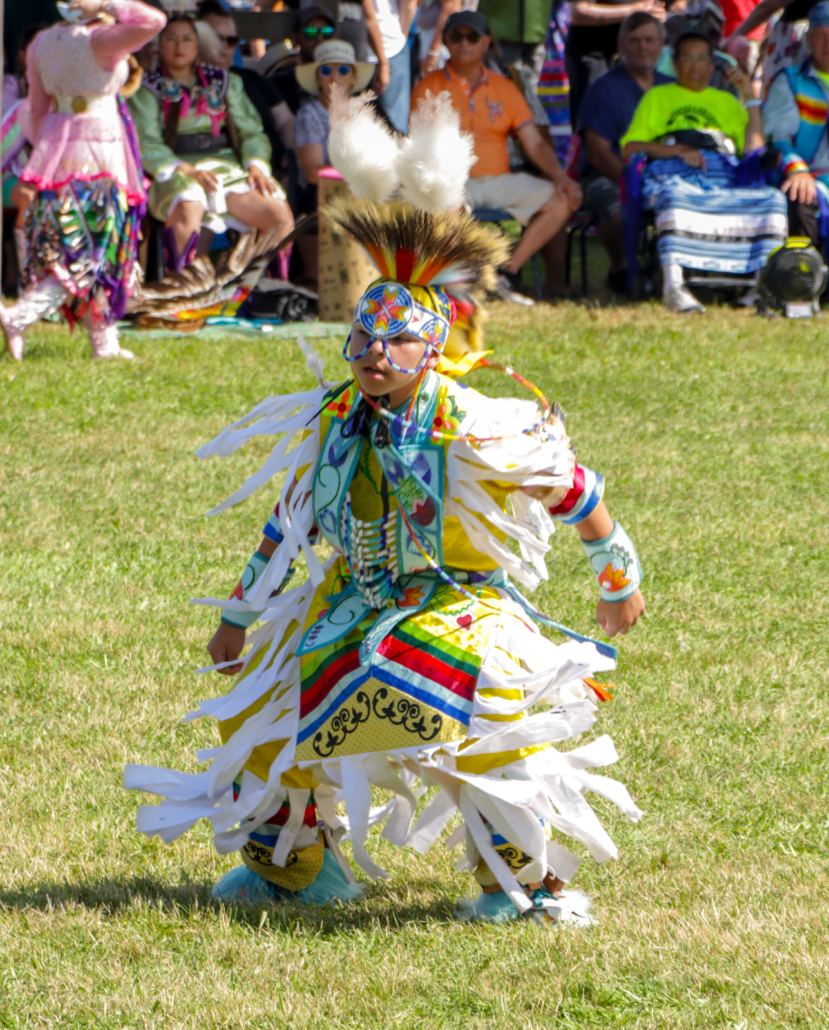
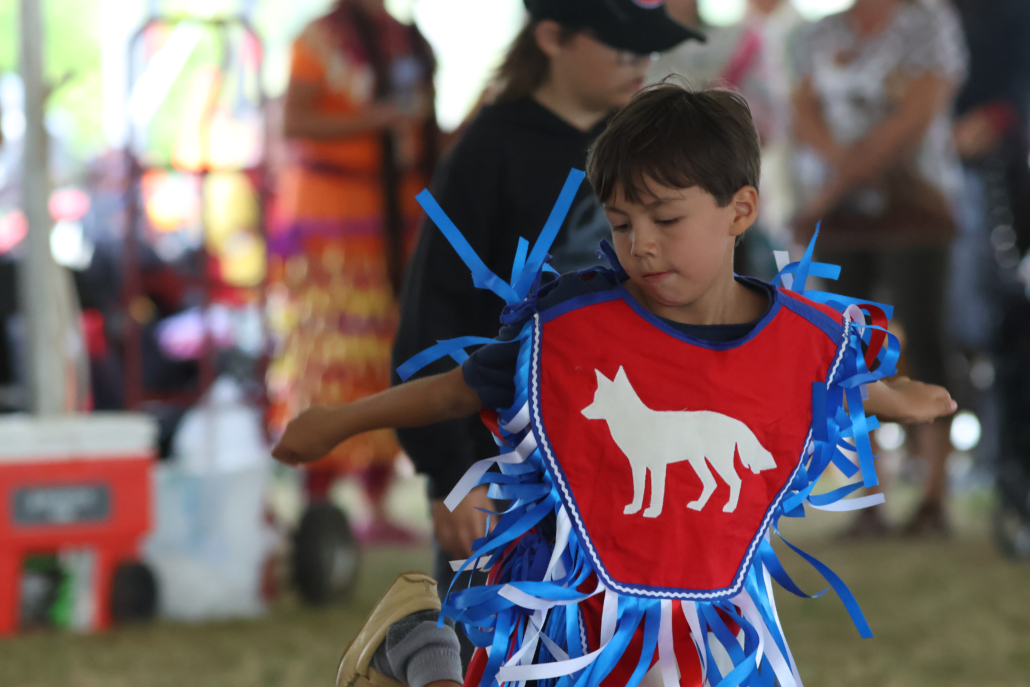
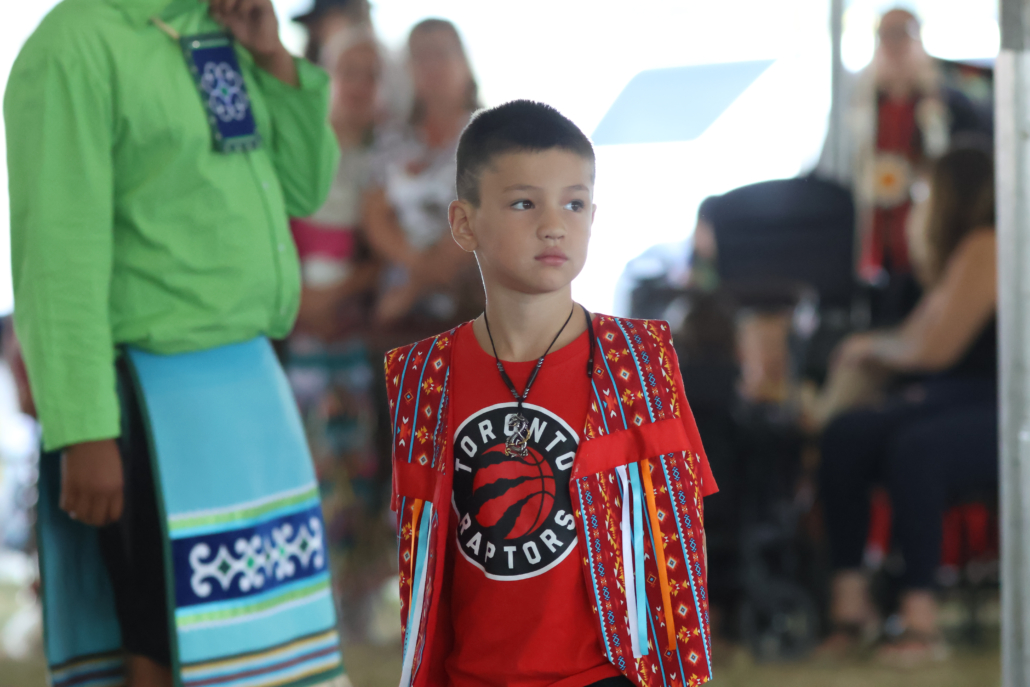
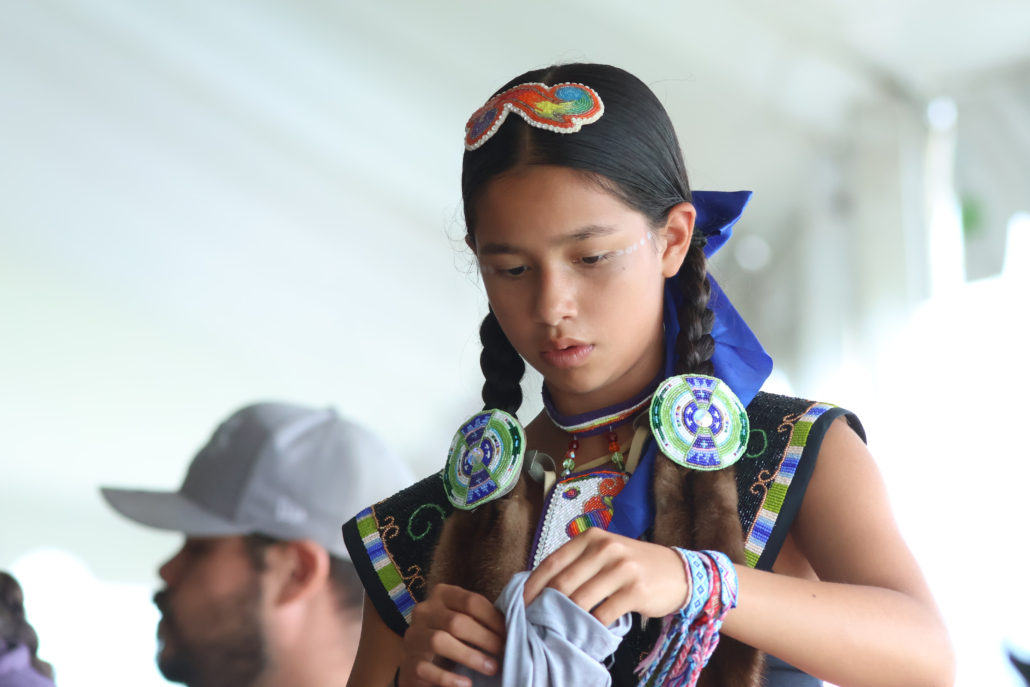
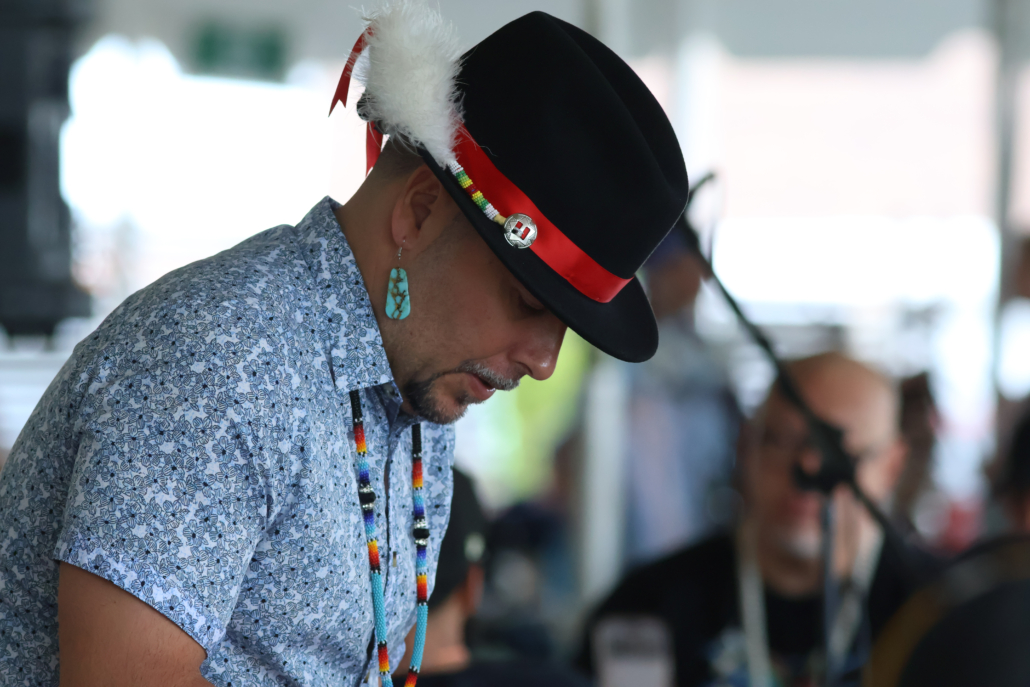
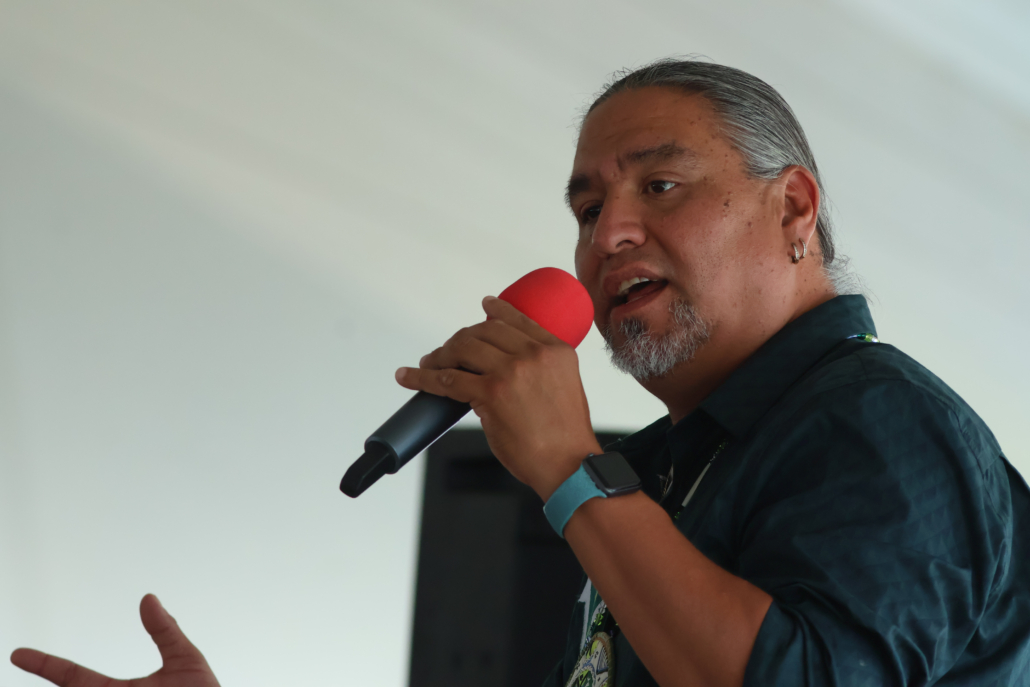
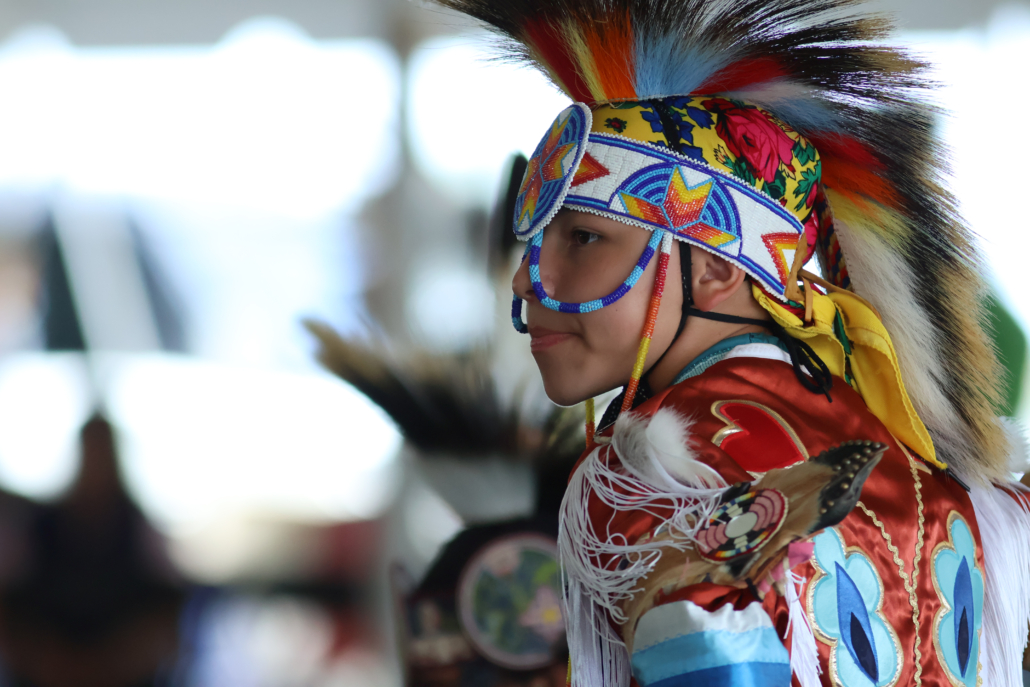
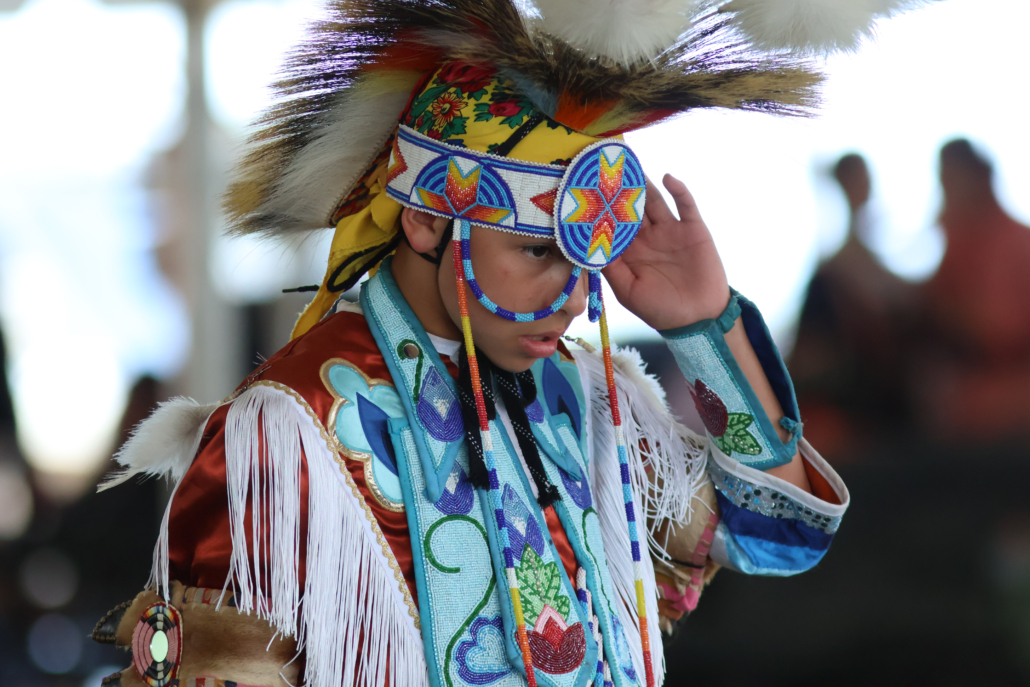
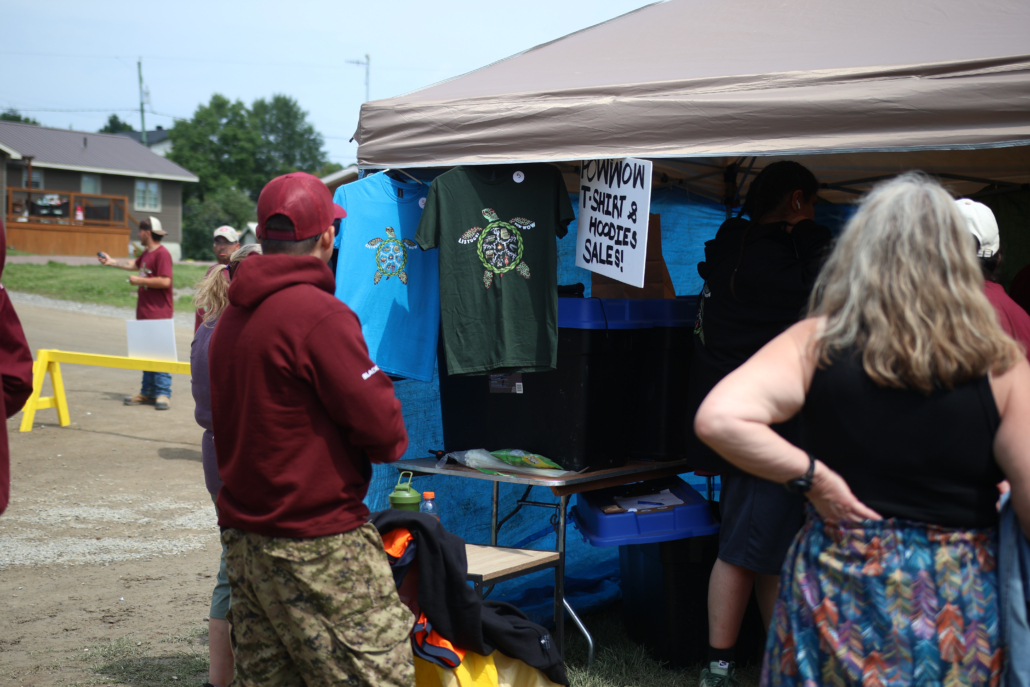
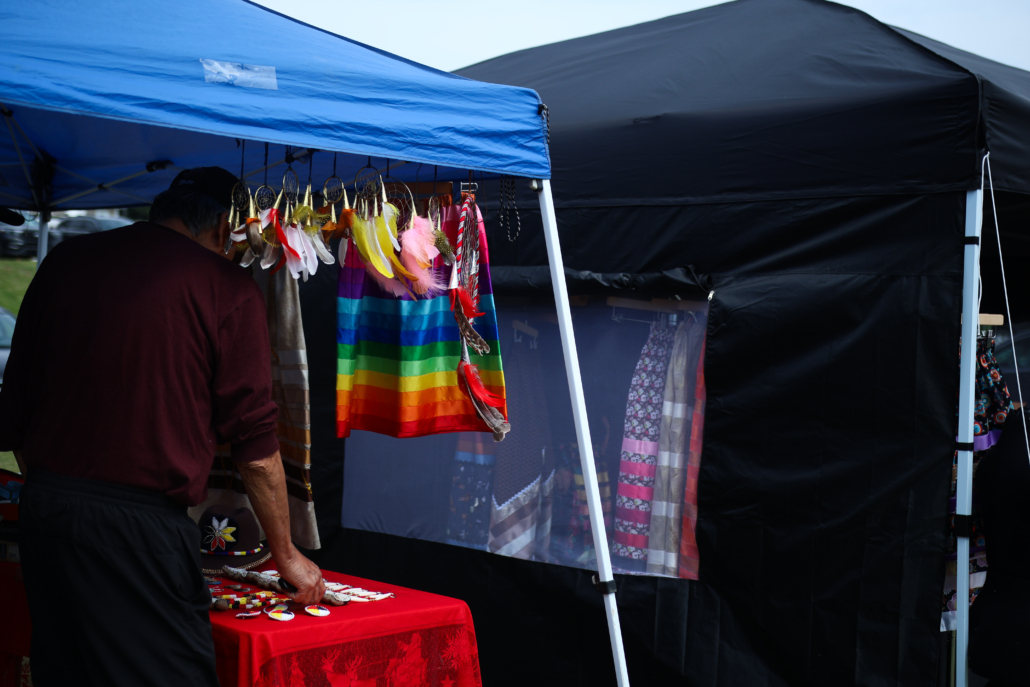
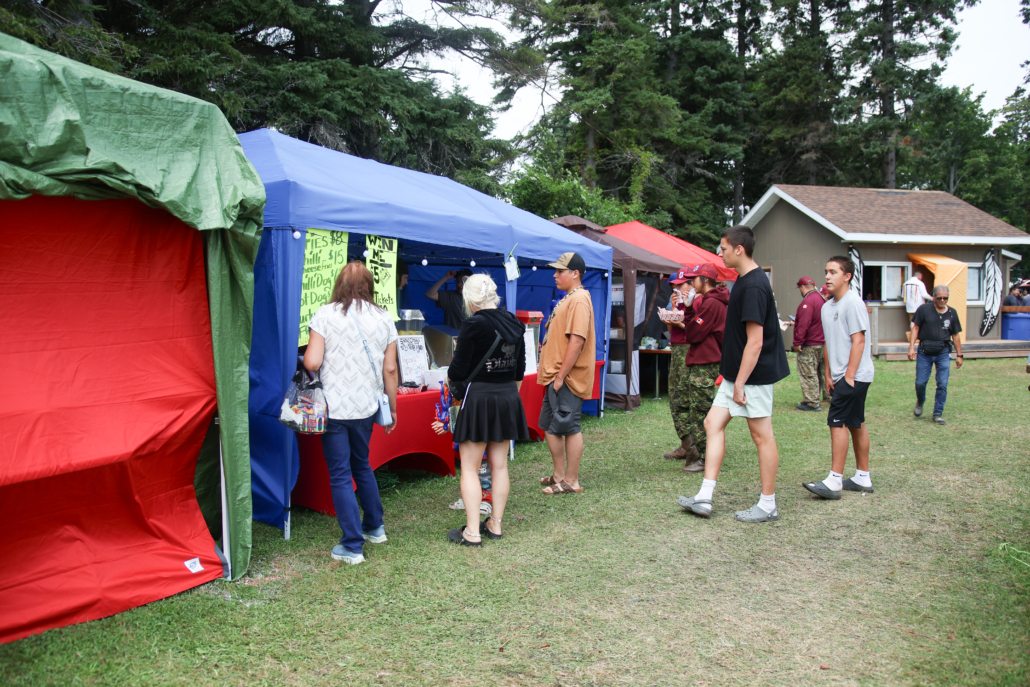
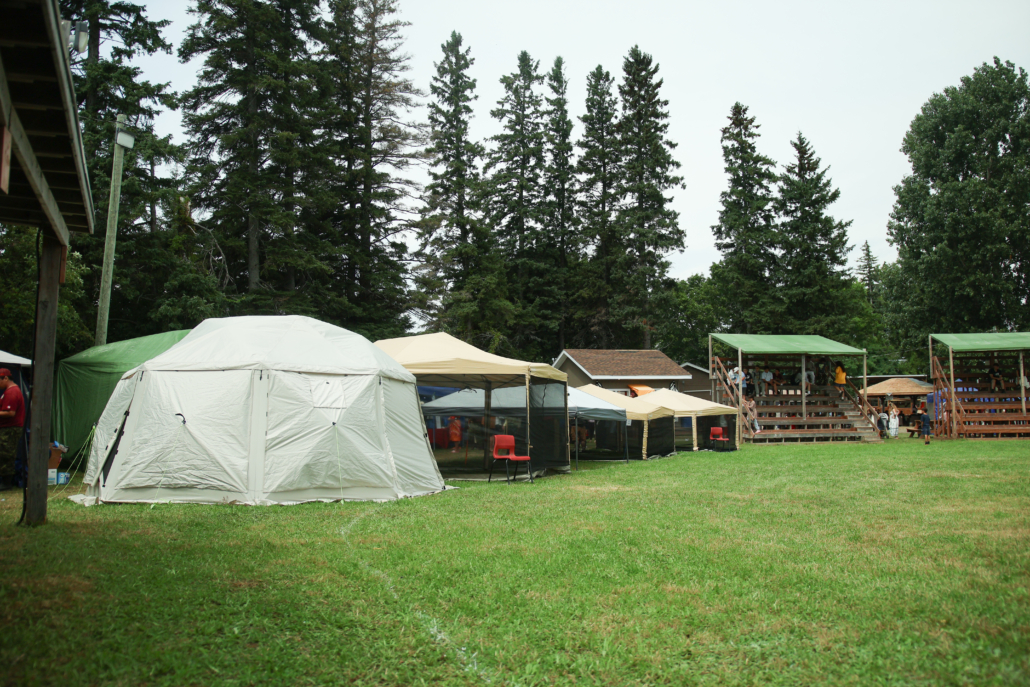

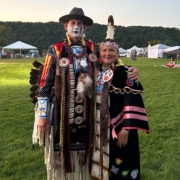
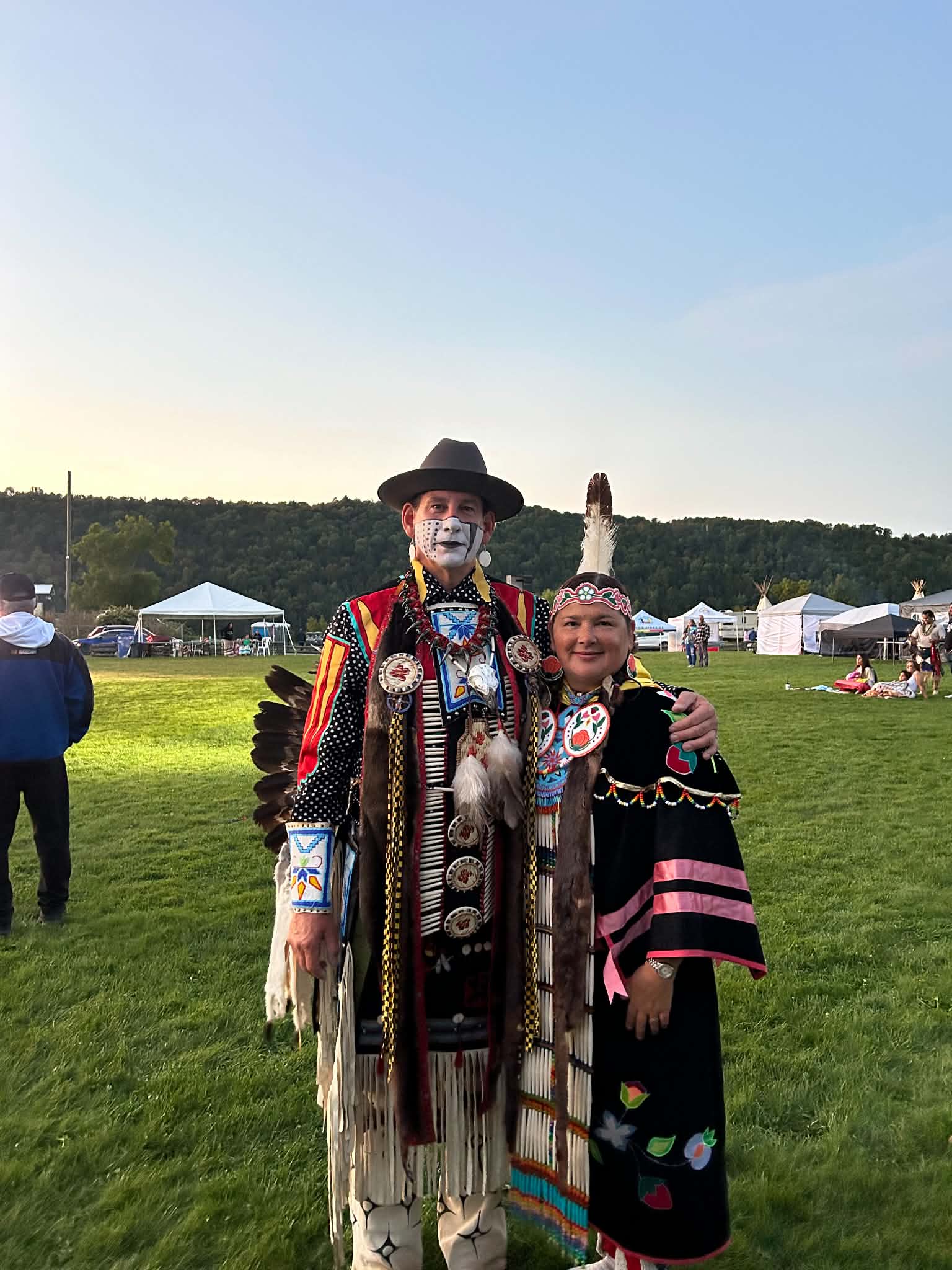
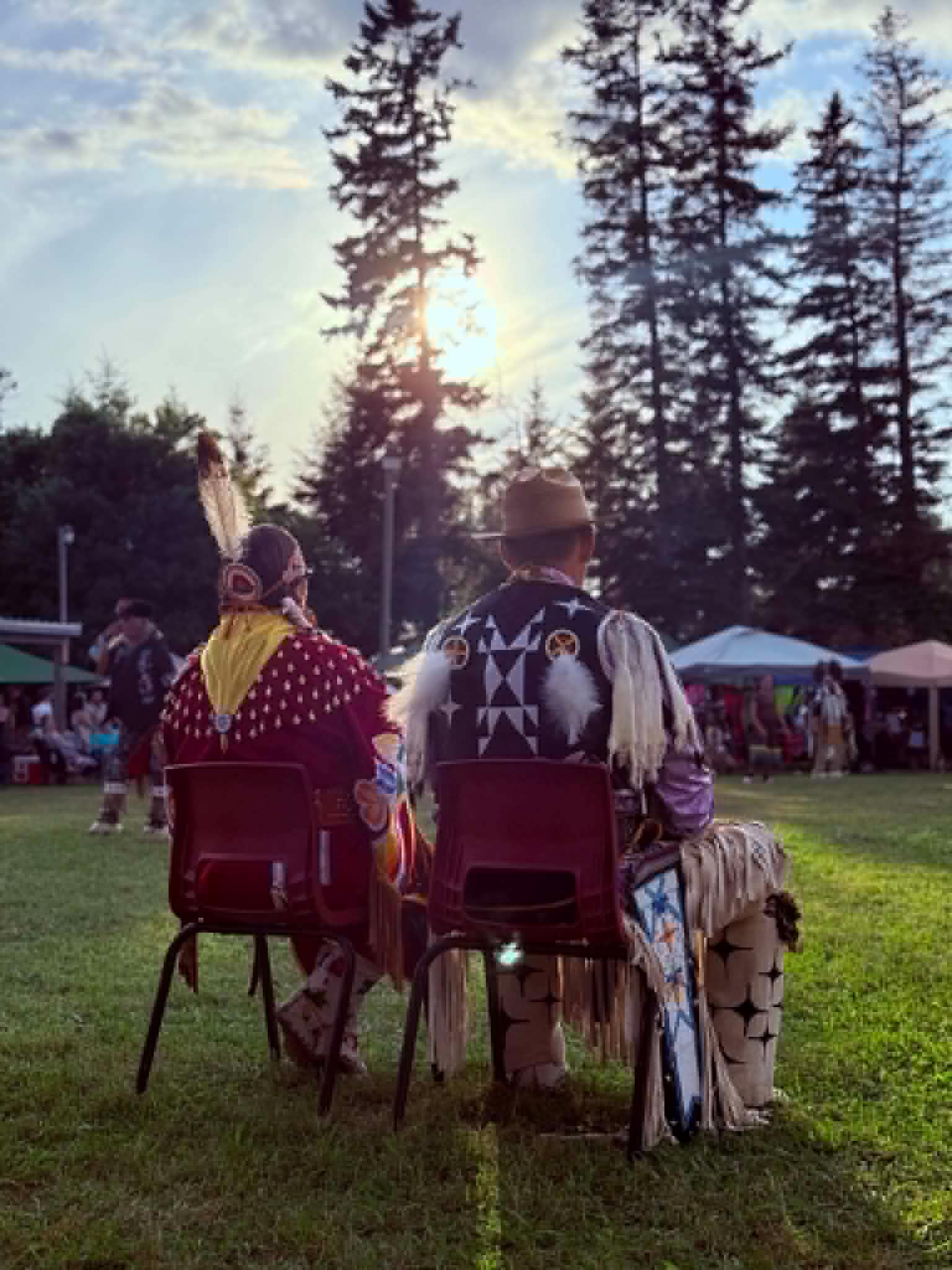
For Bobbi Madahbee and Derek Barnaby, dancing is more than a tradition. It is a lifelong journey of learning, sharing, and connecting with culture. This year, the couple took on the title of Golden Age Head Dancers together at Listuguj’s 34th Annual Powwow, marking another chapter in their decades of dancing.
Bobbbi Madahbee, originally from Aundeck Omni Kaning, First Nation has been a Women’s Traditional Dancer for the past twenty-nine years. As a child, she regularly attended powwows and would dance for fun, often following her cousin around the grounds. It was later, in her early twenties, when she entered the Miss Indian World Pageant that Mahdabee received her first full regalia and began dancing more seriously.
Through the guidance of her cousin and mentor, Dawn Madahbee, Bobbi learned the fundamentals of traditional dancing. “She not only taught me to dance, but she taught me about the teachings in dancing, the protocols. It’s not just dancing. There’s teachings that go along with it.” Throughout her dancing career, she has remained a Women’s Traditional dancer. Being asked to be head dancer of the Golden Age category is an honor she accepts with humility. “I was a little taken aback when I was asked to be Golden Age, not realizing how old you’re getting,” she said with a laugh. “But I’m very honored to accept that role. It’s a duty I take very seriously as a humble position in the powwow.”
Derek Barnaby from Listuguj has been a men’s Traditional Dancer for the past thirty-six years, beginning his journey when he was twenty-one. Over the years, he has learned from dancers and teachers throughout North America, including his first mentor, Irving Hill. Barnaby explored other styles of dance, including hoop dancing. His interest in hoop dancing lasted for several years, as he learned not only the movements but also the stories and teachings connected to the style of dance. Eventually, he returned to his true passion for Men’s Traditional dance and continued with it throughout his dancing career.
At fifty-five, Barnaby now finds himself among the longest-running dancers in the community. “Thirty-six years of dancing, and now you’re in a category where you’re with all these other men who have been dancing forever. I’ve never stopped. I’ve maintained it. I’ve always been interested in more stories and more history, just understanding every part about it.”
For Barnaby, becoming a Golden Age dancer is not simply about how long he has danced. It is about what comes with those years of experience: knowledge, responsibility, and the opportunity to help others. “I’m not an elder, but I have knowledge. The way I was taught was about protocol, about following the guidelines, making sure that you’re doing things
respectfully, and passing that knowledge on.” That responsibility for sharing knowledge is something both dancers take seriously, particularly when it comes to youth.
Madahbee believes sharing teachings is one of the ways traditions remain alive. Through her work in education, she has opportunities to share with the youth. “That’s how we still have our teachings—it’s all about sharing. That’s the way we keep it alive and keep the pride and share and hope to build youth pride and identity and become a part of the circle.
Barnaby acknowledges the importance of cultural revitalization. He speaks about the generations in which language, culture, traditions, values, and family structures were restricted or taken away. Over the past thirty-six years, his journey has involved re-learning ceremonies and traditional practices. “Now we’re starting to regrow it. You see it a lot with the younger generation that are picking up dance.” Barnaby shares that cultural knowledge should be shared freely with those who want to learn. “There’s no price tag on it. If someone really wants to do it, and they come over and ask me to share something, I’m more than happy and more than proud to share that experience.”
Being named Golden Age Head Dancers together makes this year’s powwow particularly meaningful. Barnaby shares his passion for this momentous occasion for their family: “It’s really awesome that we get to do this as a family. Our kids are here as well. It’s Bobbi’s first time actually being a head dancer. At a Golden Age, she’s gone through so many things, and I’ve gone through so many things. We’ve gone through so many things together for us to be here sharing that experience, being in front of the community, in front of our families and friends it’s incredible.” Madahbee adds, “It’s an honor. I’ve earned my stripes.”
Madahbee hopes their family’s example will encourage others to find their own place within the Powwow circle. “Another thing is to hopefully inspire others to want to come out, to join the circle, and to want to dance and share.”
For Bobbi and Derek, the Golden Age role represents more than the decades they spent dancing. It represents the knowledge gathered along the way, the people who taught them, the family they have built around the powwow, and the responsibility to ensure those teachings continue. As they step into this role, they do so not only as experienced dancers, but as teachers, parents, mentors, and members of the community, aiming to help carry traditions and teachings forward for future generations.
By: Ivy Grenier
Alaqsite’w Gitpu School (AGS) offers a variety of cultural and traditional courses, and one of these programs is a land-based course called, Outdoor Education. Outdoor Education is for students grades 5-8, where they explore Mi’gma’gi territory, and develop relationships with the land. They take part in hands-on learning such as hunting, fishing, snowshoeing, maple tapping, fire making, food sovereignty, and more. The community of Listuguj often associate Outdoor Education with the late Jonathan “Spanky” Barnaby, but since his passing, Outdoor Education Assistant, Travis Barnaby is carrying on his legacy by leading the program and sharing teachings with the students.
For the past five years, randomly selected students from grade 6 to grade 8 take part in a “Moose Camp”. This year’s camp was held from Oct 27-29 at a chalet in Kedgwick, NB. The students, teachers and chaperones would hunt and scout the land for moose in the mornings and in the early evenings. This year the group saw a total of 42 moose, and 3 deer, and successfully brought one moose back to the community.
The moose is brought back to the Outdoor Education workshop at AGS, where it is stored in the cold room and skinned. After it is skinned, it is butchered by the students and cooked. Hamburgers, steaks, and sausages are made with the moose. Once the process is done, the bones of the moose are then brought to the woods for other animals to feed. Since one moose can feed many people, over the past years, Outdoor Education have donated moose meat to those in need in the community, and even to an organization in Montreal. The students take pride in contributing their moose and supporting their community.
The Moose Camp offers valuable knowledge and experience for youth in Listuguj. The students recognize the hard work that goes into hunting and providing food for the community. They are involved in the process from the start to finish and get to witness the importance of tradition firsthand. Regarding the Moose Camp and land-based learning, Travis Barnaby said, “I want to keep it as traditional as possible. There is a lot of stuff that has been passed down to me by my family.”
Moose Camp 2025 attendees:
Teachers/Chaperones:
Travis Barnaby
Erwin Molley
Davery Mitchell
Jennifer Morrison
Crystal Moffat
Students:
Tessa Barnaby
Kiana Anderson-Isaac
Tucker Barnaby
Knoxx Vicaire
Mckenna Metallic
Donna Isaac Brisk
Buzz Doucette
Elijah Isaac
By Ann Marie Jacques
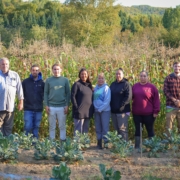
Every season, the The Listuguj Garden Staff devote their time in providing the community with fresh, harvested produce. Their commitment and dedication to the community does not go unnoticed, and the staff go above and beyond – rain or shine – to promote food sovereignty and healthy living in Listuguj.
Thank you to the team:
After the salmon raids of 1981, regulation and self-governance was needed in the community, therefore the Listuguj Rangers department was established in 1994. Since then, they have gone on to be an integral part of Listuguj: helping protect the Mi’gmaw’s fishing and hunting rights, assisting with Public Security and educating the public on the importance of conservation. As of today, the Listuguj Rangers have approximately 30 members on their team, six boats and 5 fully serviced trucks.
Don Leo Arsenault has an impressive and extensive work background. He was a US Marine in the 90’s, he worked for the Listuguj Police Department, he was a commercial fisherman, and has worked on and off as a Ranger in the community since 1998. Two years ago, he took on the role as Chief Ranger. When it comes to his role, Arsenault said, “Seeking out this job, and coming back to work here, it’s all about being out in nature. Just going to patrol on the river, it’s not a job per-se, when you’re out there, you feel like what people would feel on vacation.”
The Listuguj Rangers protect the Restigouche River and cover the annual salmon fishing season in June/July, rock crab fishing, and seasonal lobster fishing in Carleton. They now monitor a new zone for lobster fishing within Miguasha. They are also responsible for patrolling up in the woods during the Fall hunting season. They work to ensure all laws and agreements that have been implemented in the community are abided by and respected.
They collaborate with Public Security in the community when needed and will help with roadblocks and other duties as they arise. They donate and distribute salmon and lobster and take part in a number of fundraising events in the community.
Receiving training for Search and Rescue duties when needed in the community is a possibility for the future. If an incident were to happen in the river, or in the woods, the Listuguj Rangers would be called to assist. Search and Rescue training would include the use of GPS and grid squares, and ensuring all surrounding areas are covered.
In June, 20 Rangers graduated from College d’Alma with a diploma in Wildlife Protection. This program provides in-depth training regarding wildlife and their habitats. Having official certification from the government opens more funding opportunities for the department.
Since 1994, the Listuguj Rangers have been managed under their own government, and have worked harmoniously with the community and surrounding areas. They continue to work to preserve, manage and conserve all natural resources and the right to fish and hunt.
By Ann Marie Jacques
 Formerly titled the Nujignua'tegeg - The Wi'gatign is a multi media community newsletter for Listuguj First Nation.
Find our printed issues within the community. We print once a month.