Cultural Reclamation Workshops with Hannah Vicaire

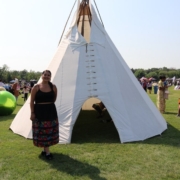
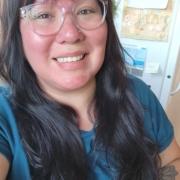
Listuguj’s Hannah Vicaire is the Community Engagement and Cultural Officer with the Legacy of Hope Foundation (LHF) in Ottawa. She has been involved with this organization since 2022, and travels to different communities in Canada with her colleague Tara Devlin. On their travels, they offer a number of cultural and traditional workshops such as ribbon skirt making and drum making. These workshops aid in preserving traditional knowledge and practices. Vicaire also offers free financial literacy and attends pow wows and conferences giving more insight on the LHF.

A little about the Legacy of Hope Foundation, from their website:

We are a national Indigenous charitable organization with the mandate to educate and create awareness and understanding about the Residential School System, Including the intergenerational impacts such as the removal of generations of Indigenous children from their families, including the Sixties Scoop, the post traumatic stress disorders that many First Nations, Inuit, and Metis continue to experience, all while trying to address racism, foster empathy and understanding and inspire action to improve the situations of Indigenous People today. The LHF supports the ongoing healing process of Residential School Survivors, and their families and seeks their input on projects that honour them. 

Vicaire became passionate about traditional crafts at a young age, and started sewing with her grandmother, Theresa Wilmot. When her grandmother passed away, she lost this passion, until a year or two later when she worked with the Listuguj Pow Wow Committee as a student worker.  It was then she realized she wanted to get back to pursuing cultural practices.

When it comes to Vicaire’s knowledge and craft, she said, “An elder from Toronto came to Ottawa and she showed me the basics of how to make a ribbon skirt, then after that I started to watch more videos and started to teach myself more stuff about it.” Since working with the LHF, Vicaire has dabbled in making ribbon skirts, medicine bags, drums, bracelets, keychains, moccasins, mittens, vests, and feather holders.

There is a significant importance of ribbon skirts and preserving traditions. Vicaire mentioned how much of a positive impact they can have, and how they allow connection and empowerment. Vicaire said, “Seeing that the skirts make a positive impact whether they’re buying it, or making it shows me how important they are. They create a space for non-indigenous people to be curious and ask questions, which lead to bigger conversations about Indigenous people.”

Vicaire plans on offering more workshops and travelling to different communities in the future. She continues to broaden her skills and revitalize traditions in her everyday life.

By Ann Marie Jacques

Local Artist Spotlight – Felicia Mitchell

Felicia Mitchell was born and raised here in the community of Listuguj. She became a single mother at the age of 19 but that didn’t stop her from going on to obtain a highly impressive education. She graduated from community college in Miramichi, NB, obtaining a certificate in Human Services. After this, she obtained a diploma in Business Administration, and as of this Spring she graduated with a Bachelor of Business Administration degree. She is currently the Business Development Advisor for the Natural Resources Directorate (Fisheries). While attending school and being a mother, she developed a passion for beading.

When Mitchell was in Miramichi for Community College, she had three teachers who impacted her immensely, and to show her gratitude, she asked her cousin to teach her how to make a beaded dream catcher as a gift to her teachers.  When Mitchell presented them with their beaded dream catchers, something just clicked. Mitchell said, “I witnessed their reactions with joy and happiness and showed their gratitude with big hugs. This was the feeling that I wanted to chase, knowing how something I made with my own hands could influence people, and just like that, BeadworkbyFelicia was accidentally born.”

Since Mitchell attended school in Campbellton, and not in Listuguj where culture classes were readily available, it wasn’t until she was in her early 20’s that she learned how to bead. She attended craft nights in the community with Lita Isaac and started with beaded dreamcatchers. After some time, she became skilled with quills, leather and various types of beads. Mitchell eventually developed her signature style of earring, called “BeadworkbyFelicia flowers” which consists of shiny glass gems and beads. This style is very intricate and simply one-of-a-kind. The stand-out flowers come in three different sizes and can also be put on badge reels.

Mitchell has several achievements when it comes to her craft. Her beadwork has been sent to all 10 provinces and three territories in Canada, as well as 46 out of the 50 states in America. Mitchell said, “My long-term goal is to reach all 50 states, so if you know anyone in Missouri, Alabama, West Virginia, or Delaware, send them my way!” Her dedicated Instagram page has over 6,000 followers, and her Facebook page has 6,000 likes and 7,000 followers. Mitchell has also collaborated with Indigenous company, Manitobah Mukluks, resulting in six custom pairs of mukluks with her signature beaded gem flowers.

Mitchell continues to bead and finds her inspiration in the beauty of the world. She will have her work available at the upcoming Autumn Festival and Craft Fair in the community on October 5th from 10AM to 5PM at the Listuguj Community Development Center (Bingo Hall.) You can follow BeadworkbyFelicia on Facebook to see available inventory or if she is accepting commissioned orders.

By Ann Marie Jacques

Local Business Spotlight – Wasueg 3D Printing

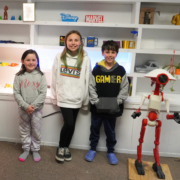
Wasueg 3D Printing was established roughly two years ago. Interest in this business began shortly after 12-year-old Aliyah Wasueg Bernard received a 3D printer for her Birthday. Her siblings, 10-year-old Anthony Bernard Savoie and 8-year-old Ayanna Bernard Savoie, received 3D printers shortly after.

All three children attend Alaqsite’w Gitpu School (AGS) in Listuguj and developed a passion for 3D printing after enrolling in the school’s STEAM (Science, Technology, Arts, Engineering, and Math) program. Their dad, Gino Savoie, said, “If it weren’t for AGS, we probably would never have gotten into this.”

The business, Wasueg (meaning “flower” in Mi’gmaq), started with one printer and one roll of plastic. The family sold their creations solely on Facebook, and every penny made was reinvested into the business. Eventually, their home was filled with four 3D printers and printing materials that they needed to expand. They moved into their current location at 64 Water St. in Campbellton two months ago.

Wasueg 3D Printing creates various items and products, such as decorations and lamps. They also offer custom-made products, household item replacements, and more. Most of their products use Polylactic Acid, commonly known as PLA, for 3D printing. It is derived from corn and is 100% biodegradable. Regarding the material, Aliyah Bernard said, “If it breaks, you can put it in hot compost, garden, or in the ground, and then it will be gone.”

The children enjoy creating new products and experimenting with the 3D printers and materials. Anthony Bernard Savoie’s specialty is making gaming products, such as controllers and headphone stands. He said one of his favourite things about 3D printing is “Making big robots.”

Be sure to follow “Wasueg 3-D Printing” on Facebook for hours and available products. If you are looking for a custom item, stop into the shop on 64 Water St. or send them a Facebook message.

By Ann Marie Jacques

McGill Master’s Students Present Their Projects to Community

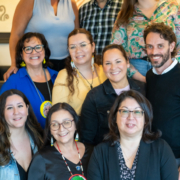
Our McGill Master of Arts, Education and Society cohort have presented their final projects to a committee comprised of education stakeholders, the Listuguj Council of Mi’gmaq Educators, and the Listuguj Education Directorate. They’re excited to bring their projects to life. Here’s a look at what they’ve envisioned!

More on the McGill MA Education & Society Program (Project Option)

A few years ago, when considering our next program offering, we explored different ways to build capacity in our community. We identified curriculum development as an area to work on in Education. We need to build a curriculum that supports our learning environment rooted in Mi’gmaw worldviews and values. To help with this goal, we selected the McGill MA Education & Society Program for its focus on teaching, learning and curriculum. This program will equip our educators with the knowledge to design and implement our curriculum, focusing on second language acquisition (Mi’gmaq).

They are tasked with critically investigating and responding to a problem, challenge, issue, opportunity, or need in our community’s schooling. Their projects should make a genuine contribution to our educational practices.

Student Project Abstracts:

Naomi Marchand

My project developed Land-Based Curriculum Objectives and Implementation Guide for Grade 1. My inspiration for this project is the Forest Kindergarten Program in Listuguj; it has been proven to be successful. My intention was to expand existing Forest Kindergarten objectives, specifically land-based learning for Grade 1. Extending the Forest Kindergarten program to Alaqsite’w Gitpu School (AGS) for the Grade 1’s will allow students to continue to develop and grow.

Carley Collin Wysote

The Social Emotional Learning (SEL) and Community Resurgence Toolkit for Listuguj N’nu students and families, fosters healthy relationships, identity, and academic success through engaging lessons in SEL, mindfulness, and community service. This toolkit will contribute to a thriving community and encourage growth within ourselves and as a whole. This resource is not only accessible to educators and families online but also a hard copy can be accessed by request. The toolkit inspires educators to

practice the activities provided as well as contribute to the toolkit by suggesting additional resources and lessons; conducive to the journey of reciprocal education.

Sarah Lauretta Arsenault

For my project, I will be creating an Early Years Cultural Resource. Starting with Fall, this resource follows the seasons throughout the academic year and the cultural teachings within that season. This resource serves as an introduction to culture-rich activities for both students and educators. Each season has three lesson plans with various on-the-land learning opportunities and teachings that are geared toward emergent learners (6 years and younger). This resource will be a valuable tool for enhancing the quality and relevance of education for Mi’gmaw learners.

Jarrett Francis

My project titled Journeying the 7 Mi’gmaq Worlds Through Waltes is a Teachers’ Guide that is designed for grade 3 to 5 students which will allow educators and students to explore and learn about the seven (7) Mi’gmaq worlds. This project will provide teachers a guide included with lessons and activities that utilizes a holistic, interdisciplinary approach which will foster an understanding and appreciation of Mi’gmaq knowledges and worldviews with meaningful cross-curricular and experiential learning of the seven (7) Mi’gmaq worlds represented through the traditional Waltes bowl and dice.

Tanya Wysote

My project is to design a school improvement plan that focuses on integrating an in-house traditional Elder as part of the Alaqsite’w Gitpu School curriculum to educate students and staff about First Nation ceremonies. An improvement plan helps schools navigate academics and behavioural issues both with students and staff, and it helps improve teaching quality to achieve better grades.

The primary objective of having an in-house traditional Elder in the school is to foster a sense of belonging among students and staff within the school and the community. Since not all Mi’gmaq teachers or students are familiar with these ceremonies, the in-house traditional Elder will guide them throughout the year on which ceremonies to perform and their significance.

Shelby Caplin

I want to Indigenize material that is currently being used in the classroom that is outdated and not diverse enough for our First Nation students. I will include different forms of literacy written by Indigenous authors. Our students will develop a strong sense of identity and take pride in themselves, their community and their schoolwork.

Karen Martin

Language revitalization efforts and immersion programming have become increasingly significant in Listuguj, and educators require resource tools and support to carry out the goals and objectives of educating in Mi’gmaw. The Mi’gmaw language is a verb-based language, and the shortage of verb conjugation resources presents a challenge for Mi’gmaw language teachers in the immersion classroom. Creating foundational material for learners and teachers is a key aspect of supporting educators in Mi’gmaw immersion. The development of a verb conjugation resource will support teachers and learners of all levels in their language acquisition development. The resource focuses on an intransitive verb, 2 transitive verbs and a reflexive verb. The process

started with one intransitive verb, as these are commonly used in novice level language learning and do not require a subject to be conjugated. Establishing the process, resources, and ethical considerations was the aim of this current project. To develop the verb resource and establish an ethically-sound vetting process, I worked with Taie’n Mise’l (Diane Mitchell) as my mentor and a group of first language speakers. We reviewed past, present, and future indicative tenses of different verbs during multiple two-hour gatherings to ensure verb. The initial focus was the identification of commonly used verbs amongst learners of the language, specifically through adult immersion program students, to establish the verbs that would be conjugated. Through this community engagement, we followed an ethically-sound vetting process that 3 validated verb accuracy. This intransitive verb conjugation development process serves as a foundation for further expansion.

Jennifer Wilmot

My Traditional Mi’gmaq Dance Project aims to introduce a curriculum that would

support our grade one teachers in the implementation of a culturally sound dance resource. Our Grade One students need to have daily dance teachings at an early age and to continue throughout their formative grade one year at AGS. By showcasing how our grade one class can learn their Mi’gmaq Dance, this curriculum will be the framework for other lessons that will secure in them their identity and their agency as ‘Nnu.

Claudia Gray

Gisigu’oguom will not only restore a sense of purpose, but it will instill that inner call to the ways of the past, just like our ancestors intended; much of what I intend to do. That said, this longhouse is the first step to creating a bigger Mi’gmaq purpose that will give all our children and adults a sense of spiritual connection and belonging. Belonging is key, as this lodge will hold more worth to the students at AGS than just a place to go to, as it will be a place to be part of and understand wholeheartedly the powerful connection to the community and all the resources it has to offer, filled with community members and Elders. I am creating a comprehensive visitor’s guide for Gisigu’guom, detailing its conceptualization and design.

Jean M. Isaac

My project is a Treaty Education Unit for grades 5 and 6. I will be using the Nova Scotia Curriculum as the base curriculum and it will focus on themes and issues that are important to our culture (identity, family, connection to the land). My goal is to allow our teachers at Alaqsite’w Gitpu School to use it in their classroom as part of their teaching of Mi’gmaq Treaty Rights.

The project that I created is “an extension of [my] personal, inward journey” (Kovach, 2021, p.137) of curating resources that reflect the two-eyed seeing approach. I gathered information through research that reflects the Mi’gmaq worldview, and it has led me to explore the Nova Scotia curriculum. Through my participation in the Professional Learning Committee and the Treaty Education Committee, I have gained a deeper understanding of Mi’gmaq history and culture. I have learned to question and rethink how we use the curriculum we use in our class and to consider what we want our students to learn and achieve. In this project, I have created a Treaty Education Guide for grades 5 and 6. The Treaty Education Guide is a cross-curricular initiative intended to weave treaty understanding across disciplines and subject areas. When teaching treaty education, it is essential to adopt an approach that incorporates Indigenous perspectives, encourages critical reflection, and fosters meaningful dialogue. These elements will contribute to a holistic and meaningful treaty education experiences. The goal of this project is for our students to have a greater understanding of who they are as a Mi’gmaq person.

Conclusion

We’d like to congratulate our students on completing their projects and the McGill Master of Arts, Education and Society program. Their in-community convocation is set to take place on May 25th.

We have so much to look forward to from our fellow community members. Their projects are sure to have a positive impact on our students’ learning. We are lucky to have these talented and hardworking people in our community.

By Listuguj Education Directorate

From Radio to Television

Justin Caldwell has been one of the voices behind Listuguj’s radio station CHRQ 106.9FM for the past 20+ years. He’s known for his Friday Night All Request Country Shows, the occasional Bingo, and creative commercial breaks, but did you know he also provides the English narration for APTN’s TV series, Gespe’gewa’gi: The Last Land?

Gespe’gewa’gi: The Last Land is a show produced by Rezolution Pictures. An Indigenous-owned film production company out of Montreal, QC that showcases Indigenous representation when it comes to film. The show focuses on Indigenous commercial fisheries, their traditions, and the hard work that comes along with this industry. Season one of the show highlights Listuguj’s Natural Resources, while season two focuses on other Mi’kmaq communities in Nova Scotia.

In season one, viewers get an in-depth look at Listuguj’s history and traditions when it comes to snow crab and shrimp fishing, salmon conservation, the raids of 1981, and more. Natural Resources Media Journalist Felix Atencio-Gonzales worked closely with Rezolution Pictures and APTN for this project. Atencio-Gonzales recommended that Caldwell would be a great choice for a narrator for the series, as he is a well-known voice in the community.

Gespe’gewa’gi: The Last Land also has a Mi’gmaq version available to stream. Elder Joe Wilmot offers the Mi’gmaq narration for these episodes. A number of Elders and community members also offer their voices in the Mi’gmaq episodes of the series.

Caldwell has narrated both seasons of the series thus far in English, and will be returning for season three, which is expected to air this Fall. Most of the recordings for the show are done in Montreal. Caldwell is provided with a rough cut of the filming, along with a script. He is honored to be part of such an informative show for the community of Listuguj. He said, “For fishers, you kind of know what’s going on, but you don’t see the day-to-day of everything that’s happening. You don’t see how stressful it can be, how rewarding it can be, and everything that goes into it. It’s impressive to see.”

All episodes of Gespe’gewa’gi: The Last Land can be found on the streaming service APTN Lumi for $4.99 per month, or you can catch episodes from time to time on APTN.

By Ann Marie Jacques

Gina’mu Studio – A Place to Play and Learn

Gina’mu Studio is a brand-new facility located in Campbellton, New Brunswick, offering before and after-school care and weekend programs. The weekend programs include playgroups, art workshops, and Mi’gmaq language classes for youth ages 5-11. “This project is a combination of all my passions, and needs that I see for the Mi’gmaq community,” said Amy Martin, owner of Gina’mu.

Martin is a Concordia University student, majoring in First Peoples Studies, with a minor in Human Rights Studies. She began teaching Mi’gmaq two years ago in Montreal and comes from a family of youth educators. Her sister, Karen Martin, is a Mi’gmaq Immersion teacher at Alaqsite’w Gitpu School. Amy Martin said she relies a lot on the community of Listuguj for their resources when it comes to teaching the Mi’gmaq language.

At Gina’mu Studio, Martin expressed the importance of acceptance and kindness. This facility is open to everyone and is a safe place to play and learn social skills. “We’re here to make friends, and teach the language,” said Martin.

Martin offers a before and after-school program on weekdays from February to June, picking back up in September. It will run in the mornings from 6:45 AM to 8:45 AM, and in the afternoon from 2:30 PM to 5:00 PM. The before-school care is $75, the after-school care is $50 and if you’d like both services, it is $100.  Weekend programs consist of a Mi’gmaq language class from 1-2 PM, and an art and play workshop from 2-3:30 PM. These programs run for $10 each. There are no long-term commitments for these programs. Schedules of activities will be released ahead of time on Gina’mu Studio’s Facebook page.

Gina’mu Studio is located at 156C Water St. in Campbellton. If you want to register your child in one of these programs or would like more information, you can find Gina’mu After-School on Facebook, or email ginamulearningcenter@gmail.com.

By Ann Marie Jacques

Local Artist Spotlight – Miranda Barnaby

Miranda Barnaby’s love for beading started at a young age. When she was in middle school, she looked forward to class with Claudia Gray every week. In high school, she spent many lunch breaks beading and learning with Lita Isaac. Her eagerness to learn eventually led to a passion for beading. She was gifted a pair of beaded earrings and beading supplies from her aunt, and this inspired her to practice making earrings and dreamcatchers, and the rest is history.

Over the years, Barnaby developed her own personal style when it comes to her creations. Her work is very vibrant and intricate with a bohemian flare. She uses birch bark, porcupine quills, and fox or rabbit fur for her hand-sewn poms-poms. As of recently, Barnaby has been crafting beautiful genuine leather purses with removable pom earrings.

With over 6200 followers on social media, her work has evolved significantly over the past six years. Her earrings have been modeled in a fashion show in Edmonton, Alberta, and most notably featured in Sephora’s Native Women’s Association of Canada on Indigenous Beauty.

Barnaby’s work can be found on the Facebook page, “Beadwork/Dreamcatchers by Miranda.” Here you will find what pieces are available for purchase, and information on custom items.

Barnaby’s creativity is unmatched, and she states she does not look online for inspiration, but the designs come naturally to her. “I’m so excited for what the future holds. I don’t think I could ever stop being creative, it’s in my blood,” said Barnaby.

By Ann Marie Jacques

Local Author Spotlight – Emily Angel Isaac Johnson

Emily Angel Isaac Johnson is from right here in Listuguj, but grew up in the Fredericton, New Brunswick area. She attended the New Brunswick College of Craft and Design and obtained a diploma in Wabanaki Visual Arts. She is currently working on becoming a certified doula and is planning on going back to school for a degree in design and plans on writing more books on Indigenous teachings.

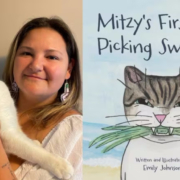
Johnson created the book, Mitzy’s First Time Picking Sweetgrass after a class assignment for an oral tradition course. She created the watercolor images and script. Johnson said, “I got the idea by brainstorming my favourite things to do traditionally. Sweetgrass picking has always been a favourite! My cat Mitzy is very adventurous, and I figured why not make her the main character?”

This book is a great tool to introduce these kinds of teachings to children who may not be familiar with sweetgrass picking. Here is a summary of the book provided by Johnson:

Mitzy the cat is invited by her mom to go sweetgrass picking for the very first time! As her mom passes the important Indigenous teaching down to the next generation, Mitzy learns that this beautiful plant is a traditional medicine that is used for ceremonies, healing, and art.

Mitzy’s First Time Picking Sweetgrass is available on Monster House Publishing’s website. Order your copy today!

By Ann Marie Jacques

Tanner Isaac – Entertaining and Educating Today’s Youth

Listuguj’s Tanner Isaac is no stranger when it comes to the media and has a lot of experience with it at an educational level, and a personal level.   Isaac’s family has been in the media for over a decade, since Isaac’s brother, Chris Metallic went missing in November 2012 while attending Mount Alison University in Sackville, New Brunswick. Isaac graduated from Algonquin College in Ottawa for TV Broadcasting. He was employed at the Listuguj Mi’gmaq Government’s Communication department as a summer student, producing videos and articles for the Wi’gatign. He worked for APTN’s radio station 95.9 Elmnt FM in Ottawa. He has an impressive social media following with 31.0K followers on TikTok. Most recently, Isaac was a recipient of an Indigenous Journalist Fellowship with CJF and CBC, where he was sent to work with CBC Indigenous in Winnipeg for one month as an Associate Producer and Journalist.

Over the years, Isaac expressed his dissatisfaction with the media when it comes to twisting words for his missing brother’s case. When he applied for the fellowship, he spoke about his brother a lot. He stated a lot of information that went out to the public was not accurate. Some sources did not get the correct information or permission which caused his family great hardship. Originally when applying for the fellowship, Isaac expressed his intention of covering missing Indigenous person cases. Once he was accepted for the fellowship, he realized he had become a little more sensitive to these topics. Isaac said, “It makes me emotional to relive it with other families.” He decided to go in a new direction and cover the Indigenous entertainment industry.

“I’m trying to look into what is pulling our generation in the media, what attracts them. TikTok is a great start, and I did have a presence on TikTok before. I never thought making TikToks for fun would get me a job at CBC News,” said Isaac. Right away CBC Indigenous recognized that Isaac was a natural in front of the camera, and he was a great spokesperson for younger generations.

When Isaac started with CBC Indigenous in Winnipeg, it was during elections for the premiere of Manitoba. Wab Kinew was voted in as the first First Nation Premiere of the province at this time. It was a very monumental and hectic start with CBC Indigenous, but Isaac learned a lot from the experience. Going in, he wasn’t familiar with Indigenous politics, and CBC used this to their advantage in making relatable videos for young generations. Isaac incorporates humour in a lot of his videos but also provides facts and education on topics that the youth might not be familiar with.

A TikTok page had been in the works at CBC Indigenous for quite some time, but when Isaac arrived, this was a perfect opportunity to create an account. CBC Indigenous’s TikTok page consists of several Indigenous journalists from across the country sharing all kinds of Indigenous stories and topics, ranging from inside the AFN (Assembly of First Nations) in Ottawa, to a story about a “rez goat” named Bruce from Beaver Lake Cree Nation in Alberta. Isaac played a major part in accumulating followers and working with the journalists on trends, and tips and tricks when it comes to video editing on TikTok.

Once Isaac’s fellowship in Winnipeg was over, he continued working for CBC News in Ottawa. At this time, the company sent him to cover the AFN Elections, which Isaac refers to as his proudest moment.  At the AFN Elections, Isaac spoke with many politicians, councilors, and leadership across Canada, including former Interim National Chief, Joanna Bernard. Isaac also interviewed Listuguj’s Rosalie LaBillois. LaBillois is the Co-Chair of the AFN National Youth Council and spoke to Isaac about today’s youth becoming involved in politics. Isaac stated that he was inspired by LaBillois’s determination and mindset when it came to politics. There are several videos on CBC Indigenous’s TikTok page of Isaac covering the AFN Elections.

Isaac also spoke about his past collaboration and inspiration when it comes to Listuguj’s Nation Isaac. Nation is working as a journalist for CBC Quebec from right here in Listuguj. Isaac credited his interest in journalism to Nation after they worked together on an award-winning video, Mi’gwidelmag gnitjgamitj (Remembering Our Grandpa) about Nation’s grandfather and his experience of the 1981 raid in Listuguj.

Isaac was offered a permanent position with CBC in Winnipeg but declined the offer to move back to Listuguj. Ultimately, he would like to stay in the journalism/entertainment industry and could see himself with a future in politics. He laughed, and said, “I think I just like talking to people on a screen.” Isaac certainly made a name for himself whilst working for CBC and made several memorable videos.

Be sure to check out CBC Indigenous on TikTok to see Isaac’s videos, alongside many other talented Indigenous journalists.

By Ann Marie Jacques

City Natives Return to Perform in Listuguj After 10 Years

In 2014, hip-hop group, City Natives performed at the Listuguj Pow Wow, and this year, on January 20th, they were back to perform a free show at the Listuguj Community Development Center. City Natives member, Shelby Sappier said, “It’s always been love every time we come here. Mainly because we have a lot of close friends and family here. It’s just a good vibe all around.”

City Natives consist of three members, Shelby Sappier, Blake Francis, and Brandon Arnold. The group was formed in 2012 and has gained major success over the years. They are 16-time award winners, having won several Indigenous Music Awards, and in 2023, they were the recipients of Rap/Hip-Hop Recording of the Year – making City Natives the first Indigenous artist to do so. The group strives to produce music with catchy beats and relatable lyrics and to incorporate their language and culture.


2024 will be a big year for City Natives. On March 2nd, the group will be opening for rappers Ice Cube, and Xzibit, at the TD Station in Saint John, New Brunswick.  “All the hard work paid off. People are recognizing that we deserve to be on this bill. We’re rez kids from New Brunswick, and the biggest act is coming here, and we’re on that bill? It shows we’re on the right path,” said Sappier. The group is excited for this opportunity. Blake Francis said, “We’re on another level opening up for legends.”

The group will also be performing at The JUNO Awards on March 24th in Halifax, Nova Scotia. Sappier said, “The first step is getting in the door at the JUNOs, the next step is winning them.” Nominees for The JUNO Awards will be announced on February 6th, and there is a possibility City Natives may be nominated.

Both Sappier and Francis stated that when the group first started, there were no East Coast Indigenous artists doing what they were doing at the time. The group is proud to have helped pave the way for others and wants to have an impact on the next generation. Francis said, “I just do what I do because I was once an Indigenous child who had no influence. As we excelled, I see Indigenous children looking up to us.”

In 2023, City Natives had 90,000 streams on Spotify. Sappier and Francis say they are looking to set the bar higher and continue giving the fans what they want. The group is grateful for their fans over the years and those who continue to support them.

Check out City Native’s newest album, “Still Chief’n” on all streaming platforms, and be sure to tune in to their performance at The JUNO Awards on March 24th.

By Ann Marie Jacques