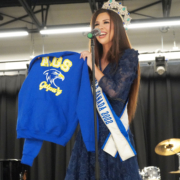
Canada’s First Indigenous Miss World Canada – Emma Morrison

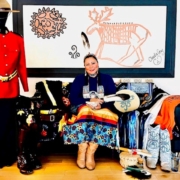
Emma Morrison is a member of Chapleau Cree First Nation, outside of Timmins, Ontario.  She grew up very connected to her culture and spent most of her time outdoors: hunting, fishing, and playing sports. In 2017, Morrison received a message via Facebook from a local pageant representative asking if she’d be willing to give pageantry a try and represent her town of Chapleau. She was skeptical but agreed and ultimately went on to be the first-ever Indigenous woman to win Miss World Canada in 2022.

Before competing in the Miss World Canada pageant, she competed in other pageants. and claimed the titles of Miss Northern Ontario and Miss Teenage Canada. There is a lot of hard work that comes with competing in pageants. They require a lot of training and dedication and are physically and mentally demanding on competitors. Even during vigorous training, Morrison always stays humble and grounded.  

In November 2022, Miss World Canada was held in Toronto, Ontario. When Morrison was crowned, she said it was a surreal experience. “I had a little piece of sage on me, I was having a little prayer backstage by myself amongst all the chaos. I remember thinking, ‘Okay creator, whatever you have in store for me, I surrender to that 100%,” she said.  When she got on stage, she was given an Indigenous issue question from the panel, and at that point, she felt it was truly meant to be. Morrison will never forget what it felt like to win and have her family cheering her on from the front row.

Morrison now has the privilege of visiting multiple Indigenous communities throughout Canada. She does motivational speeches and meets with community members promoting self-acceptance and gaining confidence. She joked that in every community she visits she always ends up with a “new cousin.” Even though she comes from a small town, she has worked hard for her accomplishments and is a good example for young people that anything can happen if you set your mind to it.

Morrison will be going on to compete in the 72nd Miss World Festival in December 2024. She said, “I’m really looking forward to this because, in 72 years, there has never been an Indigenous Canadian woman representing Canada.” One thing she is looking forward to about Miss World is that the festival holds a “Dancing of the World” category, where delegates can showcase a dance from their culture. Morrison plans on dancing in Fancy Shawl Regalia. There is a “Beauty with a Purpose” portion of the festival as well where delegates have a project developed in their communities that provides change and hope. Her project is “Reconnecting through Ribbon Skirts” where she creates ribbon skirts for Indigenous women and two-spirit people, so they can feel connected to their culture.

During her trip to Listuguj, she visited several places and met with many community members. She spent a lot of time with our youth visiting Alaqsite’w Gitpu School, the Outdoor Kindergarten class, and Sugarloaf Senior High School in Campbellton. She attended Eel River Bar’s Annual Pride Celebration. She went salmon fishing, attended a belt-making workshop with Jamie Metallic, and was taken around the community to see the beautiful sights. Morrison stated she thoroughly enjoyed her time in the community. She also experienced salmon fishing using a net for the first time, as opposed to using a fishing rod that she is normally used to. “The people have been so welcoming. Everyone has been so kind, and they have gone out of their way to make me feel so welcome in the community. The kindness is beaming from Listuguj. I’ll be back!” she said.

You can find Emma Morrison on Facebook or Instagram, where she posts regular updates about her travels, her pageantry, and her positive outlook on life.

By Ann Marie Jacques
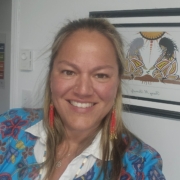
Donna Metallic – Helping Individuals Navigate the Criminal Justice System

“The Native Courtworkers” program is a part of The Native Para-Judicial Services of Quebec that offers support services to help Indigenous people involved in the criminal justice system. These could be victims, witnesses, and accused in both the Adult and Juvenile courts. This program is to ensure Indigenous clientele receive equal, fair, and culturally appropriate treatment in all legal processes. 

In the Mi’gmaq communities in Quebec, there are two Courtworkers and Gladue Writers: Donna Metallic in Listuguj, and Tina Condo-Martin in Gesgapegiag.

Metallic started this role in October 2016.  She meets with community members and assists them in navigating the justice system. This could be several things, such as helping to obtain a lawyer, assisting them in the courtroom, helping clients undergo the Youth Protection process, or writing a Gladue report.

Gradue reports were developed in 1999 and are used only for Indigenous people. They were created to review historical, systemic, and individual factors that may have been contributors to an individual’s legal situation. It could include personal and/or family history, intergenerational traumas, criminal histories, and more. They are confidential, and not meant to be disclosed in a courtroom setting. They must be ordered by the court and may be requested for offenses in particular under the Criminal Code that lead to a prison sentence. “The courts want to see the whole dynamic of this individual. Where they’ve been, what they’ve suffered, any traumas or factors related to the crimes they’re being sentenced for,” said Metallic.

Courtworkers do not give legal advice, but they are available to help to understand legal processes. A lot of individuals do not know their rights or what resources are available. Metallic said, “We’re like a mentor for individuals and help them understand the Criminal Justice System and any other legal court system.” The nearest courthouse in our area is in New Carlisle, and for young offenders, Carleton Court is closest. Metallic will accompany individuals to their court dates and will offer them emotional support and guidance.

To get in contact with Donna Metallic, call 418-788-5455, or visit her office at 21 Riverside West, 2nd floor.

By Ann Marie Jacques

Chief’s Corner with Chief Scott Martin – June 2023

On June 11th, we honored and acknowledged the events that took place in 1981 that strengthened our community. It was great to see so many people out for our Migwite’tm 81 Commemoration event. Thank you to all the sponsors and volunteers who made this meaningful event possible.

On behalf of the Listuguj Mi’gmaq Government, congratulations to our Listuguj graduates. Whether you graduated high school, grade 8, or Nursery, we are very proud of your accomplishments, and can’t wait to see what is in store for the future.

I look forward to all upcoming events in the community this Summer.

2nd Dan Black Belt – Joey Caplin

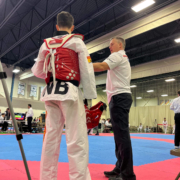
Listuguj’s Joey Caplin is currently in grade 10 at Sugarloaf Senior High School, and will be going into Grade 11 in the Fall. His grandmother put him in Taekwondo when he was six years old because he was getting bullied. “It wasn’t for the sake of just being able to go fight someone, it was for inner confidence and discipline,” said Caplin.

Caplin earned his black belt in Taekwondo when he was 12 years old. Earlier this year with focus and persistence, he achieved his Second Dan black belt. He will be able to earn his Third Dan black belt in two years’ time when he is in Grade 12. In Taekwondo, the highest level of belt you can achieve is the 9th Dan black belt, which takes roughly a lifetime of years to attain.

Caplin’s favourite thing about Taekwondo is the traveling that comes along with competing. He loves the environment and meeting new people. In traveling through Canada, he has also had the opportunity to meet famous athletes.

He trains in Atholville, NB at Patrick Soucy Taekwondo. He would like to add that his grandfather, Frank Caplin has been driving him to Taekwondo since day one. Caplin said, “That’s a lot of dedication that he’s done my whole life really. He’s getting old, but he still always drives me, he cares about me a lot.”

The Taekwondo competition season has come to an end, but he will continue training during the summer months and will work to achieve his Third Dan black belt.

By Ann Marie Jacques

Migwite’tm 2023

Chief Martin
Migwite’tm 2023 Speech
June 11, 2023


It’s inspiring to see Listuguj come together to honor our people who were involved in the 1981 raid. This year as the previous years, the commemoration carries a meaningful name: “Today we honor the day we became stronger.” When the rights of our Mi’gmaw Nation were challenged, our people stood together to defend our fishing rights. They did this for all our people and our future generations.

In 1981, when our rights were challenged by the government, our people stood together once again to defend our fishing rights. As we stood for our rights, we also stood together for the rights of our future generations. Strength grew strong within our community on June 11, 1981.  Not only did we receive support from our Canadian First Nations communities we also received support from our first nation communities within the US.

We truly became one Nation.

The 81 raid was another test of character for our nation, now we move forward and celebrate with strength, affirmation, and assertiveness for our people. We will never surrender our inherited rights as first nations for ourselves and our future generations. We will continue to fish by respecting and honoring Plamu as taught by our ancestors.

I would like to thank everyone who made this Migwite’tm commemoration possible: the organizers, the walkers and the sponsors.

Thank you for everyone’s’ help and support in making our community stronger.


Wela’lin

We Remember
In light of today, we gather to remember,
The scars that have lightened over time
Still, the stories remain vivid and true.
Despite the healing and fortuity of growth
We ruminate the actions we’ve had to subdue.
We try to fathom this sacred feeling
That flows through our blood,
Like the salmon that run the streams.
An unexplainable mystery that can’t be seen.
But we remember how,
On June 11, 1981,
The people were made aware.
By the juddering sounds of helicopters above
And wailing speed boats splashing through the Restigouche river; stunned
Our people while the Surete began to demand and shove.
They came in the night without any sight
They came with their weapon’s at Listuguj First Nation
They came for destruction with strict instruction…
To cut the fishing nets
Seize the salmon with many threats,
Violate the Treaty of Peace and Friendship.
They slipped through history
And attempted to rip
The essence of our being they thought could shatter,
But what they held really didn’t matter.
A human shield of residents were forming
Because they would not allow the intruders to yield our right
And stood in their way
Despite the government’s warning
Through the thick of it we remember,
The time it took to fix our nets,
Anticipating the moment to challenge
their laws once more and renounce
We would resist and do what was true…and fight!
To prove salvation is always the goal rather than unhinge
With all our might.
Today I ask that you remember,
Through the rivers and streams
The salmon symbolize our right to the land
A regalia of life and hope,
For First Nation people to cope.
We are the key,
To preserving nature’s beauty,
For all to enjoy and see,
A profound emotional experience
In a world that’s sustainable through coexistence
Truly.
So today we honor,
And celebrate
The day we got stronger!

By: Carley Wysote

Indigenous Representation in the RCMP

The National Police Federation recently published a new book, “Why We Serve: Stories

of Today’s RCMP Members – Celebrating 150 Years.” The book celebrates 150 RCMP

members across the country. One of those members is Listuguj’s own, Mandy Barnaby.

Barnaby has had several reputable careers in the community. She was the coordinator of Listuguj’s Youth Centre, now known as the Listuguj Youth and Family Centre, she worked auxiliary in the Listuguj Police Department, and she worked in the Listuguj Social Services Directorate. When asked why she decided to pursue a career with the RCMP, Barnaby replied, “My own childhood traumas, and my own dealings with social service and the police. My ownyouth and childhood really influenced my decision to get into grassroot work.”

Barnaby completed police training in Regina, Saskatchewan. When she joined the RCMP in 2010, she expressed that being close to Listuguj, and maintaining cultural ties was important to her and her family. After being assured there would be Mi’gmaq postings available in New Brunswick, Barnaby was posted in Baddeck, Nova Scotia. After six months, she was transferred to Wagmatcook for the next six months, then to Elsipogtog, NB, where she worked for seven years. From Elsipogtog, she was then posted to Lennox Island in Prince Edward Island.

From the get-go, Barnaby noticed a lack of Indigenous representation in the RCMP –especially Indigenous women. “When I joined, in all of the RCMP, I think there were eight Mi’gmaq women,” she said. She noticed that being a visibly Indigenous person quickly came with its challenges and she was often not treated with the same level of respect as non-Indigenous officers. From the early stages of her career in the RCMP, Barnaby states there has been many offensive behaviors and comments from other members and upper management within the organization. At first, she looked past them and excused these behaviors just to focus on her job. As an Indigenous constable, Barnaby said it has been challenging to cope with the racial climate that comes with incidents that are racially motivated or rights driven. She has held the belief that through representation and education attitudes within the organization can change. She has always incorporated her cultural knowledge and ceremony in her approach when responding to calls. She would often carry medicines and do talking circles to help de-escalate situations, this approach encourages respect and communication that has always had positive outcomes.

While the RCMP does portray itself as diverse and accepting, the organization does have a long way to go. Barnaby referred to the organization as “archaic” stating that it is built on a hierarchical pyramid structure. Unfortunately, this organizational structure focuses on protecting authority and less on accountability. She said, “The promotion criteria goes from providing competencies that focus on quality service to instances that you have demonstrated that you can discipline or find mistakes your coworkers have made” This is when Barnaby says it can lead to a hyper focus on minority members or women.

While Barnaby has gone through some negative experiences with the RCMP, she has stated that she has met a lot of members who have great attitudes and love to serve. She believes that as the younger generations get into policing, there is hope for change. Barnaby said “Younger people tend to be more open-minded, accepting and have likely been exposed to historical truths, social inclusion, racial equality, gender identity and many other major issues that impact our country”

For Indigenous women considering a career in policing, Barnaby said to always trust your gut. If it feels like racism or sexism, it’s important to honor your instincts and speak up, stand up for yourself because if you doubt yourself or keep overlooking these instances, the negative impact it will have on your self-worth or self-esteem are not worth it going unaddressed. Make sure to connect yourself to Elders, the Community and all resources in every Indigenous Community you may serve. Barnaby stressed the importance of Indigenous representation, especially the need for Indigenous women in all fields of justice.  She said, “If you want to serve, our communities desperately need our people for justice,”

While she has been addressing her own experience with systemic racism, Barnaby is waiting for another transfer to start a new chapter in her career. She is determined to create change through service within the RCMP and aims to finish her career with pride. Barnaby is passionate about justice and looks forward to continuing to serve in a culturally sensitive way.

Thank you for your service, Mandy Barnaby,

By Ann Marie Jacques and Mandy Barnaby

Meet the Culture and Language Revitalization Team – Audrey Isaac and Mary-Beth Wysote

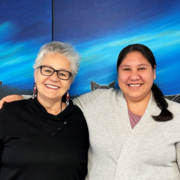
The Listuguj Mi’gmaq Government would like to introduce Culture Coordinator, Audrey Isaac and Mi’gmaw Revitalization Coordinator, Mary-Beth Wysote. They are both new to their roles on the revitalization team, but among their impressive educational, cultural, and artistic backgrounds, they already have plenty of ideas when it comes to revitalizing culture and language in the community.

Isaac is from Listuguj and has twin daughters, Missy, and Vanessa. She has several years of experience in business and event planning. She has been doing freelance work with the Listuguj Mi’gmaq Government and has coordinated and volunteered with many groups in the community, like the annual Pow Wow. She loves painting, writing, drumming, and practicing cultural spiritualism. “My passion is healing and culture,” said Isaac. The Listuguj Mi’gmaq Government reached out to Isaac specifically to take on the role of Culture Coordinator in the community.

Wysote is also from Listuguj. Her parents are John-Loren Wysote (Blue) and Meredith Bernard from Gesgapegiag.  She is passionate when it comes to arts and attended the New Brunswick College of Craft and Design for the Aboriginal Visual Arts Program where she studied Black Ash Basketry. She had the inspiration to learn her language and joined the Mi’gmaq Adult Immersion Program, and from here she assisted family members in learning the language and volunteered at Alaqsite’w Gitpu School helping students learn. Wysote is currently enrolled in the Cape Breton University Bachelor of Arts Community Studies program.

The team has started off strong in their roles and has been brainstorming many projects and programs for Mi’gmaw and Culture Revitalization. Their first project is the Mi’gmawei Mimajuaqan event happening on July 1st in Gesgapegiag. This event is an opportunity to share, celebrate and learn. This event is expected to continue for the next couple of years.

Other projects that are in motion are the Mi’gmaq Mentor Apprentice program which is expected to start back up in the Fall. Language Home Kits that contain resources to start learning the language (Dictionaries, flashcards, etc.) and stories in the Wi’gatign featuring Mi’gmaq speakers in the community.

The program is about celebrating and embracing culture and language. It’s about making it a more natural, everyday part of our lives. Isaac said, “It’s connecting our communities, revitalizing our culture, and bringing it back.” The program is not a political initiative, it’s strictly cultural and it’s about encouraging others. Wysote said, “I think for some people it might be intimidating to want to learn Mi’gmaq or want to learn their culture, so what we want to do is make it more accessible to as many people as we can in the community.”

We look forward to seeing what the team has in store for future programs and events in the community!

By Ann Marie Jacques