Small change to the food bank

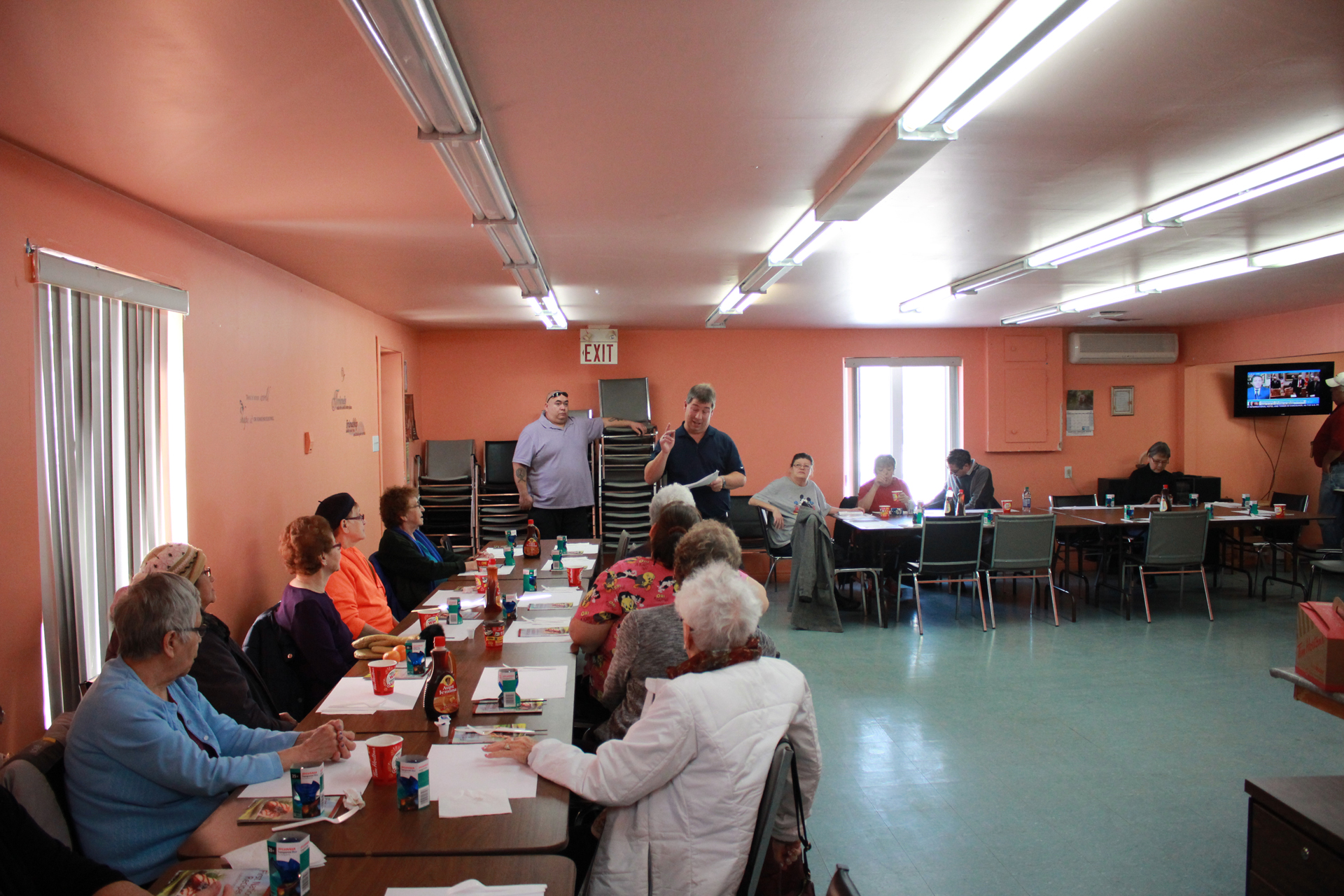
The Listuguj Community Social Services has an active program (initiative to fight poverty) for community members in need. The initiative is funded by Quebec and Labrador Social Services Commission, and through this, the community food bank was created in April 2016. The food bank is typically held on the third Tuesday of every month, however dates still can be subject to change.

For those who come to the food bank, they would be given an assortment of fresh foods and non perishable items. Basic food items such as eggs, milk, bread, pasta, potatoes, breakfast cereals and much more.

With the amount of recipients the food bank gained over the past few months, this has brought a few changes. Starting February, they are implementing an evaluation process in order to avoid abuse of the services and to provide to those truly in need.

“They just meet with me once. They have to provide their proof of income & proof of expenses (Hydro, Telephone) and we’re going to create a file for them here,” said Jessie Gallant “Once you meet with me, then you’re good to go. Your always welcome every month.”

For more information, call Jessie Gallant at the Listuguj Community Social Services. (418-788-3039

2016 In Review

NEWS

AFN National Chief  Visits Listuguj

Issue 26, Aug. 2016National Cheif

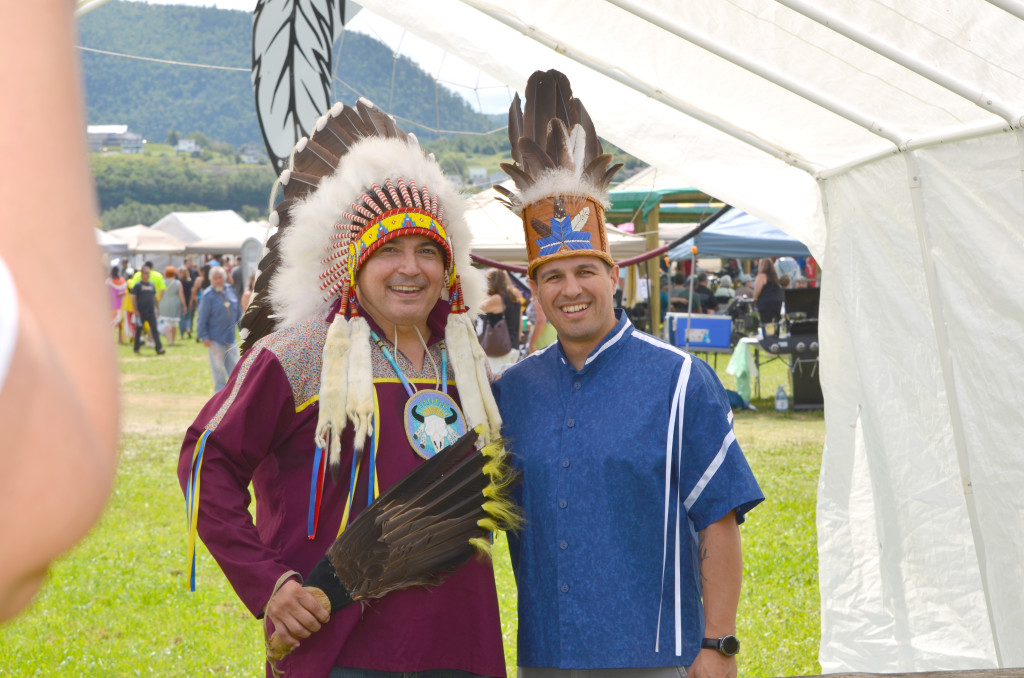
The Assembly of First Nations National Chief, Perry Bellegarde, visited Listuguj during the Powwow weekend last year. It was his first time in the community.

Bellegarde met with people from the community, and heard the concerns of various organizations. He spoke at the Powwow, and sat down with  Nujignua’tegeg for a video interview that can be found online.

Read More
In-Community University Graduates

Issue 24, July 2016

First Ever Graudation

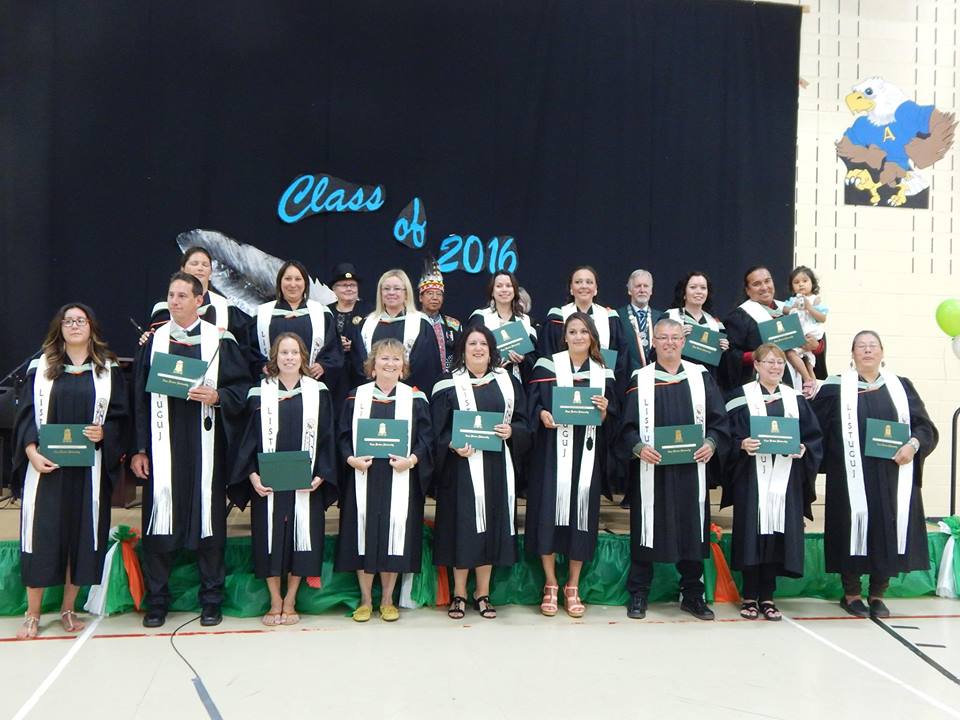
 The first-ever university course offered in Listuguj graduated 19 students on June 30th. The Bachelor of Arts in Community Studies (BACS) was offered through the Cape Breton University. It began in 2013.

“This program was truly a collective achievement,” said Dr. Fred Metallic, at the convocation at Alaqsite’w Gitpu School.

Many classes were taught by Listuguj teachers, and was for the community in a variety of ways.

The high percentage of graduates is proof that the model works.

Read More

Mesgi’g Ugju’s’n Wind Farm at full capacity

(Issue 30, Dec. 2016)

photos_carrousel_energies_wind2

celebration on December 1, 2016 marked the opening of the wind warm, and Troy Jerome’s resignation from the MMS.

Read More


FEATURES

‘Nnui’sultinej Let’s speak Mi’gmaq

(Issue 27, Sept. 2016)

class

Excerpt:

There is a red line at the Listuguj Education Complex that can’t be missed.  The line divides three classrooms from the rest of the building, creating the only English-free zone in Listuguj. Anyone crossing that line has to speak only in Mi’gmaq.

The line is more than red tape on the floor.  It is a compelling symbol of the protection of the Mi’gmaq language that evolved on this territory for thousands of years, but is now vulnerable.

There was never such a “language line” in Listuguj.  Maybe that’s the reason why in the last 50 years the English language had entered the homes, stayed there and with time, displaced  Mi’gmaq as the main language.  Those were the times when Canada’s assimilation policies forced Aboriginal peoples across Canada into Residential Schools and they were pushed to believe ….
Read More

Passing on Traditions

(Issue 25, Aug. 2016)

aurele-tanne-pole

Excerpt:

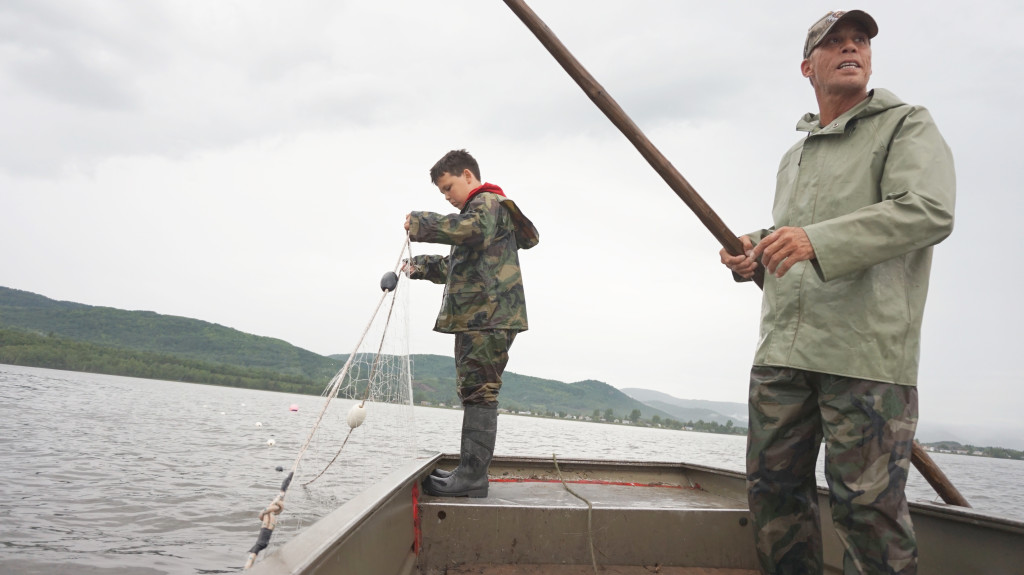
Tanner Sage Barnaby, the son of Tara Barnaby and Robby Ouellette, has been salmon fishing for the last six years and he’s only twelve. He leaves the quarry in the middle of a rainy afternoon and when he arrives to the fishing area he slows down the motor to set the net.  A very attentive boy, Tanner drives the boat with the seriousness that his tasks require.

As the rain continues to fall, he stops the boat and initiates a conversation with Aurele Isaac, his mentor.  They talk about the places where other fisherman set their nets. “We have to respect them,” he says. “If you see that one person has a good catch on his place you just can’t come the next time and occupy his location. We have laws and we have to respect them,” he says to Tanner…
Read More

Women’s voices of Mi’gwite’tm

(Issue 23, June 2016)

raid-sq-church-kid

Excerpt:

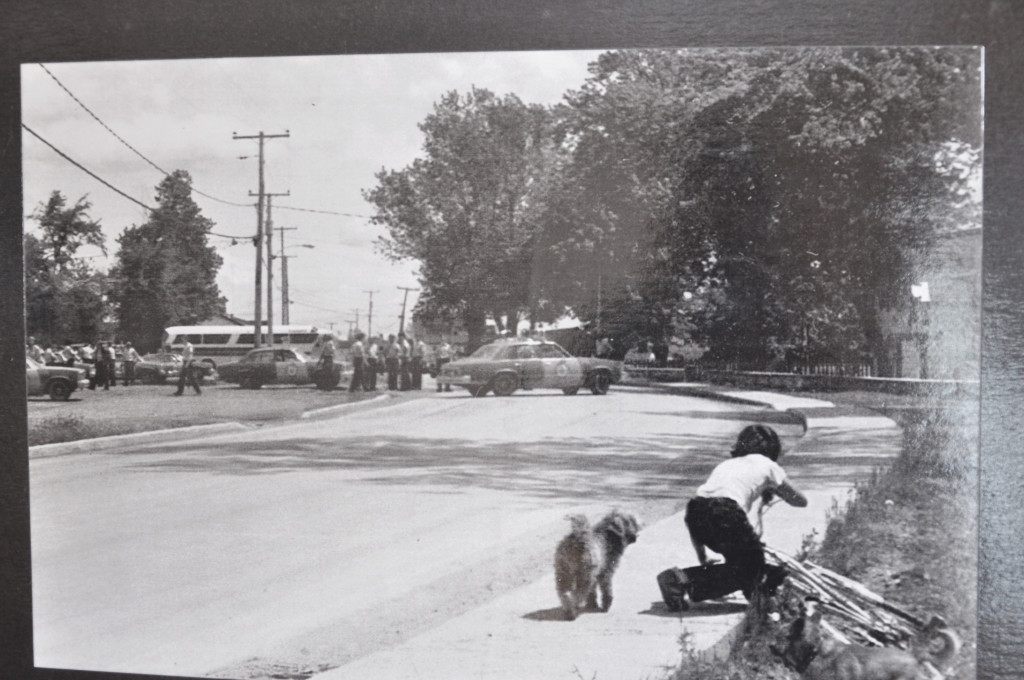
This year marks 35 years since the raids in 1981. But even after all this time, there are still “as many stories as there are people who fill this room,” as Victoria LaBillois said before the Salmon Feast at the Bingo Hall on June 11. This year – just like in 1981 – women of the community stood alongside the men.

Images of men standing up to Quebec Provincial Police are close in everyone’s mind, and stories of men from nearby nations coming to help are often retold with pride, but the fact that women came from other nations as well is mentioned less often…

Read More

Best Photo Page

Echoes of Powwow – Issue 26, Aug. 2016

Echoes of the Powwow

ARTS

Painting: A Healing Journey

(Issue 22, June 2016)

Tracey Metallic

Excerpt:

When your work is displayed around the continent, attracting the attention of famous artists, and selling within 30 seconds of being posted on social media, some people could probably call you an “artist.” But Tracey Metallic-Barnaby is still getting use to the title.

She’s only been painting for a year, but her work has clearly been resonating with others. She has shipped her work to Alaska, her prints caught the eye of a television set designer while on display in Thunder Bay, and her work has recently been commissioned to be installed in a new health center in Michigan.

All the recognition has definitely been exciting. But it’s all secondary. “I’ll never give painting up,” Tracey said. “It’s way too therapeutic for me.”

Tracey says she’s always been crafty, but she gave up drawing when her daughter was born. She was 18 at the time. She then raised two more children, until she was 31 and decided she needed to go back to school.

Three degrees later, after years…

Read More
Don Burnstick

(Issue 30, Dec. 2016)

don-burnstick

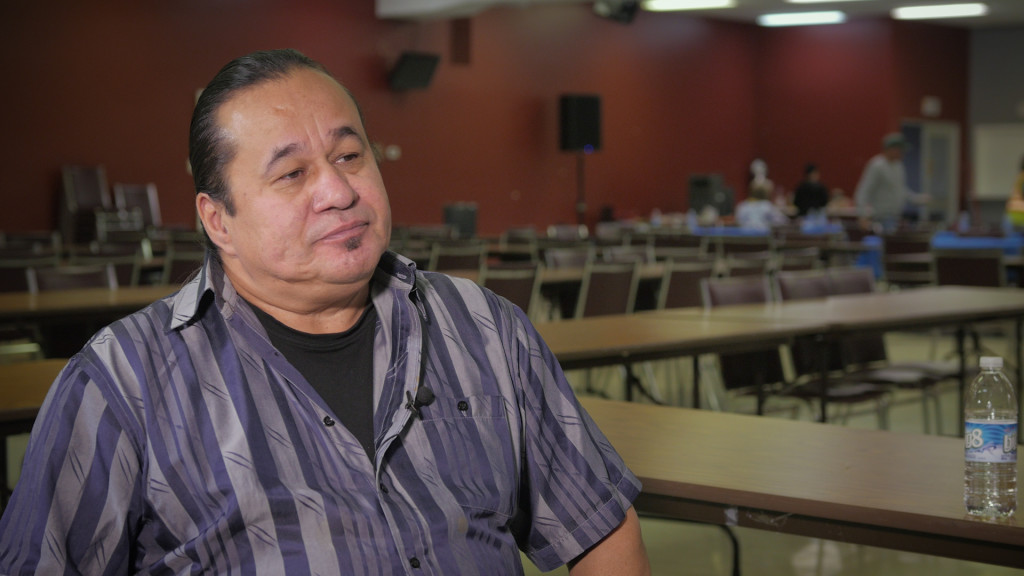
Don Burnstick was invited to Listuguj for National Addictions Awareness Week in November. He gave a few shows, and sat down with the Nujignua’tegeg for a video interview and a story.    

Read More

COMMUNITY

Listuguj Mourns death of Chief of Police Henry Vicaire

(Issue 21, May 2016)

Henry Vicaire

Excerpt:

Listuguj Chief of Police Henry “Hank” Vicaire was rushed to the Campbellton Regional Hospital on Friday the 13th under emergency circumstances, but was unable to recover.  He passed away several hours later.  He was 50.

On May 18, at around 10.30 a.m.. various delegations of Police, SQ, RCMP, Firemen, Ambulance technicians from around Listuguj, and a representatives of Henry’s Bike Club, gathered in front of his house. A solemn march to St. Anne’s church followed, where political banners were covered and painted with the number 21, in respect to the badge of the Chief of Police.

The Church was packed and the mass started with the Spirit Bear singers chanting the Mi’gmaq Honor song.  Native and non-natives families and friends of  Henry “Hank” Vicaire gathered to pay respect to a person that the eulogies described as a humorous, sensitive, respectful and a talented human being.

Henry Vicaire was born in Campbellton, N.B. in 1965. He attended the Justice Institute of British Columbia (JIBC) where he earned his policing certification in 1994. He served as a Listuguj K-9 officer from 2002 to 2010 with detector dogs Echo and then Bonzai.  He became Listuguj Chief of Police in 2012…

Read More

Fire Fighters graduate from first course in 15 years

Firefighters from the first course offered in Listuguj in 15 years graduated just before the new year. The graduation was held on Dec. 16 at the Bingo Hall.

The 10-week course began in September. They could be seen running various training exercises throughout that time.

Some of the new firefighters, like 18-year-old Cody Duguay tried getting in early, but didn’t hear back. He recieved a call the day the course started. Someone had dropped out. Duguay was there five minutes later.

“What have I gotten myself into,” Duguay quickly thought.

“I would just start, take a step back, think why I’m doing this, and is this really what I want to do,” he said.  “As I read through the course books and looked at and everything, I found this would be something I would really love to do, so I kept going with it.”

The training did it’s job – it taught Duguay how to keep a level head in a stressful situation.

He remembers one time during training when he was under a firetruck, practicing how to conserve air when an air tank is low. He rolled over, and didn’t realize his air was off. Then he got stuck.

“That scared the hell outta me right there, I was ready to quit the course,” he said.

His instructor pulled him out, and he decided to go back the next day. Now he has five different certificates qualifying him as firefighter.

“We earned this and it was a hard road,” said Duguay. “While I will – and always shall – be happy that we have completed this course, I will miss this training. I will miss doing this everyday.”

Salmon Summit 3

Salmon Summit 3

The Salmon Summit has been held in Listuguj for three years now. It was created to bring people and organizations with interests in the Restigouche watershed together.

Over the course of two days, Salmon Summit 3 was held at the Bingo Hall. Discussions and focus group sessions were held, showing the amount of work and data that needs to be analyzed and shared.

The summit began as a means to talk about the diverse relationships with the salmon, but is now growing into a truly collaborative approach to managing and protecting the water, and all that it sustains.

There are people like Carole-Anne Gillis, a cost-shared fisheries biologist, working for several organizations, to gather information and understand Everything from stock assessments, to testing fish for viruses or bacterial infections.

“We’re doing a lot of basic fundamental research,” Gillis said. “To answer questions that we can then follow through with management.”

The benefit of the summit, is various groups can work toward mutually beneficial goals. The first step, however, is Identifying the challenges to achieving them.

“Discussion groups today were about identifying them,” said Kirt Dedam, the Aboriginal Fisheries Strategy Coordinator, with Listuguj Fisheries. “How can we work toward solutions? So that everybody – when they go away today, will have something to work towards.”

The hope is that people can return next year, for Salmon Summit 4, and say they followed through with their commitments.

“This is how we want to keep growing this thing,” Dedam said.

The summit has always been intended to serve multiple purposes. Representing the Aboriginal perspective has always been one of the key goals. Dedam believes a lot of people were taking this perspective away with them this year.

“There’s a lot of talk about ‘two-eyed seeing,’” Dedam said. “Seeing from a western science and an Aboriginal perspective too. But how do you blend the two?  So I think that’s one of the things that people get from these meetings. Plus, we learn more about the science that’s going on, which is important too. ”

A main focus has always been building relationships and trust among the various groups, and Dedam was pleased to see a lot of participation this year.

Discussions around what the future may hold for the summit has also begun.

“We’re starting to expand our view,” Dedam said. “And where we want to go with this is maybe inviting other watersheds in the area, from other provinces, other communities, other First Nations, and start being more inclusive, and keep growing this.”

Public Meeting

On September 25th, Chief and Council held a community meeting at the Listuguj Community Development Center (Bingo Hall) to discuss topics that community members submitted.

The doors opened at 5 p.m with over 50 community members in attendance. It lasted nearly four hours. The night’s agenda had several topics.

First item for discussion was the electronic meters from Hydro Quebec. Questions were asked and what benefits come from these meters.

The next topic was the 20 houses being built. It was explained that 10 were ready for construction this year while the other 10 were having the lots prepared for next Spring.

The Matrimonial Property Law was also looked at briefly, with Sheila Swasson explaining what it is and what it means for our community members.

Zenabis was the last item on the agenda, questions focused on the availability of jobs across all sectors, from construction all the way to production. Two 8-week training courses will be hosted by the L.E.D and facilitated by the Kwantlen Polytechnic University. The training would be done online and this would be a starting step for anyone interested in the Professional Management of Medical Marijuana Facilities in Canada.

Other related topics were brought up during the meeting were the Elder’s Facility, Education, Future Structure of Housing, Finances on Housing, a request from CHRQ.

Brenda Gideon-Miller was present, and thought it was a positive meeting overall.

“The only regret that i have is that there wasn’t as many community members as I had anticipated,” she said.

She would have also liked an agenda prior to the meeting, and any other information that could have been available. Overall, she thought it was encouraging, and a good step by the Chief and Council.

“It was good conversation, good discussion, people were talking,” she said. “There wasn’t any yelling going on, there wasn’t any of the negativity also. I think it was a good first public meeting. I’m looking forward to more.”

‘Nnui’sultinej Let’s speak Mi’gmaq

There is a red line at the Listuguj Education Complex that can’t be missed.  The line divides three classrooms from the rest of the building, creating the only English-free zone in Listuguj. Anyone crossing that line has to speak only in Mi’gmaq.

The line is more than red tape on the floor.  It is a compelling symbol of the protection of the Mi’gmaq language that evolved on this territory for thousands of years, but is now vulnerable.

There was never such a “language line” in Listuguj.  Maybe that’s the reason why in the last 50 years the English language had entered the homes, stayed there and with time, displaced  Mi’gmaq as the main language.  Those were the times when Canada’s assimilation policies forced Aboriginal peoples across Canada into Residential Schools and they were pushed to believe that their culture and their language were unimportant and an obstacle to progress.

Today, that red line in Listuguj represents the last stronghold of resistance and decolonization.  On the other side of the line there is a group of teachers and students – men, women and children – learning the language that was used to name the lakes, valleys, mountains, rivers, communities, cities, and plants on this territory.

In the adult section 12 students are committed to learn the Mi’gmaq language five days a week, until March 2017.  Around 800 hours of Mi’gmaq lessons in the classroom as well in the territory. This pilot project was initiated by a grant from Heritage Canada. red-line
After almost 500 years of the arrival and imposition of English and French languages, our Mi’gmaq language is at risk.  According the 2010 UNESCO’s report Mi’gmaq language is considered “vulnerable,” a close step to the endangered category.  However, in Listuguj there is a consensus that our language is in severe decline and it’s necessary to act now.

“Mi’gmaq was declared the official language of Gespe’gewa’gi, but a declaration is not enough.  We need policy, language law and other initiatives to save our language”, said Lorna Sook, Director of the Listuguj Education, Training and Employment.  “We did a survey and we got a lot of suggestions, ideas and we decide to strengthen the immersion programs”.

One of the strategies implemented was to move the AGS Mi’gmaq immersion classes to the Education Complex, the other side of the red line and next to the adult immersion program.

Nathalie Metallic requested a leave from her work at Day Care to learn Mi’gmaq.  As a mother of three children she feels it’s important to pass the language on to them and eventually be able to converse with elders.  She understands Mi’gmaq but like many in the community, she lacks the confidence to speak, something that an immersion program will provide. “I really want to speak it and practice at home with my kids,” she said.

For Scott Isaac, his decision is about identity. “It is part of my decolonization process”, he said. “For 50 years I have been speaking the language of the colonizer and now it is time to speak the language of my ancestors.”  He also sees the possibility of new job opportunities associated with knowledge of the language.

Mary Ann Metallic, Janice Vicaire and Dianne Mitchell are the instructors of the Minuignewa’tu’g ‘Gtli’sutiminu Program.  Their combined work experience for the language is associated with Mi’gmaq Online, research, summers courses, adult classes, teaching sessions at AGS, SSHS, nursery, translation, etc.  They are part of a devoted group of people working in the education system.

Mary Ann Metallic wishes to replicate Quebec’s measures to protect French. “They passed a law to promote the predominance of their language on public signs, at work places, at schools, at public services, etc. It worked for them.”  She sees the importance of taking diverse initiatives and not only leaving the transmission of the language up to the education system.

Janice Vicaire has worked on language programs since 1998. “When I started working we knew the decline of our language and we confirmed it now. Little was done and it was left to teachers or the school,”  she said. “I wish it to be a grassroots movement, from the people, from young parents to learn the language, to pass it to the kids. We need to start a movement to protect our language.”

What will it take to bring back our language, who will do it?  “The preservation of the language has to be the will of the community,” responded Janice Vicaire.

The loss of the language in some Aboriginal communities, including Mi’gmaq has different factors recorded in numerous reports and studies. If the responsibility of its preservation is taken on by speakers and non-speakers living in the community, the participants of the immersion programs at the Education Complex will feel supported.  That is the kind of environment that Diane Mitchell remembers as a young girl.  “In Listuguj the language was just spoken naturally, we were spoken to exclusively in Mi’gmaq. That kind of environment allowed the passing on of the language naturally. I grew up in a generation where everyone was a speaker and the exception was English.”

That’s what the immersion program will recreate – a Mi’gmaq-only space in Listuguj. For Mary Ann Metallic “the red line is a symbol of resistance,” she said. “We have to get stronger for our language, we have to regroup forces, we have to isolate, and by concentrating our language in one space it will help to pass it on to the little ones.  They will hear the language more often”.

In fact, visiting Miss Mabel Metallic’s class next door, we can see the children surrounded by Mi’gmaq textbooks, native chants and designs.  Their little voices speaking Mi’gmaq represents the hope for the survival of our Mi’gmaq language.

red-line-sign

Food and Water Study being done in Listuguj

It is our lifestyle to consume what comes from the land. We fish, we hunt and we harvest. With the rise of industry, came the reality of exposure to harmful contaminants.

What could be in the local resources? This is what the First Nations Food, Nutrition and Environmental Contaminant Study (FNFNES) is here to examine.

The FNFNES will be conducting a four mon th study here in Listuguj. This is just a small portion of the study, which spans coast to coast over the course of 10 years. The FNFNES has collected data from many First Nation Communities all across Canada.

The study is collecting traditional food and water to be prepared and sent for testing.  During the four months Stephanie Levesque, the Nutrition Research Coordinator from FNFNES, will be here alongside two Community Research Assistants, Stacy Martin and Claudette Methot. The data of the study is separated into these 5 components:

• Drinking Water Component
• Traditional Food Sampling and Collection
• Surface Water Collection
• Hair Sampling for Mercury
• Traditional Food Frequency
Questionnaire

100 Households will be selected at random for the Food Frequency Questionnaire. The first part asks how much of the traditional food the participant has consumed, and how often. The second part asks about the water sources used in the household for cooking.

Nujignua’tegeg’s Tyler Morrison sat down with Stephanie Levesque and Denny Isaac, the Director of Research at the GMRC, in Listuguj to talk about the FNFNES study, as well as information from the studies conducted by the GMRC.  “I find it very pleasant to know as a Dietician that some people are hesitant to eat traditional food, but once it’s been tested it’s proven to be healthier than typically what we can buy in the grocery store” said Levesque.

Powwow

Echoes of the Powwow

Every year the Powwow seems to get a little bigger. But that’s not really a priority for the coordinators.

“Our main goal is not to be the biggest, or the best Powwow,” said Lita Isaac, who has been involved since the very first Powwow in 1993. “It’s just for people to get here safely, enjoy their weekend. Dance. Drum.”

That’s a big enough job. Keeping people hydrated alone required over 170 cases of water, which had to be requested — and donated — from local businesses.

“It’s a lot of hard work. We have a small committee,” said Isaac. “But people will approach us and ask, ‘can we help?’”

The whole weekend runs on volunteers. Whether it’s in the weeks and months leading up to it, or those filling all the small, but demanding jobs. Everything from making coffee to directing traffic needs someone giving up their time.

“The Powwow belongs to the community,” said Isaac. “When people step up and offer to help … it might be something small, but it all counts.”

Laura Arsenault has been involved with the Powwow for seven years. She’s now one of the coordinators. “It’s just something for me that I would donate all my time to — even if it was yearlong, I’d still do it,” she said.  “I’m passionate about. It’s the only thing I really volunteer for.”

While she spent this year mostly occupied with the vendors, Arsenault’s favorite job is working the canteen. She gets to meet new people and catch old friends visiting home.

A lot of people plan their vacations around the Powwow, and new people people discover it every year.

This year, over 500 people were fed moose, salmon and fiddleheads on Saturday alone. Isaac says being able to feed everyone is their way of thanking those who come and support Listuguj, and the Powwow.

“It’s building up the pride,” said Isaac.“If somebody leaves the Powwow with a feeling of experiencing a ceremony at the sacred fire, or just praying at the sacred fire, or enjoying the drumming and dancing. Or going to the native crafts and buying something made by somebody from a New Brunswick First, or Quebec, or Listuguj — it’s wonderful … Or just enjoying an indian taco. Leaving with something in their bellies or their heart or soul, it’s the best feeling for us. That’s our aim.”


Vilma Almendra, Nasa Nation, Colombia

DSC_4294

It’s nice to feel that with the dances and the presence of the Grand-Father-the-Fire, you are still honoring the spirituality of Indigenous people here. AFN Chief Perry Bellegarde said: “despite colonization they couldn’t kill us and we are still here, alive”.  These strong words, speaks about the ongoing death and life struggle that Indigenous peoples of Turtle Island are facing for many centuries.


Garland Joe Augustine, Elsipogtog,Mi’gmaqi

At the first Powwow there were few regalia, few eagle feathers and now we see more drums, more dancers, more children at the Powwow. This mean that people are coming back to their culture and it makes me proud. I come here every year since the first Powwow and they treat us good. I always want to come back.


Rene Arsenault, Member of Parliament, Restigouche East—Madawaska Riding

This is my first powwow and it’s nice to sees Natives, Acadians, French and English to meet at the beat of the drums. This is a family gathering. I feel like the Earth vibrates when I see a community that chants, dances and respect Mother Earth.

Jamie Metallic, Listuguj, Mi’gmaqi

This was my first time dancing with my regalia and in my home community. The support of friends and family was overwhelming and makes me feel proud. Looking at them was like looking at a rainbow with all their colors and they were around the circle.  This is a new road for me, physical and spiritual.


Watching over the community

“How are you tonight?” Constable Jacob Renouf asks at a roadblock set up by the Listuguj Police Department (LPD) in front of the Education Complex. It’s near 10:00 PM on Aug. 5 — the start of the Powwow weekend.  Six officers are working, instead of the usual two.

Flares, and the flashing lights notify oncoming traffic. Constable Renouf greets drivers, and explains what they’re doing – just making sure everyone is being safe. The officers quickly shine flashlights in the car, and everything is in order. A few more jokes are made, everyone laughs, and the car continues on.

“How are you tonight,” Constable Renouf asks the next car.  The officers work their way through the line of vehicles that has formed, and then they pack it up. They’ll set up another road block later, but for now they’ll patrol.

Constable Renouf expects to drive the same streets dozens of times throughout his 11-hour shift. He has only been in the community for nearly a year. But he was on duty this time last year. He worked for the Gesgapegiag Police Department, which provided extra help in the past. No other police departments were needed this year. And the Powwow continues to grow.

Sgt. Detective Trapper Metallic has been with the LPD for over 15 years. He grew up here, got a summer job with the LPD, and got his training in Regina at the RCMP Academy, Depot Division.

Sgt. Detective Trapper Metallic has been with the Listuguj Police Department for 15 years.

Sgt. Detective Trapper Metallic has been with the Listuguj Police Department for 15 years.

There were a couple years in his career, around Powwow time, when he would see an influx in incidents.  “Then we started to put some more guys on patrol, and start making it a regular thing annually. Then those stats start to go down.”

Police Chief, Peter Arsenault said that the incidents this year were “almost garden variety.”  “Everything went well,” he said.

While some may see operations like a road block as a nuisance, Arsenault hopes they recognize the true purpose. “I’d like to think that they’re aware that we have their best interest in mind,” he said. “Everyone is entitled to safety.”

Like most of the officers on duty, Sgt. Detective Metallic is also working extra hours, after his regular four-day schedule, through the night.  “To work extra hours is nothing,” he said. “It comes with the territory. Whether you’re 15, 20, 30, 40 – however many years of service you have – you come and work the extra hour, just to make sure that nothing happens. It’s priceless.”