INTRODUCING THE NEW LISTUGUJ COMMUNITY SOCIAL SERVICES BUILDING

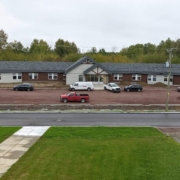
The community of Listuguj now has a new Social Services building that is located at 2 GEF St. (across from the Gignu). It is the new home to the three Listuguj Community Social Services departments: Prevention Services – Families First Support Services, Child and Family Services, and Social Assistance.

In 2019, the Capital and Infrastructure team was approached by Social Services regarding having one building that can house all departments. Once funding was received from Indigenous Services Canada (ISC), and the tender was complete, the design was finalized, and construction began in 2021.

The building is 800 square meters and has enough space for 40 occupants. The design is very sleek and modern, but also has a warm feel which will be very welcoming to Social Services clientele.

General Manager of Capital and Infrastructure, Bassem Abdrabou said, “The project will house all employees of Social Services including room for growth in the next 15 years.” The design was created with the option of expansion in the future, including two additional wings and 25 additional offices if needed.

Listuguj Social Services Director, Tanya Barnaby said, “We are transitioning our services to better serve the needs for Listuguj community members now housed under one roof.”

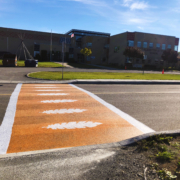
The building’s construction was completed in September 2022. The paving of the parking lot and GEF Street has been completed as of October 2022.

For information on current or upcoming projects in the community, please contact Capital and Infrastructure at 418-788-3022.

By Ann Marie Jacques

“If we don’t exercise our rights, then they won’t be there for us.”

When JD Wysote isn’t fishing snow crab for the Listuguj Mi’gmaq Government, he can often be found hunting, trapping, and tanning animal hides.

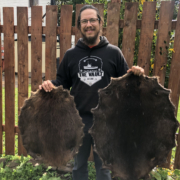
He started tanning hides around three years ago when he realized that he wanted to utilize everything when it came to hunting.   After hunting or trapping an animal, he would use the meat and the skull but realized the hide could also be utilized. Wysote would eventually like to use the hides to make clothing and said, “It is the next step from hunting. You know where your food comes from, and next is knowing where your clothes come from.”  One of the main reasons for picking up this hobby is to exercise his rights as a Mi’gmaq person.  He said, “If we don’t exercise our rights, then they won’t be there for us.” While there are not many people in the community who tan hides, Wysote said he has talked to the few who do for guidance and advice.

The process of tanning hides is very time-consuming and detailed. The process differs for the type of animal and depends on if you want to keep the fur on. It also depends on the time of year and the season. Typically, in the winter, animals will have thicker fur. Winter pelt on animals will also dry lighter in color than an animal with a summer coat. Wysote talked about the process of tanning a beaver hide, “If you want to keep the fur on for beavers you don’t have to worry about shaving all the hair down, half the work is already done. You do got to skin the animal, then you got to flush it all out, get all that fat and meat off of it, until it’s just the skin itself. Then you got to dry it out, pickle it, then the final process to make it waterproof and durable is to smoke it, multiple times.” Eventually, a preservative will be added to the hide when the process is done. Some of the animal hides that Wysote has in his possession that he has worked on include, moose, beavers, and bucks.

Tanning hide is a very long process.  It’s a hobby that requires a lot of time and patience, especially if it’s just one person doing the work.  Wysote said, “Traditionally what hide work was, it was a family chore. The family got together, the men went out to hunt it and the women got together and work on the hides. It was a family activity.” His family also partake in the process, with his oldest daughter helping him set and check traps. He hopes his growing family will continue to accompany him with his hobby and fully embrace their Mi’gmaq culture.

By Ann Marie Jacques

Decolonizing Our Education

Jacob Gale is the Treaty Education Lead at the Listuguj Education Training and Employment Centre (LETE). Here he works and collaborates with a team featuring, Jeanette Henry, Paige Isaac, and Patrick Wilmot.

Often when people think of the term, “Treaty Education” they will associate it solely with learning about treaties, Gale explained it’s much more than that, “Treaties are fundamental and they’re an important part of the work that we do, but there’s also so many other pieces of work that we do under Treaty Education. It’s really about decolonizing our education here at LETE, at AGS, and at other branches of LETE. Treaty education includes our culture, our identity, our well-being, spirituality, all those pieces of who we are as being L’nu – in a way it could be called L’nu Education.”

The Treaty Education team work with teachers and educators in the community to help build a foundation that connects culture to the school curriculum through experimental learning. Gale said that it’s important to include Mi’gmaq culture in our school systems. An example that was given was the building of the sweat lodge, and how there are so many lessons embedded into that process, such as math, literacy, history, ceremony, and a connection to the community and to the elders. Another major program for our community in Treaty Education is Outdoor Education at Alaqsite’w Gitpu School.

The Treaty Education team also works with the youth in the community and helps them learn about who they are and embrace their culture.  Eventually, the youth will become leaders in our community, and it is important that they have a strong sense of belonging. Gale said, “We ask the question, ‘Whose story should we value in education?’ We’re in that business of we are a Mi’gmaq community, we are a Mi’gmaq school, and it’s important that we continue to find ways to embed our stories and our connections to our land, our elders, our ceremonies, in school – so that students understand that, “Hey I’m Mi’gmaq, I’m proud to be Mi’gmaq and I’m proud to be L’nu” They’re Learning so much about who we are in their education journey.”

There are many events and activities in the community that the Treaty Education team helps organize – a few recent events were the Cultural Night and Social Night held at Alaqsite’w Gitpu School in August. Gale mentioned that many students will be attending the Tim Hortons Children’s Camp in Tatamagouche, Nova Scotia, he also mentioned an upcoming Moose Hunt Camp in the community with the Outdoor Education program.

Gale stated that being part of the Treaty Education program is always fun and exciting and that he is proud to be part of many youths’ cultural and spiritual education journeys.

By Ann Marie Jacques

BRANDON MITCHELL – COMBINING CULTURE AND CREATIVITY  

Many of you may know Brandon Mitchell from his time working at Alaqsite’w Gitpu School as the art and technology teacher, since then he has gone on to be a very successful creative writer and illustrator.

At a young age, Mitchell always had a passion for drawing and art.

Mitchell said, “I was into comic books, cartoons, movies, and video games but instead of re-drawing my favourite characters, I would try and make my own. It was only in grade 11 when I had an opportunity to flesh out my ideas in writing.  We had an open assignment to write on any topic we wanted, and I asked if I could write about these characters I created. From there, I was hooked on seeing where my characters took me.”

Mitchell then enrolled and obtained a diploma from an Animation and Design program at NBCC in Miramichi. “I learned not just HOW to draw, but HOW to tell a story with images,” Mitchell said. Mitchell went on to earn a Bachelor of Integrated Science and a Master of Adult Education from UNB.  Mitchell began working at AGS, and with inspiration from his students, he eventually founded Birch Bark Comics, and from here, a comic book story called Sacred Circles was created. This story was based on local legends with a contemporary twist.  

“One of the things I didn’t grow up with was Native characters being the main characters in the stories I read.  That’s what inspired me the most in creating these stories,” said Mitchell.

Mitchell also had the opportunity to write six Indigenous-themed stories focusing on health-related issues with Indigenous Story Studio, with stories such as River Run – which focuses on smoking prevention, and Tomorrow’s Hope about First Nation suicide prevention. He has been a part of numerous creative writing and art projects such as, the National Best-selling graphic novel anthology series This Place: 150 Years Retold, Migwite’tmeg: We Remember It – a story of the 1981 salmon raids in Listuguj, and the traditional Mi’gmaq story, Adventures of the Pugulatmu’j: Giju’s Gift.

Mitchell and his wife Natasha Martin now live in Fredericton, but there are a lot of things to miss about Listuguj.  “I miss my family, the river, and the beautiful mountains,” said Mitchell.

As of right now, Mitchell is currently working on the second adventure of the Pugulatmu’j, and he’s also illustrating a picture book for Ksalsuti Wellness Resources Inc. You can find his books and work on Amazon, Chapters, Portage and Main Press, and at a Pow Wow near you.

By Ann Marie Jacques

INTRODUCING THE NEW MUSIC PROGRAM AT ALAQSITE’W GITPU SCHOOL

Former Youth Care worker Douglas Pictou is the Performing Arts teacher at Alaqsite’w Gitpu School. Last year he solely taught Mi’gmaq hand drumming to the students, and this year, he will be the music teacher from grade four to eight. Pictou has plans to update former music classes and teach them in a more modern and progressive way. Pictou said, “It’s going to be more percussion-based and projective-based as opposed to music class I grew up with.”

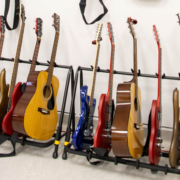
The brand-new classroom is equipped with many different instruments, like guitars, pianos, and drums, but will also have a variety of cultural instruments as well such as Mi’gmaq hand drums, and African rainmakers. The students will also get to learn digital aspects when it comes to music – such as MIDI boards and using various recording software.

Pictou explained his class will be very project based with exercises such as group rap projects, music video producing, and creating elements in sound.  One project, in particular, will be having the students mute scenes in a film and have them find a piece of music that fits the tone and mood of the film. When it comes to his goal for the class Pictou said, “I want to encourage them to play music, expose them to different types of music as opposed to just being a listener. If they still want to be just a listener, at least they’ll know what they’re listening to.”

Pictou says that he is looking forward to building relationships with students and letting them know that the classroom is a safe environment where they can come and blow off steam, feel accepted, have fun and perhaps heal themselves through music if need be.

By Ann Marie Jacques

NR Scientific Research members saved the life of DFO officer

“The fact that you have put your own life in danger to save me is remarkable and I’m deeply touched by your actions. In doing so, you gave me the chance to continue my wonderful life and for that, I will be forever grateful. You have shown exceptional courage and strength and I’m so proud to say that you are my heroes.” 

These were the words from Michel Arsenault addressed to Diane Bernard and Denise Barnaby.

Emotionally and in tears, he told a small audience about the moment, three years ago, when he fell from the smolt wheel, his boot was caught in the wheel, pushed underwater by the current with his wader full of water, which it made it hard for him to lift his head. “It lasted few seconds, but it looked hours for me,” said Diane Bernard, who was the first one to jump from the Scientific Research canoe to the platform of the smolt wheel and run to the other side to try to rescue Michel.

Diane’s first attempt was to pull Michel out, but the water current was hard because Michel was 5’11”, 190lbs, the water in his wader, and the strength of the current. On her second attempt, she got the help from Denise and together they pulled him out. When he was out of the water on the platform, Diane was still holding him so tight that Michel, recuperating and coughing to expel water from his lungs, told her “Let me go”. 

This happened in spring May 19, when the current of the Restigouche river is fast and carrying all kinds of debris. DFO wanted to thank them before, but the pandemic prevented doing it.

Yesterday was the day when Diane, Denis, and Michel, their families, DFO representatives, and the Listuguj Scientific Research team were together to celebrate the act of heroism of helping a colleague of 23 years, in danger on the salmon river.

By Felix Atencio-Gonzales

LOCAL BUSINESS OWNER SPOTLIGHT – LLOYD ALCON

Lloyd Alcon has had many impressive job titles under his belt, but now he’s focusing on his businesses. He is the owner of LCA Rentals and Outdoor Services, LCA Solutions Inc., and is the Chief Executive Officer/Part Owner of Initiative Concrete Inc.

Alcon says LCA Rentals and Outdoor services began in 2019 when he purchased a tractor and started doing small maintenance jobs in the area. Alcon always knew he’d like to do this kind of work eventually, but when COVID-19 hit, with the bridge being closed, these kinds of services became a big demand.  Alcon said, “We weren’t able to access certain services, and equipment rentals was one of them. I saw an opportunity and rolled with it.” Alcon continued to purchase more equipment and hired employees to work for his business. LCA Rentals and Outdoor Services is now a successful construction and landscaping equipment and machinery rental business.

LCA Rentals and Outdoor Services offer a wide variety of services such as construction equipment and machinery rentals, land maintenance, new driveways, larger landscaping projects such as retaining walls and drainage, and much more. The company has completed many projects in the area like various renovations and new house excavations.  One thing Alcon highlighted is how proud he is to be able to give back to the community of Listuguj. He said, “We’re able to donate a lot back to the community. I have the equipment, so if somebody needs something within the community and it’s not a big project, I can give it to them.”  One particular project done by LCA Rentals and Outdoor Services is the community garden.

After this business was underway, Alcon partnered with Grant-Mann Solid Concrete Ent. and started his most recent business, Initiative Concrete Inc. which is a ready-mix concrete company – the two companies complement each other and continue to do so.

Since 2017, Alcon also owns LCA Solutions Inc. which is a private consulting firm that specializes in public security.

Alcon says that he would eventually like to expand his businesses and hire more full-time employees. He is currently working on getting his contractor’s license and getting certified in Quebec to work off the reserve. Alcon laughed and said, “This is still pretty new to me, and I don’t think I’ll be starting any new businesses any time soon.”

By Ann Marie Jacques

GIVING CHILDREN A HEAD START SINCE 2001

Listuguj celebrates and offers many programs for the youth in the community.  One of these programs is Head Start.

Head Start began back in 2001.  It was initially held in what is currently the Haven House building. It eventually moved to the Education Complex until a new building became available specifically for the program in 2017.

Head Start features an early childhood learning curriculum and is a program for children ages three to four in the community. The staff at Head Start consists of General Manager, Tina Martin, and early childhood educators Valery Jacques-Larocque and Mallory Larocque. Here children will learn and participate in several programs with various workstations, such as story time, yoga, fine motor skills activities, outdoor play and even learning Mi’gmaq.  The children learn how to maintain structure and routine, how to become independent and interact with other children in the community.  Head Start consists of two groups – mornings and afternoons, and each group runs on weekdays for two hours. This type of program will also help prepare them for going to school in the future.

The program is a key point in helping to determine any learning disabilities and ensure children receive the type of assistance they need. Tina Martin said, “If we see any kind of a developmental delay, we’ll be able to have them screened with the permission of parents, we can either get a speech pathologist or an occupational therapist, we can also go through Jordan’s Principle.”

When asked what their favourite thing about working at Head Start is, Martin said, “Watching these children learn and play, and then seeing them graduate from high school.”

Valery Jacques-Larocque simply said, “Watching them grow.”

Head Start has kicked off again this month, and the staff is eager to take part in the children’s education journeys!

By Ann Marie Jacques

Elawsimgewei Gina’muo’guom – Encourage, Empower, Educate

The Elawsimgewei Gina’muo’guom isn’t just your typical education institution when it comes to adult learning, it’s a safe haven and a place for students to learn about themselves and grow as individuals. As the name loosely translates, it’s a place where lifelong learning occurs.

Bella Moffat is the Academic and Guidance Counsellor and Co-Manager of this First Nation Regional Adult Education Centre right here in our community. Moffat is the first person potential adult learners meet with to discuss the next step in their education journey. “My goal is to identify the individual’s career goal or what the goals are, and it’s whatever is in the best interest of the adult learner,” said Moffat. Once the staff can establish the individual’s goal, then they can work together to determine the best path to take for success. The staff recognizes that many of these individuals are in different stages of their lives, and once they make that first step to further their education, the staff will guide them the rest of the way.

There are various programs offered at the Elawsimgewei Gina’muo’guom such as high school diploma, general development test (GDT), academic upgrading, and more. The staff at the centre understand that each adult learner is different, which is why they offer a different approach when it comes to teaching. The style of courses is switched up to keep things interesting for the adult learners. “We try to base our courses on the needs of the adult learners,” Moffat said. The courses are a mix of self-paced learning, land-based learning, Mi’gmaq learning, and theory, but also feature a lot of hands-on learning activities such as horticulture and cooking classes.

The atmosphere is very laid back and welcoming. The centre takes pride in its relationships gained with the adult learners. Each person is treated in a mature, respectful manner and their comfort is the number one priority. Moffat said she wants the adult learners to feel loved and respected when they come through the door. The staff are very eager to support and guide the adult learners throughout this stage of their life.

In addition to the relaxed, self-paced teaching structure, the centre offers various incentives and fundraising for activities, events and holidays. The centre offers transportation to the adult learners, breakfast and lunch programs, and even weekly self-care activities in the building.

The Elawsimgewei Gina’muo’guom consists of a staff of eight, and the programs are run from September to June. To find out more information on the centre, contact Bella Moffat, or Administrative Technician and Co-Manager, Myrna Sook. More information can also be found on their Facebook page.

-By Ann Marie Jacques

Opening of the Eastern Door – Women’s Gathering

Families First Support Services hosted the Opening of the Eastern Door event in August.  Guest speakers at this event included Elder Janie Meader and Shinead Meader from Membertou, Dr. Andrea Colfer from Elsipogtog, Karen Bernard from Waycobah, and Rose Ann Martin from right here in Listuguj.

Families First Support Services, Cultural Coordinator Christine Metallic discussed the importance of this event, “We’ve been trying to get it organized for the last three years, because of COVID we weren’t able to.”

This three-day Women’s Gathering featured ceremony, teachings, sharing, and prayer. It was a time for women to gather and listen to one another to help with healing. “The purpose of the women’s circle is to create a safe space, to be able to share your story or listen to other people share their stories, so you can decide where you would like to go in your own healing journey,” said Christine Metallic. The theme for the gathering was reclaiming power as women.  Dr. Andrea Colfer said in her teaching, “We don’t need anyone’s permission to be Indigenous women.”

You can find more information on upcoming events on Families First Support Services, or Haven House’s Facebook page, as well as posters and pamphlets in various Listuguj locations.  

y Ann Marie Jacques