Food and Water Study being done in Listuguj

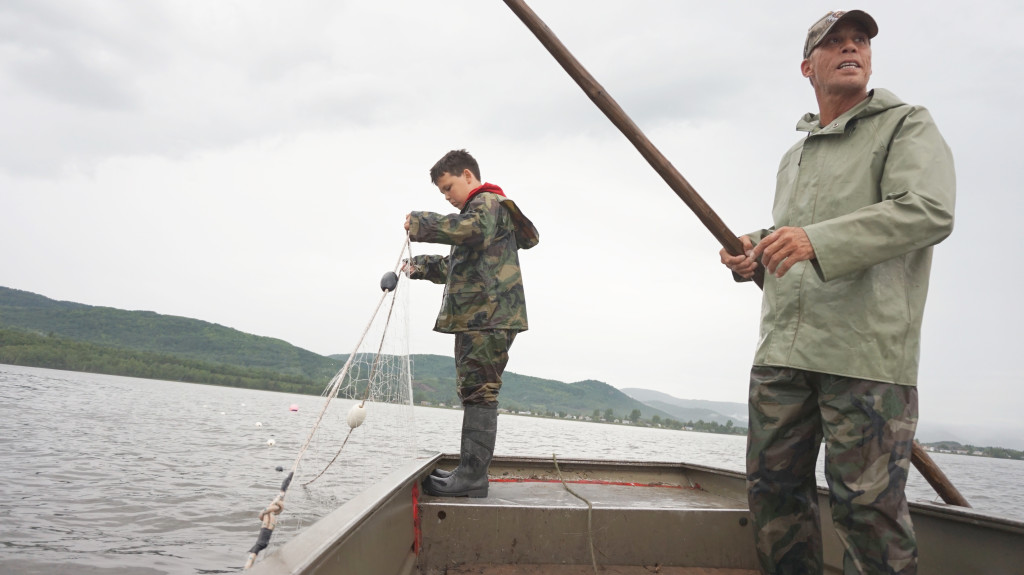
It is our lifestyle to consume what comes from the land. We fish, we hunt and we harvest. With the rise of industry, came the reality of exposure to harmful contaminants.

What could be in the local resources? This is what the First Nations Food, Nutrition and Environmental Contaminant Study (FNFNES) is here to examine.

The FNFNES will be conducting a four mon th study here in Listuguj. This is just a small portion of the study, which spans coast to coast over the course of 10 years. The FNFNES has collected data from many First Nation Communities all across Canada.

The study is collecting traditional food and water to be prepared and sent for testing.  During the four months Stephanie Levesque, the Nutrition Research Coordinator from FNFNES, will be here alongside two Community Research Assistants, Stacy Martin and Claudette Methot. The data of the study is separated into these 5 components:

• Drinking Water Component
• Traditional Food Sampling and Collection
• Surface Water Collection
• Hair Sampling for Mercury
• Traditional Food Frequency
Questionnaire

100 Households will be selected at random for the Food Frequency Questionnaire. The first part asks how much of the traditional food the participant has consumed, and how often. The second part asks about the water sources used in the household for cooking.

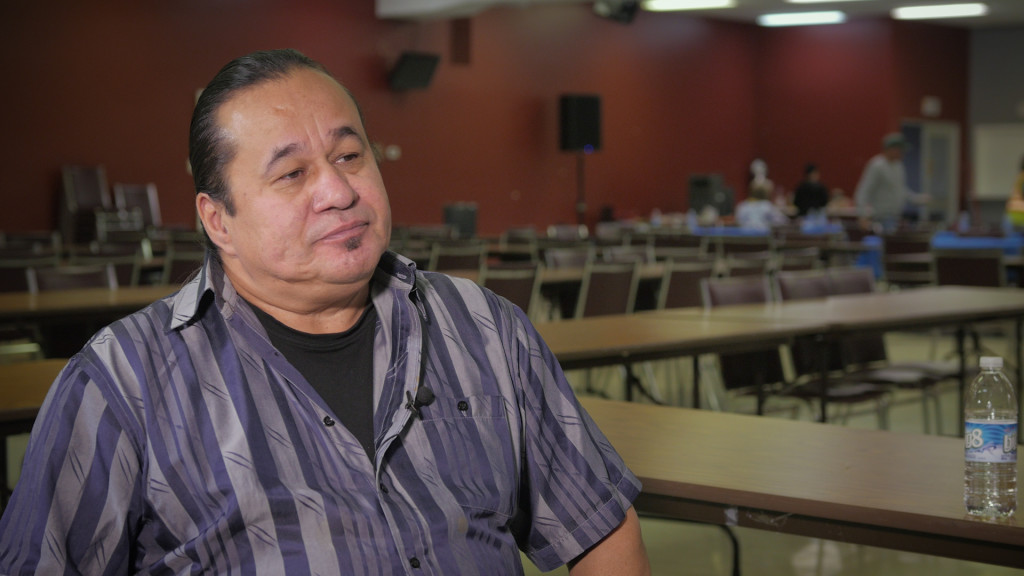
Nujignua’tegeg’s Tyler Morrison sat down with Stephanie Levesque and Denny Isaac, the Director of Research at the GMRC, in Listuguj to talk about the FNFNES study, as well as information from the studies conducted by the GMRC.  “I find it very pleasant to know as a Dietician that some people are hesitant to eat traditional food, but once it’s been tested it’s proven to be healthier than typically what we can buy in the grocery store” said Levesque.

AFN National Chief in Listuguj

Listuguj received a special guest during the Powwow weekend.  Perry Bellegarde, the Assembly of First Nations National Chief, came to the community for the first time and delivered a vibrant speech at the Powwow.

“I got a really nice invitation from Chief Darcy to be with him and his community,” he said. “I’ve never been to Listuguj before. So when I saw him at our last AFN AGA in Niagara Falls two or three weeks back I said, ‘Hey let’s make it happen.’”

His visit started with a breakfast at the Community Center (Bingo Hall) where LMG Councillors, Directors, Gespeg Chief Manon Jeannotte, as well two members of Parliament from the region, Hon. Remi Masse and Rene Arsenault, Campbellton Mayor Stephanie Anglehart-Paulin and N.B. Aboriginal Affairs Secretariat, Patrick France were all in attendance.

There were several presentations during the breakfast. Councillor Lloyd Nicholas, Alcon, Officer Trapper Metallic and Chief of Police Peter Arsenault from the Listuguj Police Department spoke on the difficulties that the department has been experiencing due to a lack of funding and the tiring amount of hours each officer endures.

There was also an announcement of a 100,000$ funding grant from Aboriginal Language Initiative Program from Heritage Canada to help with revitalizing the Mi’gmaq Language in Listuguj. This support will help the different efforts of the community to create awareness on the Mi’gmaq language situation, provide classes, stimulate the use and transfer the knowledge of the language to the non-speakers.

After the meeting, the dignitaries went to the Powwow grounds for the Grand Entry where Chief Bellegarde wore his tradition Plains Cree headdress.  The National Chief, elected in December 2014, is from Little Black Bear, Saskatchewan.

The morning started off with a blue sky bursting through what little clouds we had, a beautiful day to Powwow. After the Grand entry National Chief Bellegarde spoke about the importance to preserving identity despite the centuries of oppression and struggles for First Nations.  ‘We are alive’ he told the crowd that applauded him.  He took the time to thank Lita Isaac and the Powwow volunteers, dancers, drummers for their efforts to bring people together every year.

After the morning’s events finished, Mr. Bellegarde gave an interview on camera to Nujignua’tegeg (see our Youtube channel) before leaving to Eel River Bar for a Sweat Lodge ceremony.

AFN chief

Many aspects to wellness

The 23rd annual Wellness Fair kicked off in the usual way, with a march from Subway to the Powwow grounds at 8 AM.  As always, the Wellness Fair was a family event, equipped with an inflatable playground, and breaks for games, like a fair-wide “rock, paper, scissors” tournament. Organizer called it one of the best attended Wellness Fairs in recent years.

“One Wellness Fair is never the same as a previous one,” said Sheila Swasson. Haven House hosts the event.

This year, many aspects of physical and mental wellness were addressed, but it had a clear focus on language. Many presenters in the morning spoke entirely in Mi’gmaq. Others spoke partially in Mi’gmaq.
“If we don’t start working toward revitalizing our language, within 30 years, there will be no Mi’mgaq speakers in Listuguj,” said Swasson.

Lorna Sook, Listuguj Education Director, told the crowd about the struggles of the Listuguj Education Directorate in finding a way to address the threats facing the language.

Sook eventually attended a conference at Mount Allison University, where she heard that the only way to save a language is through immersion programs. And immersion programs will only work if they are complete. “I came back with that message, frightened,” said Sook. “Having to make a decision on relocating the Mi’gmaq Immersion Program out of the Gitpu School, and it will be located in a section the Education Complex.”

The Immersion classes will be isolated, in an attempt to reduce the tendency to switch back to english. After a certain point, people will only be allowed to speak Mi’gmaq.

Like every year, the Wellness Fair had many presenters under the big tent, and lots of gifts to give away. Presenters spoke on a variety of topics related to all aspects of “wellness.” Denny Isaac, of the GMRC spoke about the importance of water. Dr. Fred Metallic was able to keep with the Mi’gmaq language theme, while also giving a first-hand account of how preventing violence can apply to different levels. He told the story — partially in English, and partially in Mi’gmaq — of his doctoral thesis, and the battle to write it in Mi’gmaq, and defend it in Mi’gmaqi.

He referenced a banner “Family violence is not a Mi’gmaq way of life” carried in the march earlier that day. “Well neither is institutional violence a Mi’gmaq way of life,” he said. “To insist that indigenous students only speak English or French is a form of violence.”

Nta’tugwaqanminen — Our Story

More than 60 people gathered under the new LMG tent at Moffat landing for the presentation of the book Nta’tugwaqanminen – Our Story.

The book produced by the Mi’gmawei Mawiomi Secretariat is the fruit of many years of research, reflections and discussion about Gespe’gewa’gi Mi’gmaq.  A video about the importance and uniqueness of the book, was presented to the public. The video included interviews to Elder Barnard Jerome, an academic, a lawyer, a youth, a researcher and the MMS Director.

The book itself is rich in information about history, archeology, place names, legal analysis of Aboriginal Title, the Mi’gmaq vs. Canadian vision on the territory and the regional, national and international context of Indigenous struggles to reaffirms their Inherent and Aboriginal rights.

The book Nta’tugwaqanminen describes the evolution of the Gespege’wa’gi Mi’gmaq and it represents a solid source of information for those interested in knowing Mi’gmaq identity, culture, history and the roots of our rights.  There are few books available on library shelves that carry the voices of the Mi’gmaq knowledge holders and written from a Mi’gmaq perspective. This is a “must read’ for all Mi’gmaq and anyone working with the Mi’gmaq people.

For Maddie Metallic, a Mi’gmaq language teacher the book is necessary for Mi’gmaq students at all levels. “I remember when I went to Mount Allison University we were taught about our history and about our people from a non-native perspective. At that time I felt that it was wrong and we were misrepresented but I didn’t have the tools to respond to them. If at that time I had the book Nta’tugwaqanminen and I had read it, I would have the tools to respond to their misinformation.” Holding the book on her hand and with a strong sentiment Maddie concluded: “This is a great book with so much information and above all, from a Mi’gmaq perspective.”

The Nta’tugwaqanminen book is available at the MMS office and will be distributes in Listuguj, Gesgapegiag and Gespeg.

Aboriginal Day in Listuguj

Aboriginal Day

In Listuguj, Aboriginal Day was also celebrated by the Veterans with a Flag Raising event with participation of Chief and Council.

This was the 20th year that First Nations in Canada celebrates the National Aboriginal Day. Communities across the country organize PowWow, spiritual gatherings, political and other cultural events June 21 was chosen for Aboriginal Day because the Summer Solstice has an important cultural significance for Indigenous Peoples. Because of its astronomical significance, many cultures around the world celebrate on, or around Summer Solstice.

The Sun’s movement would tell Indigenous peoples in different parts of the world, when to plant the crops that sustained them, to keep track of the seasons, to keep a calendar or move to different grounds for seasonal food and resource gathering. Ceremonial sites are built with some type of solar alignment integrated into the structures. The Sun is included into Indigenous prayers as well in many spiritual practices.

The Aymara people of Bolivia celebrate their New Year (5524) gathering on sacred sites at the sunrise to greet Father the Sun. At Stonehenge (a stone structure built over 5,000 years ago in today’s United Kingdom) people gather for a Summer Solstice Festival.

A Positive Campaign

Darcy Gray has been elected Chief of Listuguj Mi’gmaq First Nation following the results of the June 4th election. Six new Councillors have been elected. 56 people ran for the one of the 12 seats.

Voting was held at the Alaqsite’w Gitpu School on June 4th at 9 a.m. The unofficial results were first posted by the LMG near 11 p.m that evening.

Cathy A. Martin, and John Murvin received among the highest votes, with over 500 each. Listuguj has a voting population of approximately 3,200 people.

Signs began popping up around the community shortly after the nominations in April. However, the signs were temporarily covered – some with the number “21” – in honor of the late Chief of Police Henry Vicaire, who passed away unexpectedly on May13th.

“During the difficult times our community did as it always has and was there to support one another,” said Chief Gray. “The demonstration of respect brings with it a sense of connectedness that makes us who we are as Listugujewaq.”

Several community members noted a new mood throughout the entire election in general.

Aside from a lack of campaigning tactics like hosting election parties, some candidates felt an overall positive approach was taken this year.

“There’s no more mudslinging going on,” said Lloyd Alcon, at AGS Sunday night, after being elected to Council for his first time. “It’s actually been nice. A lot of positive statements going around, and people promoting each other.”

“What stood out was the level of respect shown by the community members and candidates throughout the campaign,“ said Gray, the day after being elected. “There’s a sense of people wanting to work together for the betterment of the community.”

Striped bass Monitoring Program

GMRC will be implementing a striped bass monitoring programat the start of the salmon fishing season and will run throughout the fall. The goals of the program are to provide an indication of their presence in our river and also to give us insight as to what they are feeding on.

Community members of Listuguj have expressed concern over the increasing presence of striped bass in our river. Currently it is unknown if they are a threat to the salmon stock. Which is why this year GMRC has added the collection of stomach contents to the monitoring program. Stomach contents will be gathered by GMRC staff and then sent away for analysis. This will tell us if they are feeding on salmon smolts or not.

Last year was the first year of the monitoring program and many community members participated. We want to remind people that GMRC does not want your striped bass, we just want to know about it. Participation in this program is voluntary, and names collected will be entered in a draw. If you catch a striped bass either by net or by fishing rod please let us know by calling 418-788-3017 or by email at jmurvin@gmrc.ca, thank you.

Little gestures to protect Mother Earth

There is a new Ranger in town and his name is Ayden Barnaby.  An Earth Ranger that is.

A curious eight year old, Ayden visited the Earth Ranger website, where school age kids find tips and missions on how to protect animals and Mother Earth. His mission is to collect and recycle 20 batteries, and to dispose them properly.

“I choose to collect batteries because when they are thrown away to the garbage they end up on the landfills where batteries will leak their chemicals into the ecosystem” said Ayden.

The Earth Ranger missions ended up involving kids, families, friends and communities.  In order to achieve his mission he went door to door in hison hi neighborhood. He asked his friends, and when he got messages from community members, his parent would drive them to get the batteries.

When Justin Caldwell of CHRQ started to air Ayden’s message requesting batteries he got more calls.  Within two weeks of his mission, he collected almost 700 batteries that he took to the GMRC office, where there is a disposal box that is shipped to a recycling facility every week.

“I like to help animals, and the chemicals of the batteries are bad for the Earth” said Ayden that takes seriously his Earth Ranger mission seriously.  His goal now is now to collect 1000 batteries before taking on his new mission: protect the bees.

Grass fire contained, despite strong winds

Fields are drier in the spring than you may think. The fire on April 30th was proof. A fire began in in the fields located in and around Dundee Road.

“By the time the Fire Department got there – even with the quick response – there was damage done to the property,” said Peter Arsenault, the Director of Public Security. “They fought it quickly, but it also moves quickly, because of the wind, the breeze picks it up and fire generates rather quickly with dry fuel like that.”

A shed was burned, as well as portions of fences, but no one was injured. However, there have been some concerns with some Elders and respiratory difficulties.

There are unsubstantiated reports of someone on an all-terrain vehicle, dropping matches. As of now, it is not believed the fire was set intentionally. Often matches dropped on walking trails, or cigarette butts grow into large fires around this time of year.

“I think it’s someone along the lines of not realizing the consequences of their actions,” said Arsenault. “I don’t think it was their deliberate action to set somebody’s property on fire, but as a result – that is what happened.”

Unfortunately, there are always fires in the spring. In the past, some Firemen have even been injured as a result. In some areas, grass fires often get out of control after being deliberately set by people who believe it is good for the soil, when the opposite is actually true.

“It has environmental impacts,” Arsenault said. “It’s also bad for our groundwater. Plastics burn, and they seep into the soil, and eventually go down into the groundwater – the very water that we drink.”

In an attempt to curb the damage caused by these fires, the Fire Department has been conducting controlled burns, to create a buffer between dry areas, and people’s property. It is the only tool available to help limit the damage.

The only tool other than raising awareness.

Chaleur Terminals in court May 17th

Chaleur Terminals Inc. and the New Brunswick government will be back in court Monday, May 17th.

The previous two dates, March 14th and 15th, were taken up entirely by the Mi’gmawei Mawiomi Secretariat (MMS) lawyers, with all the testimonies and documentation that had been prepared.

Troy Jerome, Executive Director of the MMS, said that while it’s impossible to tell what the outcome may be, he felt encouraged by the first two days.

“We believe, at least, the court was listening to what we had to put forward,” he said.

This is the first “duty to consult” case in the province of New Brunswick. The judge  asked for legal precedents, but none exist. There are others across the country, of course.

Based on those cases, Jerome believes the application has solid ground to stand on.

“Consultation is not just there for the Aboriginals to let off steam,” Jerome was told by a lawyer from western Canada. “It should be meaningful, and it should have a reason.”

Meaningful consultations should include involving, and working with the concerns of the First Nation communities.

People are encouraged to attend, and sit in the courtroom on May 17th if possible.

“[We] want the lawyers, and the judge, to see Mi’gmaq citizens sitting in the courtroom, so they may think, ‘this is important to these people,’” Jerome said.