Walgwan Center

The Walgwan Center in Gesgapegiag is not a detox center, it’s a rehabilitation center.

Natalie & Kayla Black and White

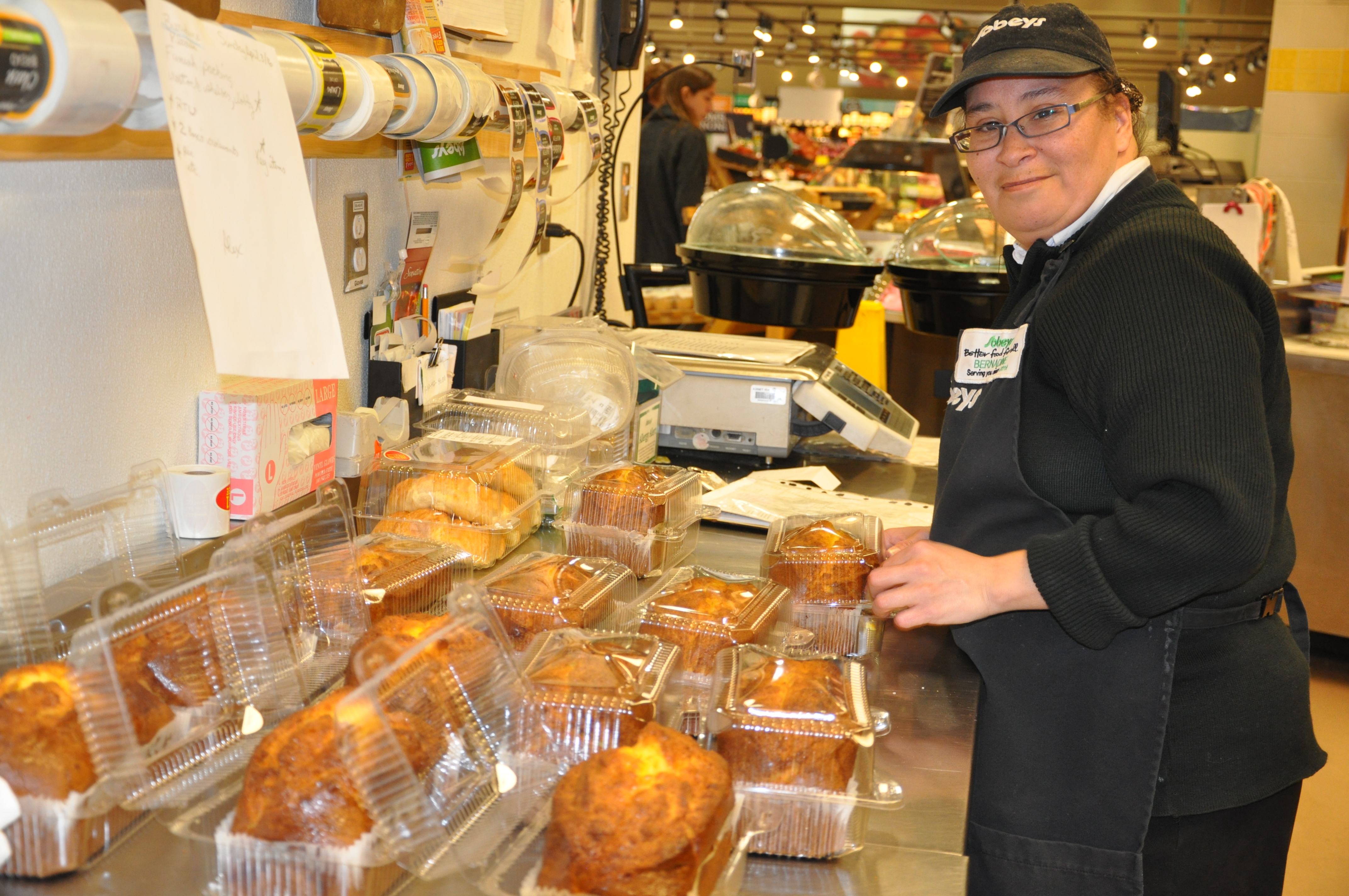
Natalie Clark, and Kayla Gedeon at the Walgwan Center. (Photo: Submitted)

“It’s a rehabilitation center, in the sense of wanting to have a healthier way of life. A healthier way of being, and conducting one’s life,” said Natalie Clark, an outreach worker who began in January.

The center is capable of addressing a wide variety of issues, ranging from grief to substance misuse.

It is aimed at First Nation youth between 12 and 17 years old. Programs include a three-month in-center stay, a four-week prevention program, and in-community counseling.

It serves communities across Atlantic Canada and Quebec. Attempts are made to have the groups evenly split – half boys and half girls, as well as half English and half French.

There have been some changes at the center this year, and they’re trying to make sure the communities are aware of them.

A big one for Listuguj, Eel River Bar and Gesgapegiag is access to Kayla Gedeon, the new Outpatient Counselor.

“She can go and counsel the youth in their respective communities,” said Clark. “That’s something that was needed.”

The main program is the three-month stay at the center. Participation is entirely voluntary.

“It’s not boot camp, but it’s not a summer camp either,” Clark said

The days are jammed packed. Clark said many participants aren’t use to going to sleep at 10 p.m., but after their first week, they’re begging to go to sleep by 8:30 p.m.

Clark said the program is 90 per cent culturally based. An elder works in the building every day, orchestrates ceremonies, and is always available to talk. The heavy focus on culture is also a recent development for the center, but again, it’s not forced on anyone.

“It’s something that we’ve seen that works,” Clark said.

A four-week prevention program is also available. The team attempts to condense the main program as much as possible.

The point is to offer help in whatever way people are comfortable.

“Yes, I’m promoting our center, but it’s not for every single First Nation youth,” said Clark. “They have to be ready to work on themselves if they want the program to be efficient for them.”

“I think we’re on the ball, and we’re out there listening to what the community and what the youth are saying, and trying to adjust the program as they go.”

Looking forward with the Chief

After the first few weeks of 2016, Chief Scott Martin sits at his desk, surrounded by stacks of papers. At the very top is a sheet signed on Jan. 18.  It finalizes the creation of the trust fund – the final step in the settlement agreement.

The official creation of this fund is the last piece of the puzzle, and Chief Martin feels good about it –  nothing was overlooked.

“[There’s] a lot of happy people,” he said. “It was a long process.”

The fund will hold the per capita distribution (PCD) funds for the 793 minors who are eligible to withdraw their portion once they turn 18. It will also hold the funds for the 431 band members that have not applied yet. They have five years to do so.

With this completed, focus can now shift to other projects and priorities

“We intend to create more employment for the community,” Chief Martin said.

A lot of interesting options are being considered, including partnerships with investors on a medicinal marijuana facility. Chief Martin was approached at the start of the year about creating a proposal. Discussions will continue. It will require a lot of work, but it has the potential to generate revenue, and jobs.

Another potential project is the gas station. As the planning work is being done, the vision is becoming clearer. The goal would be for it to be more than just fuel pumps. An attached strip mall is being considered. A seafood restaurant is also under consideration.

“There’s about 2 million tourists that go through the highway every year,” Chief Martin said.

The LMG has already identified willing investors. 

Chief Martin also confirmed that the election term will definitely not be changed this election. Changing to four-year terms can be done with an order from Chief and Council, after two public consultations. But he doesn’t want to rush it.

“I’d rather give them more time,” he said.

However, the last 18 months saw a lot of progress.

“Coming into a 20 million dollar deficit, [with] old files that were never resolved – we resolved a lot of them.”

The result was stability in the eyes of the Federal Government. The LMG was released from the Management Action Plan (MAP), which has re-opened doors.

Now, with access to Ministerial Loan Guarantees again, the LMG intends to work toward returning to the building capacity of as much as 20 homes a year.

Working with the new provincial and federal governments is looking good in a variety of ways. Both have expressed interest in exploring how they can help.

This year will also see results and progress from ongoing projects, including the fishing quota allocation to PEI, and completing agreements involving the wind farm.

“It looks promising for the future,” Chief Martin said. “We’re starting to go forward.”

support Mi'gmaq organizations in the fight to prevent oil exploration in the Gulf of St. Lawrence.

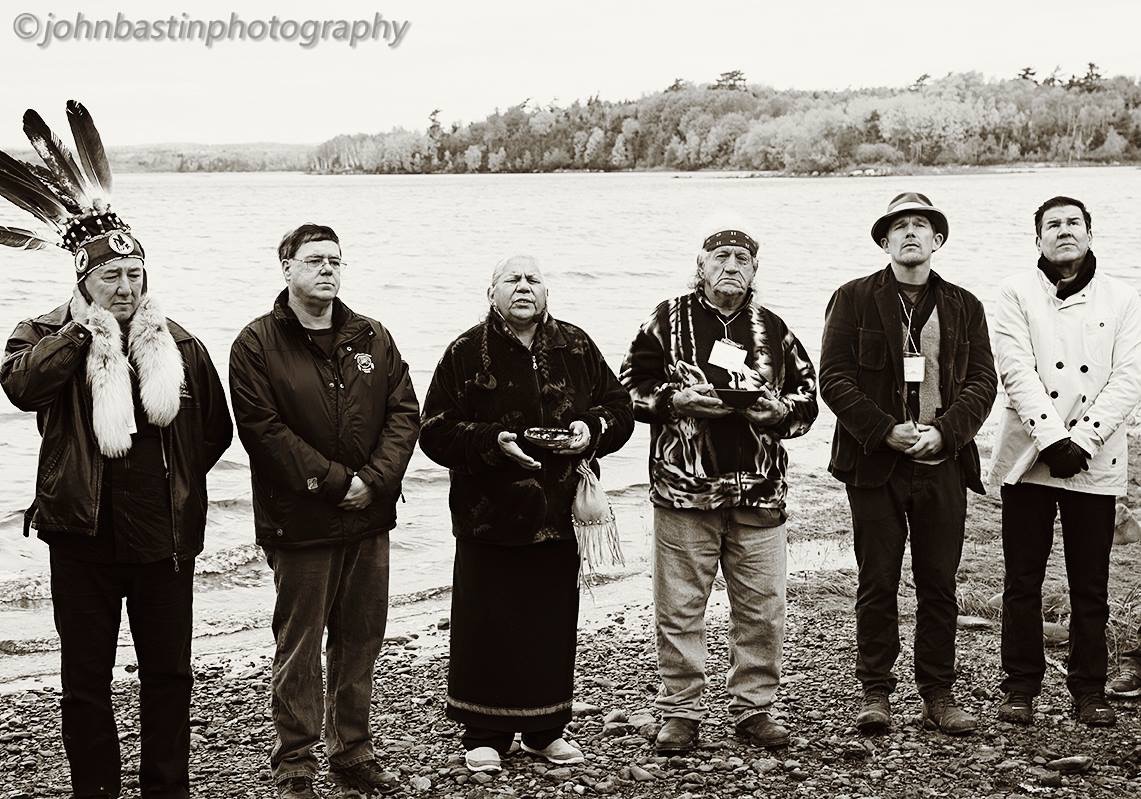
Water Ceremony with Ethan Hawke

Ethan Hawke recently threw the weight of celebrity behind the fight to protect the Gulf of St. Lawrence from oil exploration.

Hawke appeared at a water ceremony and press conference at Paq’tnkek First Nation in Nova Scotia on October 26th. The Mi’gmawei Mawiomi Secretariat helped organize the event, along with the leadership of Gesgapegiag, Gespeg, Listuguj, and Paq’tnkek. Chief Scott Martin was present.

The event garnered a lot of attention — bringing the cause to the pages of the Chronicle Herald, local newspapers in Nova Scotia, the CBC, APTN, and more.

“I really like how they’re using their indigenous rights to help us all,” Hawke recently said in an interview on CTV’s Canada AM.

The MMS, and the entire Save our Seas and Shores Coalition, are calling for a 12-year drilling moratorium in the Gulf. This will prevent further exploration.

So far, things have been looking good.

“If you read between the lines, Corridor is not going to go and drill right now,” said Troy Jerome, the Executive Director of the MMS.

Corridor Resources Inc. is the company interested in exploring for oil and gas at the “Old Harry” site. The company has identified a “salt dome” — a geological formation where oil and gas are sometimes known to collect. The site is nearly in the center of the Gulf.

“[It’s] harder to mitigate, harder to capture oil if it was gone. It’s prone to ice, the high seas, it’s far away,” said Jerome. “The reason we’re extra vigilant about that area, is because of those factors.”

So far, there has not been any site-specific consultations, or studies, that the MMS is aware of. The crown has a fiduciary duty to consult First Nation’s communities on such projects. Corridor Resource’s exploration permit is up in March, but they are believed to be seeking an extension.

Jerome said everyone on the opposition front are happy with the progress so far.

“On the Newfoundland side, seems like that is — I wouldn’t say ‘dying down’ — but it’s at least: we’re there, we have some traction, there we go,” Jerome said. “But on the Quebec side, the strategic environmental assessment is coming out.”

Jerome said they’ve made it clear to the Quebec government that, “under no circumstances — any discussions we would have — would we be open to the Gulf.”

Jerome said one thing, at the very least, is essential — a comprehensive study of the Gulf as a whole. One hasn’t been done, and the province’s own strategic environmental assessment two-years ago identified large knowledge gaps.

Luckily for the Coalition, Jerome said the Quebec government has cited social acceptability as a factor when evaluating projects and development. Jerome also said that no other project of its kind has ever come up against so much opposition as the Gulf exploration has.

The MMS plans to approach other large organizations, in hopes of making their opposition publicly known.

Ethan Hawke was easily persuaded to speak out. He has owned property beside Paq’tnkek First Nation along the St. George’s Bay for 15 years. He spoke of the beauty that struck him when he first visited 20 years ago, and his hope that his family will be able to continue coming back to the area.

“It was a real honor to be here today,” he said. “It’s bigger than any one of us, it’s bigger than any one generation.”

Listuguj Joe Robert Memorial Hockey Tournament

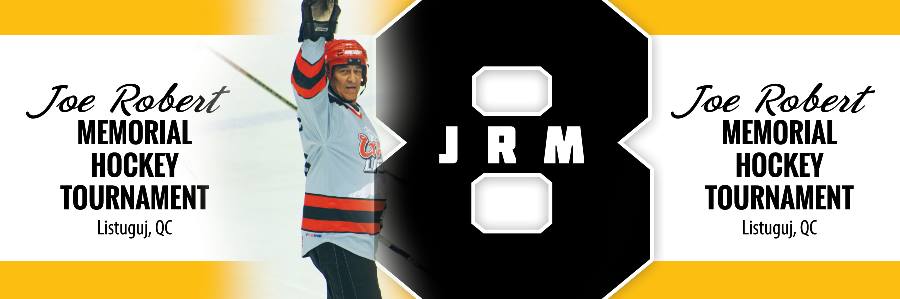
Joe Robert Memorial Hockey Tournament

new committee has formed to organize the Joe Robert Memorial Hockey Tournament, and provide two scholarships annually.

The committee is kicking off its first year with two $500 scholarships for Listuguj youth graduating  in 2016. The committee is looking for students “who are well versed in athletics, and in academics.”

The committee hopes to carry on this scholarship. But it also has other ambitions.

“It’d be nice to have something that’s community driven, and community maintained,” said Isaac.

“Giving back to the community is something that is very important, and we hope these scholarships will help youth who are pursuing post-secondary education.”

Isaac said he can imagine a fund, designated to helping athletes whenever they need it, year-round, in a variety of ways.

For now, the scholarship coincides with the revival – and renaming – of what is now known as the Joe Robert Memorial Hockey Tournament.

The last hockey tournament was in 2013. It’s now named in honor of Joe Robert Metallic.

“He was very athletic,” Isaac said. “He was always a good supporter of athletics in the community. You’d see him at our tournaments. You’d see him at our softball games.”

Metallic was known to be playing hockey in his 70’s. 

The tournament will be on January 22, at the Memorial Civic Center, with a total of at least $5,250 in prizes to be awarded to division A and division B teams. Listuguj already has teams in both divisions. The deposit deadline is January 15.

The scholarship is already accounted for, with help from donations from local businesses, including a $3,000 donations from True Sport.

A CCM RBZ Stage 2 hockey stick will be raffled off on Nov. 30, live at noon on CHRQ. Tickets are $5 for 1, or $10 for 3. There will also be a spaghetti lunch on the January 13th, as an additional fundraiser.

Proceeds will go to covering the cost of the tournament, and continuing it on an annual basis.

Restorative Justice

National Addictions Awareness Week opened the door for many, related topics to be discussed. One was “Restorative Justice,” and the study Cathy Martin recently helped complete.

“It correlates with National Addictions week because [it’s] the number one thing that came out of the survey so far,” Martin said. “The large majority of crimes in Listuguj, for the Community and Safety Wellness Plan, originates from addictions.”

Martin gave a presentation on the plan to close out the National Addictions Week events.

The Community and Safety Wellness Plan began in 2012. Martin just recently got involved to finish it. She has been involved with the Restorative Justice Healing Circle Committee since 2009. It has been active in Listuguj since 2004.

Restorative Justice provides an opportunity for those convicted of – relatively – minor crimes to stay out of the court system, and avoid criminal records.

A committee is made up of qualified people from different fields.  The accused person hears about the crime and it’s impact on the victim, families, and the community. 

“You have to have restitution for your crime, you have to address your victim,” Martin said. “And you have to really have remorse.”

Many report the process being harder than the court system, but it has been proving to be effective. It is entirely a voluntary option. But one that is not widely known, yet.

Playground Ribbon Cuting

Even with the rain, many came out to celebrate the opening of the new community park. Over $80,000 was raised in total. 

“I think a few people did double takes when we went from 5,000 to 65,000 in a matter of days,” said Sheila Swasson, one of the organizers of the project. “This project is very near and dear to my heart. Right now, it’s swelling with thanks and gratitude for all the contributions that made this dream a reality.”

A project that developed from the interest a single swing set generated, is now a full, modern playground for the kids to enjoy for years to come.

A big part of the fundraising was a donation from Invenergy – a company involved with the Mesgi’g Ugju’s’n Wind Farm. It donated $52,588.38.

Frits de Kiewit, the Director of Development for Quebec and the Maritimes, said the company will contribute to community projects and opportunities for “many years.”

“The project for a new playground just gave us an opportunity to jump-start and underscore our intentions,” he said.

The community also donated a lot, in many different forms.

Victoria Labillois, the MC of the ribbon cutting, told a story of when Swasson was up on a ladder, coloring in the thermometer.

A man walk up and asked what she was doing. After explaining the plans for a park, he dug in his pocket a found a toonie. He gave it to her.

“You know what,” said Labillois, “that’s a big part, and that says a lot. Because that’s who we are Listuguj. We come together, and we give what we have.”

Video

Remembrance Day Ceremony 2015

The Remembrance Day Ceremony at AGS school keeps growing. Last year organizers had to set up more tables. It is always held at 11:00 a.m. on November 11th.

“We’re growing out of the AGS,” said Mary Bradstreet, one of the organizers. “It seems like there’s more people that are coming out to support this event marked for the Veterans.”

Bradstreet is excited about some of the plans for this year, which includes the local drumming group, Spirit Bear.

“They sing ‘Soldier Boy’ and that’s so powerful when you hear that,” Bradstreet said. “And this year we have a litter girl – she’s about 7 years-old – and she’s going to be singing O’Canada in Mi’gmaq. Her voice is powerful and she will give you shivers. Her name is Annie Morrison.”

The committee is also hosting its major fundraiser on Friday, Nov. 6 – a silent auction at the Elder’s lodge, followed by a Steak and Rice Supper. Plates are $5. The auction is held from 1 p.m. until 5 p.m.

Bradstreet has been surprised by the many amazing donations this year.

“It’s going to help the veterans in so many ways,” Bradstreet said.

The money goes toward the many events organized by the committee, namely the Remembrance Day Ceremony, and the Flag Raising Ceremony held on Aboriginal Day, June 21st.

Thanks to the direction of the committee’s president, John Mitchell, the Flag Raising Ceremony now includes a Missing In Action (MIA) and Prisoners of War (POW) Flag , to honour the two POWs from the community, and one man who was missing in action.

The committee also grants a $500 scholarship to a high school graduate every year, provided they have the funds.

The committee originally began in 2009 to help fundraise for the Veteran’s Monument.

Bradstreet only got involved because she was looking for an activity to be involved with. She says it has grown into a passion for her.

There’s been a lot to learn, including important ways of showing respect to our Veterans.

Aside from the hard work that the committee puts in to make these events possible, Bradstreet is inspired by the veterans – like the one retired marine who always salutes until every single name is called out at the ceremony, or the retired marines who retire the flag every year.

“I am very grateful to be involved with a group of people who share the commitment and passion in giving back to the Veterans of our community, who we thank for our freedom,” she said.

The Remembrance Day Ceremony at AGS in 2014.

The Remembrance Day Ceremony at AGS in 2014.

Exercising the right to hunt

Oakley Barnaby shot his first moose this year. It was given to the Pow Wow. He just turned 12 years old.

He’s been hunting with his mom, Jill Metallic, and Ricky Condo his whole life. Condo likes to bringing kids hunting and fishing.

Among many things, Condo reminds people of the recent past, when First Nation hunting rights weren’t being acknowledged. When he was growing up, some people were even scared to hunt. He makes sure the kids never feel that way.   

“Nowadays it’s not the same,” he said. “We go everywhere and anywhere there’s moose. Whenever we want – to practice our rights.”

But Condo certainly doesn’t take every moose he sees.

“My god, there’d be no moose left out there,” he said.

He tries to teach the kids the many aspects of hunting, like when, how, and why to hunt.

“You don’t just shoot it for fun,” Barnaby says now, pulling a stool up after school. “You have to have a reason to have it.”

“Anybody can shoot a moose,” Condo said. “It’s what you do with the moose after.”

Condo and Barnaby were driving on “Pow Wow Road,” when they spotted a big dark moose about 350 yards away. Barnaby had been practicing, so he got out, and steadied the gun in between the door and truck. His mom had her gun ready too, in case he missed.

Barnaby could only see the face. He shot. And everyone thought it fell just off the road.

When they got up, they saw the moose running down the hill – now nearly 1,000 feet from the road. It was heading straight for the trees.

Condo took aim and shot. The moose fell

With the help of a friend and lots of rope and pulleys, they managed to pull the moose all the way back to the road, and onto the truck.

“It was good that it was hard,” Barnaby says now. “So I know how difficult it could be.”

Anita’s Presentation

Good Morning,

I would like to thank Darcy for inviting me to speak today at the 20th Anniversary of SSHS celebrating Treaty Day.

Last year I was doing some cleaning at home and found some old photo albums of pictures that I had taken when I was working at Sugarloaf. Included in the pictures were photos from the first Treaty Day celebration that I had organized in 1995. Later in the year, I had a conversation with Darcy, and I mentioned to him that 2015 will mark the 20th anniversary that SSHS has celebrated Treaty Day and that I had pictures of the event that he could borrow and include in the 2015 celebration. My original plan was to provide Darcy with the photos, not to be a speaker, but here I am.

I began my teaching career as a Teacher Assistant and attended university part-time. I received my teaching degree in 1989. I worked at CMS, then here at SSHS and am presently at the AGS. My assignments at SSHS were to teach one class, to organize an Aboriginal cultural center in the school, and to be the guidance counselor for the Native students.

I decided to show a visual presentation on how I included First Nation content into my classes and the activities that the students and I organized that recognized and promoted the contributions that First Nation people have made.

Visual Presentation

1. Native Awareness Week 1993 – One of the first events that we facilitated was Native Awareness week in 1993. This event was celebrated during heritage week and featured First Nation people and organizations from Listuguj. The objective was to bring awareness to the resources that the community had to offer and to welcome others to our visit our community.

Scan10017


2. Maritime Studies Class 1994 – In addition to including First Nation history in the lesson plans in my Maritime Studies class, I had learned how to make a dream catcher and decided to teach the students how to make one also.

Scan10110

3. Trip to Maria 1994 – This activity was organized to teach the students how baskets were made. The wood mainly used in basket making is ash, which isn’t readily available in our area; so our class went to Maria and spent the entire day learning how our ancestors took a piece of wood and transformed it into a work of art.

Scan10005

4. Native Studies Class – Drum 1994. SSHS was one of the first schools in the province of NB to pilot the Native Studies 120 course. A drum group was in the process of being formed; however we did not have a drum, so we decided to make one. Don Caplin was our instructor and his teachings were very hands-on, as you can see from the photos. That was the one and only time that I de-haired a moose. After the moose was cleaned it was brought to the school to be dried. We placed it in the industrial lab area – not realizing that the ventilation system would carry the smell throughout the entire school. Administration was not pleased with me on that day.

Scan10149

Scan10176

Scan10187

5. Drum Cover 1994-95 – After the drum was completed, it needed something to be covered and carried in. The students each created their own work of art on a piece of material and we then sewed it together to create the drum cover. I want to mention that all of the classes, cultural center activities and all events were open to all students – not just the First Nation students.

Scan10198

6. Variety Show – 1995. This was an annual event that was put on by the school and in 1995, for the first time, the show included the school Aboriginal drum group and the shawl dancers.

Scan10216

7. Treaty Day 1995 – The first Treaty Day event was held on Oct. 1st, 1986 in Nova Scotia. It recognized the connection between the government and the Mi’gmaq Aboriginal people and it commemorated the Peace and Friendship Treaties that were signed in the 1700’s. As 20% of the school population was Mi’gmaq at the time, we decided that SSHS was going to have a celebration on October 1st also to recognize Treaty Day. The school drum group performed and were accompanied by the shawl dancers. A traditional feast was held in the cultural center. My mom – Gerry Basque – made corn soup and listugingin and other traditional foods were also served. My mom could not be here today, but she did make her corn soup again, which you will be able to sample later during the feast. That event started the tradition of celebrating Treaty Day at SSHS and I am very proud and happy that the tradition was carried on by individuals and still is celebrated today.

Scan10249

Scan10251

8. Native Studies class 1995 – There were a number of events and activities that happened and continue to happen at SSHS that include First Nation Peoples contributions in history. The Native Studies course became an accepted elective course for graduation and is offered in many high schools in NB, including here at SSHS. I cannot show you all of the many positive things that have taken place over the years, due to time; however I do want to show you a few more pictures from activities that the students participated in.

Scan10285

9. Native Studies Class Totem Pole 1995-96. The Totem pole that sits on the landing as you enter the school was made by the students from the Native Studies class under the guidance and instruction of Don Caplin. My dad- Peter Basque – cut the log for the Totem pole and I brought the students to his gravel pit, where they learned how to shave a log using a traditional shaving device. An eagle flew overhead as the students were working on the log, which was a positive sign. The log was brought to the school and each student designed their own creation, carved it into the log and then painted it. My logo with my initials – BKS – is located on the back side of the totem pole. Mr. Lepage and my nephew –Timo – along with other students, mixed cement and erected the Totem pole in its present location. The plaque listing the individuals who participated in that activity, was made by students and hangs next to the totem pole.

Scan10352

Scan10305

Scan10316

Scan10339

Scan10347

10. Totem Pole Assembly 1996 – This assembly was held to celebrate the completion of the Totem pole.

Scan10353

Scan10373

11. Trip to Cultural Center & Fort 1996 – As some of the students in my Native Studies class had never been to Listuguj, I decided to arrange a field trip to the Cultural Center and to visit Fort Listuguj. It was hard to believe that some students had never visited our community before that activity and they were impressed with what they saw.

_Scan10007

_Scan10025

12. Jimmy Herman 1996 – The Cultural center at SSHS was one of the first ones established in the province of NB and people were becoming more aware of the work that was being done. We received many visitors from other schools and we were featured in the “Aboriginal Education in New Brunswick” newsletter. Jimmy Herman- an actor known as ‘Joe on North of 60’ was visiting in the area and heard of the Cultural Center and decided to pay us a visit. He was impressed with what he saw happening at the school and autographed a hand drum that is still located in the Cultural Center.

Scan10290

Closing

In closing I would like to read an excerpt from “The Demand” by Chief Dan George; who among many other things, was an actor and a poet from British Columbia.

The Demand

“Let no one forget it…… we are a people with Special rights guaranteed to us by promises and treaties. We do not beg for these rights, nor do we thank you….we do not thank you for them because we paid for them….and God help us the price we paid was exorbitant! We paid for them with our culture, our dignity and self-respect. We paid and paid and paid until we became a beaten race, poverty-stricken and conquered.”

As Aboriginal people, we still have ‘limited’ special rights due to the treaties that were signed. And our ancestors did pay for those rights with our culture, language, and at times our dignity and self –respect. We cannot change the past, but we can change the Future.

I believe, and I teach my students that ‘Knowledge Is Power”. Academic knowledge is important and equally important is knowledge about who you are – your culture, language, and traditions.

At the community school in Listuguj – Alaqsite’w Gitpu School – , we try to include all aspects of knowledge in the teachings to the students. I feel that Sugarloaf does the same. Today is a good example of this.

It was an honour to be asked to speak here today – enjoy the feast and the rest of the day.

Welalioq

Pre-contact Mi’gmaq Culture

Twenty-three years ago, decisions were made to revive Mi’gmaq traditions. A program began, titled – “Relearning a Way of Life.”

Twenty-two people came together to learn and share what they knew of traditional practices. Some even came from out west.

Claudia Gray remembers one elder from Gesgapegiag, who was going blind and deaf. She was teaching how to make baskets.

“If you did it wrong, she’d go up to you and just tear it apart and throw it down,” Gray said. “That’s how we learned. It was fantastic.”

Claudia Gray in her classroom at AGS

Claudia Gray in her classroom at AGS

The group wanted as close to a real understanding as possible of aspects of pre-contact culture.

“The only way to really do that,” Gray said. “Was creating the village, from the ground up.”

An entire village was built, with as much traditional knowledge as possible.

“Some of the students still practice the skills,” Gray said.

A lot was learned from a book Gray’s aunt – Vivian – had written, but never published.

“She studied this her entire life,” Gray said.

Her aunt had been teaching her things her as long as she could remember. So for Gray, a lot of practices were just a part of her life. Now they were being shared.

The program ran for three years, and then Gray was asked to teach “Pre-Contact Mi’gmaq Culture,” when AGS opened up. It has been open for 19 years now.

Vivian Gray’s work is now taught to every single kid in Listuguj. It is now just a part of growing up, and going through school.

This is a long way from when Claudia Gray was a kid. She remembers making crafts secretly. She would have history lessons and often wonder why textbooks never mentioned Mi’gmaq people.

Now – even when her students don’t seem interested in the material – Gray is certain the class is having a beneficial impact.

“We notice that our students, when they leave AGS,” she said. “[They] cross over and don’t feel inferior, don’t feel different. They feel equal, and happy with who they are. And if there’s something said that’s not correct, they correct it. They have the ability to do that. That makes us proud.”

“Oprah Moment”

“Who would ever think that this is what I would do,” Gray said. 

She had never planned to move back to Listuguj. She thought she might of retired here. But things changed.

She found herself unexpectedly moving home as a single mother.

It happened to be at a time that interest in reviving traditions was growing.

Members of the LMG knew Gray’s family — particularly her aunt — had interests in traditional practices. Not that Gray had ever thought much of it herself.  In  fact, she didn’t always understand it as a kid.

“I thought it was torture,” she said.

Regardless, it was always remained a part of her life.

“Crafty Claudia is what they called me.”

Still, she never imagined these interests could be a job.

“Relearning a Way of Life” was so successful that it ran for three years, and changed Gray’s life.

“That was my ‘aha moment.’ That was my Oprah moment. Of — ‘this is it, I’m home for a reason,'” she said. “It saved my life.”


Pre-Contact Mi’gmaq Culture

The original program grew into “Pre-Contact Mi’gmaq Culture” at AGS. It’s been taught since the school opened. Gray now teaches some of the grandchildren of participants of “Relearning a Way of Life.”

They teach the kids a lot of what they learned 23 years ago, but they also try to pass on some of the experiences of rediscovering the knowledge for the first time. One exercise for fourth graders helps them begin imagining what life could have been like hundreds, and thousands, of years ago

“The scenario is — you’re in the woods. It’s October, so it’s kind of cool. And you’re bare naked. What are you going to do to survive?” Gray said. “It really sparks their thinking.”

The class does quill work with actual porcupines quills. They go out to the woods, and gather everything they need.

“They have to learn to wait. Patience is a big thing,” Gray said.

Some kids don’t necessarily appreciate everything that is taught, but then again, neither did Gray when she was young.

“I said the same thing at 13, and I’m sitting here in a Mi’gmaq school, doing something that I thought was totally irrelevant, totally unnecessary, but yet it was my whole life,” she said. “For them to have the opportunity to know where you come from, and why you are still here today, makes who you are – I think anyway – makes you a better person.”

For Gray, it’s important that the kids share what they learn. She encourages them to go home and talk with their parents and grandparents.

“They  were part of the group that we were a part of. It wasn’t a part of our teachings everyday in school. Or even practiced with families.”

The class is proof that the decision to revitalize these aspects of culture 23-years ago was successful. Gray says the interest — and understanding of its importance — has grown tremendously over the last two decades.

“The spark was there. Now it’s fire.”

It is now at the point where students exposed to these traditions throughout their lives have grown up, graduated from university, and are doing great things. Gray certainly doesn’t take all the credit, but a healthy approach to history has undoubtedly contributed to pride, and confidence.

“Knowing who you are and where you come from – that’s all you need. And you know right from wrong. And you know that things that happen in the past can either break you, or shape you,” she said. “Most of them are standing their grounds, and changing the future. And that’s what makes us proud… they will make a difference. Because they’re not going to let history repeat itself.”