Remembrance Day: Honoring our Veterans

November 11th is a day to remember those who fought for our future and safety. 

The Listuguj Veteran’s Committee held the Remembrance day ceremonies at the Listuguj Community Development Center this year. It started at 10:30 a.m.

Half of the (Bingo) Hall was decorated, with a long table running midway through the room to accommodate our veterans.

At the front laid the Canadian, American, Prisoners of War, Listuguj American Veterans Flags,  along with the Veteran’s Cenotaph.

Shortly after the doors opened, people started filling the seats.

“I was very amazed with the turnout,” said Mary Bradstreet, one of the organizers. “This was a larger attendance – much more than what we usually get.” 

The service started with the Spirit Bear drum group, singing, while the veteran’s entered. After placing the flags alongside the cenotaph, the veterans took their seats at the table.

The ceremony opened, and Bradstreet introduced Chief Darcy Gray. He spoke of the profound impact these men had on the families, here at home.

Peter Arseneault, Chief of Police,  also spoke of the connections to family.

“There is a lot of pride – family pride – with individuals that have served in the military,” he said. 

Arsenault also noted that there’s been somewhat of a revival in honoring veterans of the past, and those of today.

The Royal Canadian Legion used to hold Remembrance Day ceremonies in Listuguj. However, many veterans served in the American Armed Forces, not the Canadian. This created some issues, and the ceremonies were ultimately discontinued.

“We didn’t have that voice or presence of the veterans for a long long time,” Arsenault said.

In 2009, the Veteran’s Committee was created to change that. The first step was creating a veteran’s monument. It was unveiled at AGS, on June 21st, 2010.

The next step was establishing a permanent home for our Veterans.

“We talked about the Veterans Lodge,” Bradstreet said. “This goes all the way back to when Michael Isaac Sr. was still alive and well. That was his dream, to have a veteran’s lodge. John Melvin Vicaire, Patrick Isaac, James Isaac – they were  key, instrumental, in getting that Veteran’s Lodge.”

Remembrance Day holds a lot of meaning for many of us.

It’s important that we continue to remember, and honor, all that these men sacrificed, for the good of their families, and the community.

Salmon Summit 3

Salmon Summit 3

The Salmon Summit has been held in Listuguj for three years now. It was created to bring people and organizations with interests in the Restigouche watershed together.

Over the course of two days, Salmon Summit 3 was held at the Bingo Hall. Discussions and focus group sessions were held, showing the amount of work and data that needs to be analyzed and shared.

The summit began as a means to talk about the diverse relationships with the salmon, but is now growing into a truly collaborative approach to managing and protecting the water, and all that it sustains.

There are people like Carole-Anne Gillis, a cost-shared fisheries biologist, working for several organizations, to gather information and understand Everything from stock assessments, to testing fish for viruses or bacterial infections.

“We’re doing a lot of basic fundamental research,” Gillis said. “To answer questions that we can then follow through with management.”

The benefit of the summit, is various groups can work toward mutually beneficial goals. The first step, however, is Identifying the challenges to achieving them.

“Discussion groups today were about identifying them,” said Kirt Dedam, the Aboriginal Fisheries Strategy Coordinator, with Listuguj Fisheries. “How can we work toward solutions? So that everybody – when they go away today, will have something to work towards.”

The hope is that people can return next year, for Salmon Summit 4, and say they followed through with their commitments.

“This is how we want to keep growing this thing,” Dedam said.

The summit has always been intended to serve multiple purposes. Representing the Aboriginal perspective has always been one of the key goals. Dedam believes a lot of people were taking this perspective away with them this year.

“There’s a lot of talk about ‘two-eyed seeing,’” Dedam said. “Seeing from a western science and an Aboriginal perspective too. But how do you blend the two?  So I think that’s one of the things that people get from these meetings. Plus, we learn more about the science that’s going on, which is important too. ”

A main focus has always been building relationships and trust among the various groups, and Dedam was pleased to see a lot of participation this year.

Discussions around what the future may hold for the summit has also begun.

“We’re starting to expand our view,” Dedam said. “And where we want to go with this is maybe inviting other watersheds in the area, from other provinces, other communities, other First Nations, and start being more inclusive, and keep growing this.”

Halloween in Listuguj

Photo by Denise Barnaby

The importance of thermal refuges for Salmon

Salmon are sensitive to everything in the environment, even relatively small differences in the  the temperature of the water.

“Anything above 23 celsius, they have a hard time doing their biological function,” said Carol-Anne Gillis, a cost-shared biologist, working with the GMRC, the Listuguj Fisheries, and the Restigouche River Watershed Management Council (RRWMC).

She is working on the Strategic Management of Thermal Refuges in the Restigouche River Watershed project. They are looking at preserving – and enhancing – areas of cold water in the river that the salmon tend to hang around. These are important areas, at several different stages in their life cycle of the salmon.

If you ever travelled down the Restigouche River, and stepped out of your canoe into surprisingly cold water – you’re not crazy. There can be as much as a 10 degree difference in some places. There are now 1,825 classified “thermal refuges” identified.

There are “seeps,” where groundwater seeps into the river, and there are “confluence plumes”  where streams meet the main river, and start to spread out. Often, the cold water from a stream will meet the river, and be pushed to the side.

“So you might have this cold water space, but it’s only like a foot wide, and it’s on the shoreline,” said Gillis.

Part of Gillis’ work is to find ways to enhance these confluence plumes.

“What we can also do is create these instream structures where you can kind of, either give more energy to the small stream, so it can have a bigger space for fish in the main stem,” she said. “It’s kind of alike a cone. So instead of having a streamline of cold water on the shore line, hugging the shore line, well you can divert it, and create a bigger cone of cold water. So there’s more volume for fish.”

The seeps are a little more complicated to protect. They are protected the same way many other aspects of the river’s health is maintained – managing nearby land use.

Etlagnutmamg with Vivian Sorbey

Etlagnutmamg with Vivian Sorbey

Joe Wilmot sat down with Vivian Sorbey to have a conversation entirely in Mi’gmaq. This is part of the Etlagnutmamg series by the Nujignua’tegeg. It features conversations entirely in Mi’gmaq with people in and around Listuguj First Nation.

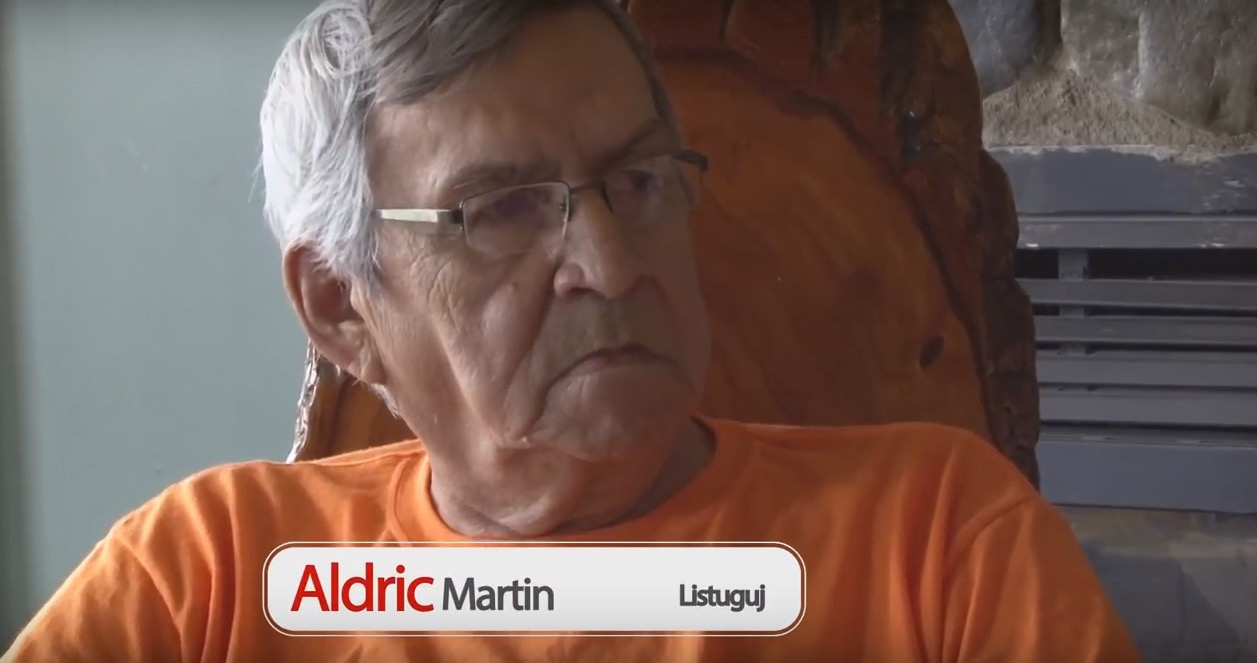
Etlagnutmamg with Aldric Martin

Joe Wilmot sat down with Aldric Martin to have a conversation entirely in Mi’gmaq for Nujignua’tegeg’s Etlagnutmamg.

Traditional Parenting Program

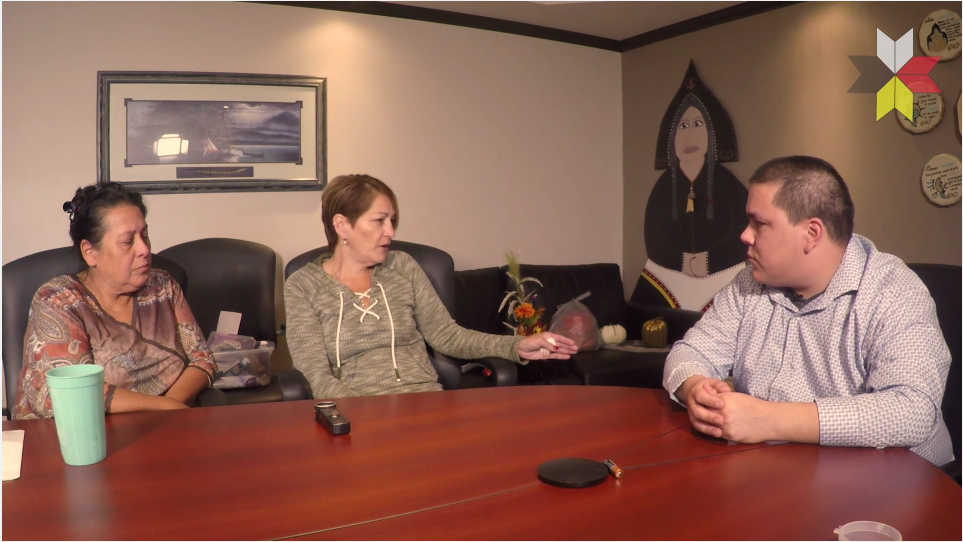
VIDEO: Traditional Parenting Program

Tanya Barnaby and Christine Metallic sat down with Nujignua’tegeg’s Tyler Morrison to discuss the Traditional Parenting Program offered by Families First Support Services.

Training the next round of firefighters

The last time Listuguj had a firefighter training course was roughly 15 years ago. As years passed the number of firefighters we had slowly dropped. “We keep on getting volunteers that quit, every year,” said Garry Caplin, Listuguj Fire Chief.

After several attempts to establish a training course, the program finally had enough applicants to move forward this year. This round of firefighters could potentially expand our Fire Station here in Listuguj.

In September the program started with 10 recruits. The training runs for a total of 10 weeks, ending in the second week of December. During this time, the trainees are put through vigorous training routines.

When working with emergency services, minutes can save lives. The training will prepare the recruits to meet those standards of readiness, and to handle the stress from whichever emergency they may respond to.

“I was kinda nervous at first, then I started learning more about it,”  said Tyrone Metallic, a current recruit.

The recruits had many live training exercises during the program so far.  One morning, a fire drill was held at the LMDC, recruits entered the building, checking for anyone inside. It gave them a chance to test some of what they were learning.

Before responding to an emergency, the recruits have to be experienced with many things, including PPE (Personal Protective Equipment), the SCBA (Self-contained breathing apparatus), and they also have to be able to get fully equipped in 60 seconds.

“I thought there was just a basic firefighter,” said Jacob Arsenault, another recruit. “You run in the burning building. No — there’s so many different jobs, tvhen there’s more training … there is the E.M.T training, then E.M.S training, all that first responder stuff.”

Hydrant connections, forward & reverse lay, using ladders, hoisting tools — those are a few of the many operations recruits have to learn. After the course finishes, recruits will be certified first responders. Bringing in new firefighters for our station is great progress.

“The long term goal is to have a couple battalions where we can split our crew with the fire department, also get new recruits, and to build our station even bigger than what it is now,” said Caplin.

The new recruits have been getting involved for all sorts of different reasons.
“I didn’t have a main interest in being a firefighter, specifically,” said Metallic. “I just knew that in emergency situations  … I wanna be able to help people, rescue people.”

“It’s one of those old kid dreams I guess,” said Arsenault. “You know, you want to be a firemen or a police officer, or a Lawyer or something. So I just ran with it, and fell in love with it instantly.”


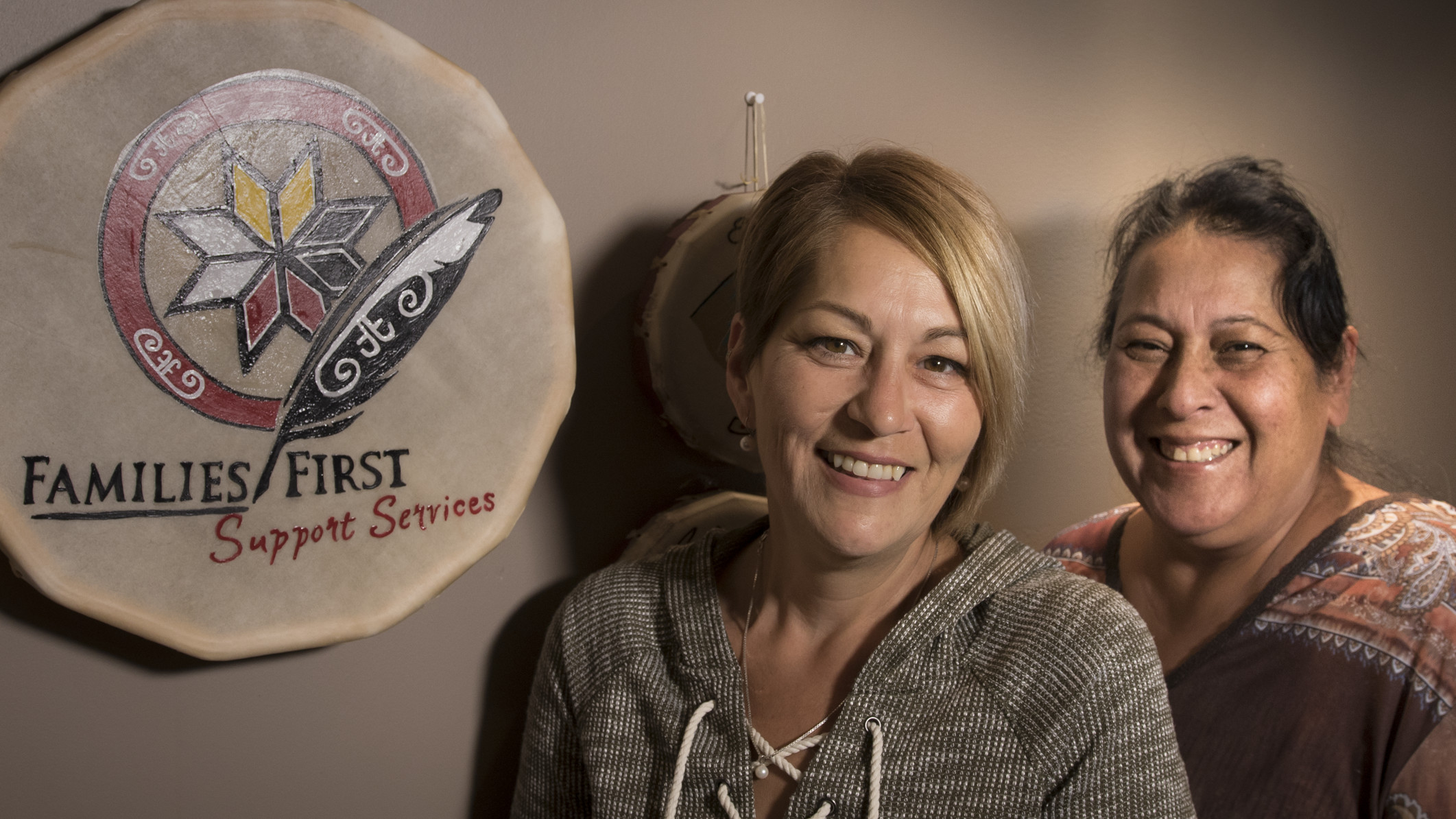
Tanya Barnaby and Christine Metallic of Families First Support Services.

Traditional Parenting: Helping people heal together

The Traditional Parenting Program offers a supportive group, without judgement, for anyone struggling with any aspect of parenting. Coordinators Tanya Barnaby and Christine Metallic try to offer tools, but ultimately, the group develops on its own. It’s been more effective than one-on-one counselling.

“Things that you would not normally see in one-to-one … you will see it in a group,” said Metallic. “I always find the group has more meaning.”

The program offered by Families First Support Services becomes a support network. People share experiences,  while coordinators try to find information and resources to help.

The group starts in the fall, and progress through the winter months together, every week at the same time.

“Surprisingly, interestingly, they are all committed to that  process,” said Barnaby. “And it’s a long process.”

The basic structure of a meeting is simple — opening prayer, time to check in with everyone, a topic of discussion, another discussion on how that information may relate to your life, and then a closing circle.

“As the weeks go on, we present less, and they bring up the issues and we have a discussion,”  said Metallic. “We really try hard for confidentiality and safety. Once we build that, then the shift changes where the participants end up running the group, and we’re just giving them information.”

The program started five years ago. Without entirely reinventing the wheel, Traditional Parenting used the experiences of similar groups out west, and responded to a growing need in the community.

“There was a need for helping support families in another way that was more culturally relevant,” said Barnaby.

The program changes a bit from to year to year, as they gather more feedback, and they use all the tools they can. An understanding the intergenerational impacts of trauma has often proved to be useful.

“It’s understanding our history,” said Metallic. “And allowing  families to have an understanding that — some of this stuff may not necessarily be theirs. It could be their grandparents, it could be their parents. But by taking a look at this — you don’t have any excuse why you can’t change and be a better parent.”

Barnaby and Metallic remember one woman showing up, unsure of herself, looking like “a deer in the headlights.”

Overtime, the counsellors got to know her and her true personality. The “vivacious” personality that was often stifled, and told to “calm down,”   was appreciated and accepted by the group.  She became comfortable being herself, and started trusting her abilities.

“For her to take that quality as a gift, as oppose to something that should be stifled,” said Barnaby. “For her to find that she has self-worth, that she is worthy, and that she can do stuff for herself and her son … it makes it worthwhile for us.”

Public Meeting

On September 25th, Chief and Council held a community meeting at the Listuguj Community Development Center (Bingo Hall) to discuss topics that community members submitted.

The doors opened at 5 p.m with over 50 community members in attendance. It lasted nearly four hours. The night’s agenda had several topics.

First item for discussion was the electronic meters from Hydro Quebec. Questions were asked and what benefits come from these meters.

The next topic was the 20 houses being built. It was explained that 10 were ready for construction this year while the other 10 were having the lots prepared for next Spring.

The Matrimonial Property Law was also looked at briefly, with Sheila Swasson explaining what it is and what it means for our community members.

Zenabis was the last item on the agenda, questions focused on the availability of jobs across all sectors, from construction all the way to production. Two 8-week training courses will be hosted by the L.E.D and facilitated by the Kwantlen Polytechnic University. The training would be done online and this would be a starting step for anyone interested in the Professional Management of Medical Marijuana Facilities in Canada.

Other related topics were brought up during the meeting were the Elder’s Facility, Education, Future Structure of Housing, Finances on Housing, a request from CHRQ.

Brenda Gideon-Miller was present, and thought it was a positive meeting overall.

“The only regret that i have is that there wasn’t as many community members as I had anticipated,” she said.

She would have also liked an agenda prior to the meeting, and any other information that could have been available. Overall, she thought it was encouraging, and a good step by the Chief and Council.

“It was good conversation, good discussion, people were talking,” she said. “There wasn’t any yelling going on, there wasn’t any of the negativity also. I think it was a good first public meeting. I’m looking forward to more.”