Vicky Metallic – Metallic Publishing

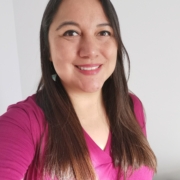
It was in 2021 when Vicky Metallic first had the idea to create Metallic Publishing – a Mi’gmaw owned business with an aim to publish and distribute Mi’gmaw language books and other related language educational material for schools and students across Gespe’gewa’gi, as well as for the general public. 

Vicky has long been passionate about reading and writing. She was raised speaking Mi’gmaw as her first language by her parents Mary Ann and Frank Metallic. In 2018, she enrolled in an intensive 2-year Mi’gmaw literacy training program at LETE (Listuguj Education, Training & Development), where she was introduced how to read and write in the language by her instructor and aunt Janice Vicaire. It was during this time that she developed an interest in, and realized the potential of, Mi’gmaw language creative writing, and had planned to help create curriculum content for the school. However, life made a sudden change.

The time between 2018 and 2021 was significant for her. Suffering the huge personal loss of her partner Mark, it prompted her to reflect and re-evaluate how she really wanted to be spending her time. During her break from work, she knew it was time to go about her interests a little differently. With an entrepreneurial spirit, experience in proposal writing, and strong support from her family, she set out on a slightly new career path as an independent publisher. 

“It feels great to be able to give what I never had as a child. Growing up, I was only exposed to the language in my home from my immediate and some extended family. Looking back, I think how significant it would have been to see children’s books and tv shows in our language. Not seeing my language reflected anywhere has always made me feel like an outsider. With Metallic Publishing, I hope to change that. I want to provide a sense of belonging.”

In December 2022, Vicky was notified that her funding application to Canadian Heritage was successful. This funding is being used to create language learning content for social media. Videos are uploaded weekly to Metallic Publishing’s Facebook page titled “Gesatm egiljei”, which means, “I like to read”, and includes a combination of introductory and intermediate language lessons that are easily accessible to the public.

It’s an exciting time for Metallic Publishing. The business is also set to launch its first Mi’gmaw language book, titled U’j’ji’jg, a translation from Robert Munsch’s Blackflies, in early spring.

To view the language content, or to purchase a copy of U’j’ji’jg, you may contact Vicky Metallic through Facebook, or by email at metallic.publishing@gmail.com

By Third Party

Coming Soon: A New Bus Loading Zone at Alaqsite’w Gitpu School

Back in January, a Call for Tender was issued for a new bus loading zone at Alaqsite’w Gitpu School. After receiving some bids, the construction of the new bus loading is set to begin in June/July after school is done.  The project will be funded by Indigenous Services Canada.

“The school bus loading zone and parking lot will include a designated area for the bus loading and another designated area for parents to pick up their kids. The bus loading area will also be equipped with electrical chargers,” said the General Manager of Capital and Infrastructure, Bassem Abdrabou.

This update to the parking lot will increase the safety in this area, by allowing a smoother pick-up/drop-off, and help minimize the traffic during peak times.

The project is expected to be completed before the school year begins this September.

By Ann Marie Jacques

GETTING SPIRITUAL WITH CHAD GEDEON

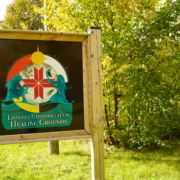
Chad Gedeon is a Councillor here at the Listuguj Mi’gmaq Government, and works in the Culture and Language department. When he got back into politics in 2018, he knew right away that he wanted his focus to be on revitalizing the culture and language in the community. The first project he took on was the creation of the Etlinpisulti’gw Healing Grounds. In the beginning, the area on Bordeaux Road only consisted of a teepee, and after community engagements, and discussions with elders and residential school survivors, Gedeon took the lead on making the grounds what they are today. A place of healing, outdoor community gatherings, ceremonies, and teachings. It’s a place where people can just sit outside and be at peace.

Gedeon’s next project is the Turtle Lodge. He said, “The Turtle Lodge will be a place of healing, where we will practice our language more, where ceremonies can be formed, where we can practice our teachings, share our stories and culture.  We will have a room for elders and residential school survivors.  There will be a kitchen for feasts after ceremonies. There will be workshop rooms for drum making, basket making, learning about medicine making, and more.” At this time, ground-breaking for the new Turtle Lodge is expected Spring of this year.

Not only are these healing resources beneficial to individuals, but also to various departments in the community, such as Social Services. With many people battling mental illness and addiction, having a place like the healing grounds, or the Turtle Lodge, is a useful tool for departments to recommend individuals take part in to begin or continue their healing process.

Gedeon believes these healing resources are a way for the community to change their way of thinking. To help encourage the preservation of the language and culture, and to learn the tools the Mi’gmaq people once had before. He said, “Before with our ancestors, everyone had a role in the community, the basket makers, the gatherers, the fishers, it was a balance, and we lost that balance once modernization kicked in.”

A lot of people in the community of Listuguj practice spirituality and everyone practices it in their own unique way. “To me, spirituality is the connection with our ancestors, our teaches, and Mother Earth,” said Gedeon. If you are looking to learn more about spirituality and healing in the community, reach out to knowledge-keepers and elders for more insight. Take part in the various ceremonies and gatherings at the Etlinpisulti’gw Healing Grounds and other facilities in the community, and eventually, the new Turtle Lodge will be another alternative for your spiritual journey.

By Ann Marie Jacques

LOCAL BUSINESS OWNER SPOTLIGHT – DEBBIE MORRISON

Debbie Morrison is very passionate when it comes to being the Owner of JB Toys and Novelty. Even though it is still a fairly new business, being in operation since 2021, Morrison always had the dream of having her own toy store.  She said, “Way back when my children were little, I wanted to have a toy store, and I actually registered ‘JB Toys.” That was over 30 years ago. I went back and added, ‘and Novelty’ and started from there.” In the beginning, she was operating out of her back porch and eventually expanded and moved the shop downstairs to the basement.

JB Toys and Novelty consists of a number of educational toys, toys for children with special needs, and sensory toys that aren’t typically sold at big box stores. Morrison sells party supplies and offers helium for balloons. There is a selection of bouncy castles available to rent, that could be used for children’s birthday parties and other events. Some clothing, gifts, and candy options are also available.

Morrison is very involved with the community of Listuguj, offering donations, and collaborating with other organizations, such as CHRQ 106.9 FM and Alaqsite’w Gitpu School. JB Toys and Novelty can also be found traveling on the road in a decaled trailer, stopping in at Pow Wows, where she typically sponsors candy dances for children.

There are plans to expand the company even further.  Morrison is currently working towards having a new building next to her store that can house children’s Birthday parties and other events. The plan is for it to be an open-concept building, with a kitchenette and tables – allowing guests to bring in their own food and supplies.  There would be indoor entertainment for children – bouncy castles, skateboards, plasma cars, etc. She said there is a lack of facilities for party rooms in the area, so it would be a great opportunity.

“You always have to be here on a regular basis, there is always something new. I just love doing it, it’s fun for the community,” said Morrison.

JB Toys and Novelty has gone on to be a very successful and popular shop in the community. People come from all over to visit. Morrison is very efficient when it comes to updating the shop’s Facebook page with new inventory.  It is located at 35 C Riverside West in Listuguj.  Visit them today!

By Ann Marie Jacques

Mijua’ji’j Park – Grand Opening Basketball Game

Earlier this month, Listuguj celebrated the grand opening of Mijua’ji’j Park with a Chief & Council VS. Capital & Infrastructure basketball game.

Thank you to the community for stopping by to check out the new basketball court and playground, and to cheer on the teams!

LOCAL BUSINESS OWNER SPOTLIGHT – MARCY ISAAC

When Marcy Isaac completed massage school, she always knew that she wanted to return home to Listuguj and open her own massage clinic, and that’s just what she did.

After finishing school, Isaac moved back home and worked at the Listuguj Community Health Centre, and after her contract came to an end, she rented space for her own massage therapy clinic in Campbellton. Eventually, she was given the opportunity to open and renovate a space in Listuguj, and Hands on Health Massage Therapy has been at 50 Gaspe Highway, for roughly six years now.

Isaac remembers being asked at school, “What encourages you to be here, doing massages?” and a lot of the answers were the same: to help people. Isaac still feels passionate and motivated when it comes to her craft. “To be in this type of profession, you need to have that thing, that drive that makes you be helpful and thoughtful, and just help people. My mom always said I had that touch and feel,” said Isaac. “People call me, ‘Marcy Healing Hands,” she added and laughed.

Isaac offers a wide variety of services at Hands On Health Massage Therapy, and as of recently, Hot Stone Therapy. Isaac said, “Since the pandemic, a lot of my clients are coming now for stress.” Before the COVID-19 pandemic, many of Isaac’s clients came in to receive therapy for specific injuries, now they come in due to fatigue, stress, and just in need of some self-care. Hot Stone Therapy takes relaxation to the next level. Another service offered is the Graston Technique – where a stainless-steel instrument is used to decrease any tension or soreness in a muscle. The closest practitioner for this technique would be in Moncton. Isaac also offers several types of massages, pregnancy massages, and Paraffin Wax for hands and feet. Isaac said this service is good for arthritic hands, so it is beneficial for elders. “It’s really nice to sit with our elders and chat,” said Isaac, who will go to elders’ homes to provide the service, for those who cannot make it into her clinic.

Isaac is always keeping up to date on new techniques and services that could be offered at the clinic. In the future, she is looking to expand her team and possibly hire new massage therapists. As of right now, Hands on Health Therapy is accepting new clients and can be contacted via phone at 506-790-4729, or on Isaac’s personal or business Facebook page to make appointments.

By Ann Marie Jacques

JUSTIN CALDWELL – 20 YEARS AT CHRQ

If you’ve ever turned on your radio to CHRQ 106.9 FM or checked them out on Facebook, then you’re more than likely familiar with Justin Caldwell. Caldwell has been working with CHRQ for the past 20 years in the community of Listuguj. Originally from Matapedia, QC, his radio career began when he went to school for broadcasting in Woodstock, NB. From there he did a job placement at CKNB in Campbellton where he worked for a period of time. He noticed a job ad for a DJ at CHRQ, applied for it, and the rest is history.

“Radio was a big deal as a kid. I thought it would be a cool experience to do something like that,” said Caldwell.

Even though there are no specific formats or job titles, Caldwell says his position could be called the “Program Director.” He assists with bingo, commercial breaks and productions, sales, and on-air work.

CHRQ differs from other radio stations for a few reasons. As mentioned before, there is no specific format – no specific genre of music is played in any order. The on-air staff has the freedom to be in the moment and play what they would like and can adjust accordingly on the spot. Caldwell said, “We’re able to take requests and that’s something not every radio station does because their formats are so strict.”  The station also thrives on being very local and community-driven.

The staff at CHRQ are grateful for Listuguj’s continued support over the years when it comes to bingo, advertisements, participation in request shows and events, etc. Caldwell said his favorite thing about working for CHRQ is being able to provide information to the community. He also expressed his gratitude to the community for being so welcoming and kind to him over the past 20 years. He said, “The community has just been so welcoming that I want to try to do my best for listeners and for the community to provide information and provide service the best we can.”

Tune in to Justin Caldwell on-air Monday-Thursday from 7 AM-1 PM, and on Friday nights for the very popular, All Request Country Show on CHRQ 106.9 FM.

By Ann Marie Jacques

WAQATASG ELDERS HOME – A HOME WITHIN THE COMMUNITY

Health Director of nearly 20 years in the community, Donna Metallic has considerable expertise when it comes to health care in Listuguj.  In the past few years, this expertise shifted to elders, and what facilities and services are needed in the community to ensure they are given the best care possible. “How do First Nations experience aging when they have to navigate complex health systems, with medical conditions and complex social and historical conditions?” asked Donna Metallic.


The idea of an elder’s home has been on the radar in Listuguj for a long time – dating back to 2001. Throughout the years, many steps were taken, and work was done to get the green light for the elder’s home in the community. General Manager of Capital and Infrastructure, Bassem Abdrabou acknowledged community members’ hard work over the years: “Several governments, people, and teams have been involved in this project.”  In 2010 the name, “Waqatasg” was coined by a group of elders in the community – Waqatasg meaning, “Northern Light.” Once the land was set aside for the facility, the process began with funding and attaining engineers and construction crews to make this dream become a reality. Most of the funding was from the National Housing Co-Investment Fund – CMHC, the remaining portion of funding was directly from a Listuguj Mi’gmaq Government band contribution. With the help of Chief Darcy Gray, council members, and the Capital and Infrastructure team, the elder’s home project was set into motion in 2017. In 2020, the project design and funding agreement was finalized. Capital and Infrastructure Project Manager, Shereef Aboulazm says when he began working with the community just under two years ago, the design had already been confirmed, and now it was his time to handle executing the project. Despite some project challenges mostly related to the COVID-19 pandemic, which included project cost and material supply variations, construction began in July 2021.


The vision for Waqatasg is to be “a home within the community” said Metallic. The community of Listuguj holds elders in high regard and wants them to feel comfortable and at home, and that’s where the design concept came from. The facility is the first of its kind to steer away from the typical institutionalized atmosphere that most nursing home facilities embody and focus more on having a home that reflects on Mi’gmaq values that allow elders to stay connected to the community that they’ve been a part of their whole lives. In many cases, elders in the community resisted going to facilities outside of the community, for reasons such as language barriers, and the fact that they are being institutionalized outside of their community in a place where they do not feel culturally safe. Metallic ensures that Waqatasg will maintain the connection between elders and their culture and language. She says that the consulting crew that was selected was familiar with First Nations values, beliefs, and principles, and they are aiming for the staff to have that understanding as well.

While the building’s physical appearance and general atmosphere may seem very comfortable and relaxed, elders who will be in this facility can expect top-of-the-line medical staff and medical equipment that they may not have had access to. Aboulazm states, “For the doctor’s offices and nursing stations, we didn’t have expertise on specific medical equipment and furnishings, so we tendered for a consultant for procurement services. We worked with them for a number of months to get the right equipment ready for the building.”


While Listuguj does offer various services at the Health Centre, this type of long-term 24-hour care was not offered in the community. “We have programs in the community, for example, the home and community care program, but it’s very limited in the types of services we can offer to an individual when their health needs require more than what we can give them,” said Metallic.


Waqatasg Elders Home will be a 24-bed facility, with one bariatric room and one palliative care room.  There will be an area set up for elders who have Alzheimer’s and/or Dementia, and rooms set up to accommodate health conditions an elder may have. There will be a Traditional room, where elders can smudge and continue their spiritual journey, activity rooms, a hair salon, and a gift shop. The facility will be very family-friendly and will allow visits from children.

Not only is this facility needed in the community for elders requiring care, but it will also be a major source of employment opportunities for the area – with a various number of positions such as registered nurses, LPNs, administration staff, legal staff, custodians, kitchen staff, security staff, etc.


The impact that the Waqatasg Elders Home will have on the community will be monumental. “I don’t think people realize how big this will be for the community,” said Metallic. Both Abdrabou and Aboulazm feel very fortunate to have been part of this significant project. Abdrabou has worked on numerous projects throughout his life but says this facility will always have a place in his heart. He said, “It’s not like a shopping mall, or a high rise, or a commercial use building, it’s a building for Elders and First Nations – it’s meaningful.”  Aboulazm said, “We get caught up in the numbers and the construction, but when you actually think about it, this will likely be the last place many family members see their grandparents and parents and to be able to speak to them in their own language, it’s a special kind of thing.”

The work that has gone into the Waqatasg Elders Home was a group effort. From Donna Metallic and her team at the Health Centre, the Capital and Infrastructure team, past and present Chief and Council Members, and the community of Listuguj as a whole.  As of right now, there is no set date for a grand opening, but they are hoping for late Fall to early Winter.

By Ann Marie Jacques

STANLEY BARNABY – AN ADVOCATE FOR INDIGENOUS PEOPLE AND COMMUNITIES

Originally from Listuguj, QC, Stanley Barnaby is the Chief Executive Officer (CEO) at the Joint Economic Development Initiative (JEDI) located in Fredericton, NB. His extensive educational background, work experience, and passion for advocating for Indigenous people and communities led him to this highly regarded position.

Barnaby became interested in this field when he was in high school, and he joined the Job Readiness program at LMDC and discovered his love for accounting. He said, “One of my job placements was at the MMS [Mi’gmawei Mawiomi Secretariat] in the accounting department and this is where my career in accounting started. I worked at the MMS for a couple of Summers during my studies and will forever be grateful for my experience there.” From here, he attended the University of New Brunswick (UNB) in Fredericton, where he obtained his First Nations Business Administration.  He received a Bachelor’s in Business, Technological and Aboriginal Economic Development certifications, Management Development Program certificate, and a Master’s Certificate in Project Management.

According to JEDI’s website, “The Joint Economic Development Initiative (JEDI) is an Indigenous organization dedicated to supporting Indigenous participation in New Brunswick’s economy.” Barnaby first joined the team as a finance intern and eventually moved up to various other positions such as Finance and Operations Manager and Senior Project Manager, up until 2021, when he was the Acting CEO, eventually becoming appointed to the CEO. JEDI focuses its work on the support of Indigenous entrepreneurs and small businesses, community economic development, workforce development, and partnerships with the public and private sector. “The thing I like most about working for JEDI is that I get the opportunity to work with all the Indigenous Communities and people in New Brunswick to create and provide opportunities that better our communities and people,” said Barnaby. You can find more information about the programs JEDI offers at their website, jedinb.ca.

Barnaby also has devoted a lot of his time doing volunteer work in several programs and organizations.  One of the volunteer roles to highlight is that as of 2021 he was elected President of CANDO (Council for the Advancement of Native Development Officers) which is a national non-profit organization that strengthens Indigenous economies by offering various programs and services.

Although Barnaby now resides in Fredericton, New Brunswick, he misses his friends and family here in Listuguj, his dad’s camp, the woods, and the river. He says his future plans are to continue to create, provide and advocate for the Indigenous people and communities in New Brunswick, while raising a family with his fiancé, Megan in her home community of Sitansisk.

By Ann Marie Jacques

“YOU CAN NEVER FINISH A DICTIONARY.”

In 1993, Diane Mitchell got the idea for the Mi’gmaq-Mi’kmaq Online Talking Dictionary when her daughter was only two years old. They were living in Southern Ontario at the time, and Mitchell realized that her daughter would not have access to their language. With the help of her tech-savvy husband, Sean Haberlin, website developer, Dave Ziegler, and database specialist, Watson Williams, she successfully recorded seven Mi’gmaq words.  Roughly five years later, Mitchell returned to Listuguj and got together with Eunice Metallic and Joe Wilmot to find out that the idea of a similar project had been brought up in the Education department prior, but no concrete work was done. In the beginning, the project was meant to be recorded on CDs, but as time went on, using the Internet for their platform seemed like the best route. To help kick off their project, they were given funding to purchase recording equipment. This is when the seven words that Mitchell had initially recorded, turned into something much more.

Mitchell said, “Initially I was just going to do it for domestic consumption – even though it was a large project, but I also recognized it would be really useful, simply because we have less and less speakers as the time goes on.” Mitchell, Metallic and Wilmot all grew up in a home where Mi’gmaq was their primary language. They felt as though their knowledge and other Mi’gmaq speakers’ knowledge of the language could be used to benefit the community to keep the language alive for future generations.

The team was determined to include more and more words, which meant doing work on evenings, and weekends. “This is what we wanted to do. Not because we were paid, not because somebody was telling us what to do. It was all just us doing the work,” said Metallic.

Eventually, the community recognized the project and temporarily employed the team to make the project even bigger. The team received various funding over the years as well. Even after the employment came to an end, and the funding was gone, they continued.

The dictionary received positive feedback and praise from the community. It is still being used frequently – whether it be by teachers, education staff, young generations of learners, or people wanting to become familiar with the language in general. The dictionary was also praised by the previous Chief and Council administration in the community. “Our Chiefs in the last 30 years have changed.  All the Chiefs have supported us. They support the language program because it’s for the community.” said Metallic.

As of today, the Mi’gmaq-Mi’kmaq Online Talking Dictionary has 6500 words. The words are in alphabetical order, defined, used in sentences, and are primarily voiced by Mitchell, Metallic, and Wilmot. The website also offers various traditional Mi’gmaq songs and stories that are voiced by people in the community, such as Roseann Martin, Simon Dedam, Roger Metallic, Theresa Mitchell, and even Mitchell’s eight-year-old daughter at the time. Mitchell has also created a Twitter account called “Pemaptoq” with over 1000 followers – where she tweets a Mi’gmaq Word of the Day. These words of the day can also be found on the billboard in front of the Listuguj Education Training and Employment office and can be heard on the radio station, CHRQ.

Mitchell has taken on a bit of a side project, that is still related to the dictionary. Over the years she has been collecting and studying work from Père Pacifique – a Priest from the late 1800s, who published numerous Mi’gmaq manuscripts and prayer books.  Included in his manuscripts is a handwritten Mi’gmaq dictionary that was never published. The primary entries are done in Mi’gmaq, but the explanations and definitions are mainly done in French. Mitchell has been working with various Mi’gmaq women in the community to extract words from these manuscripts. She is teaching them how to transliterate his work. The words that have been extracted from the dictionary, will be presented to some speakers in the community. Once these words have been approved and tested, eventually she would like to add some of these words to the dictionary. Wilmot said, “There are other projects that are going to be pulled into it. It will enhance the use of the dictionary, and hopefully, it results in people taking something from it, and learning from it.”

Even though the dictionary has come a long way, the team says you can never finish a dictionary. New words are often resurfacing and being discovered. Metallic said, “I hope somebody will be able to take over it when we’re gone.”

The Mi’gmaq-Mi’kmaq Online Talking Dictionary has gone on to be a staple in Listuguj.  The team could not stress enough that they are grateful for the help and support received from individuals who made the project possible and from the community in general. The time and effort that were put into this project are highly respected and recognized and will continue to be used as a major source for the language.

By Ann Marie Jacques