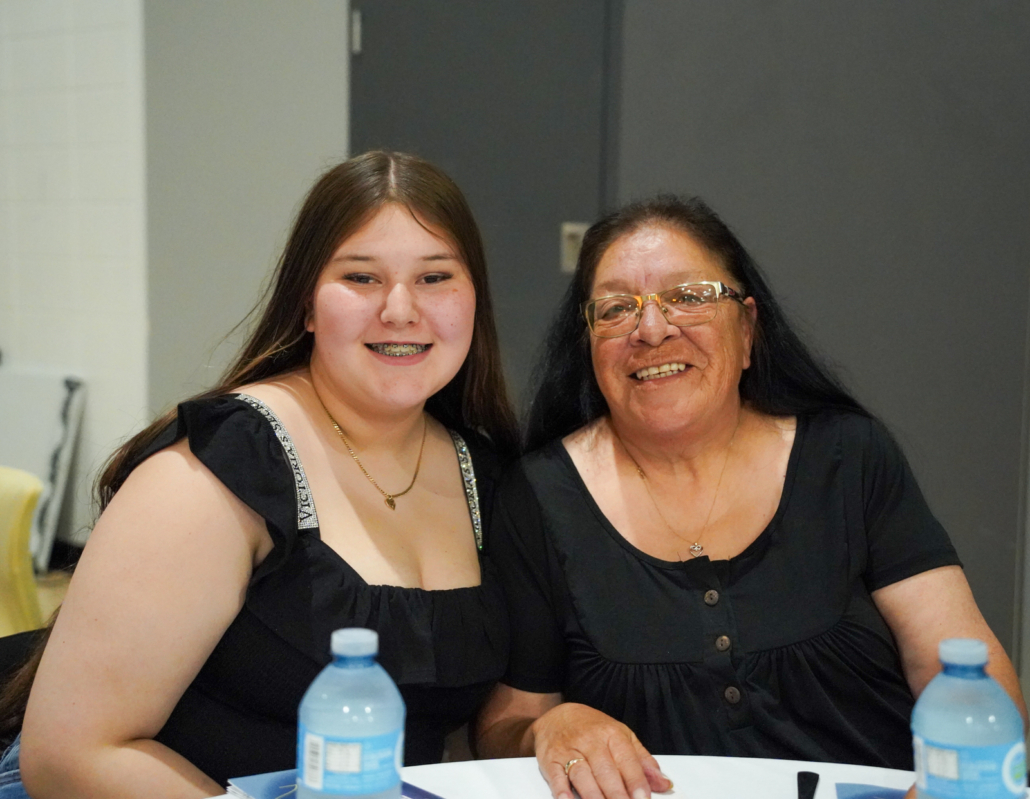
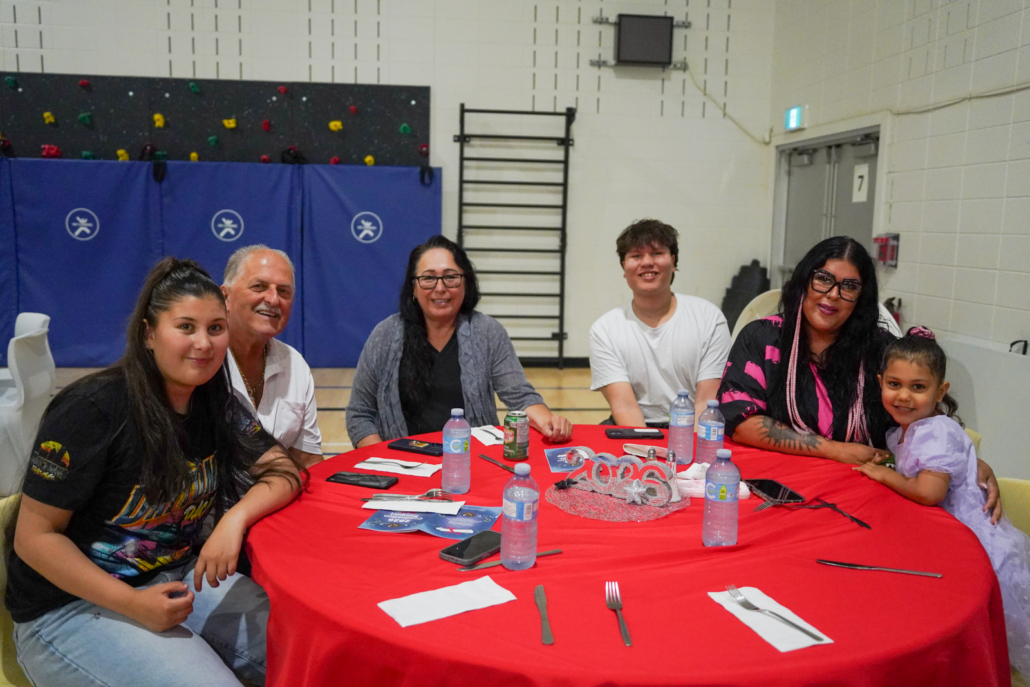

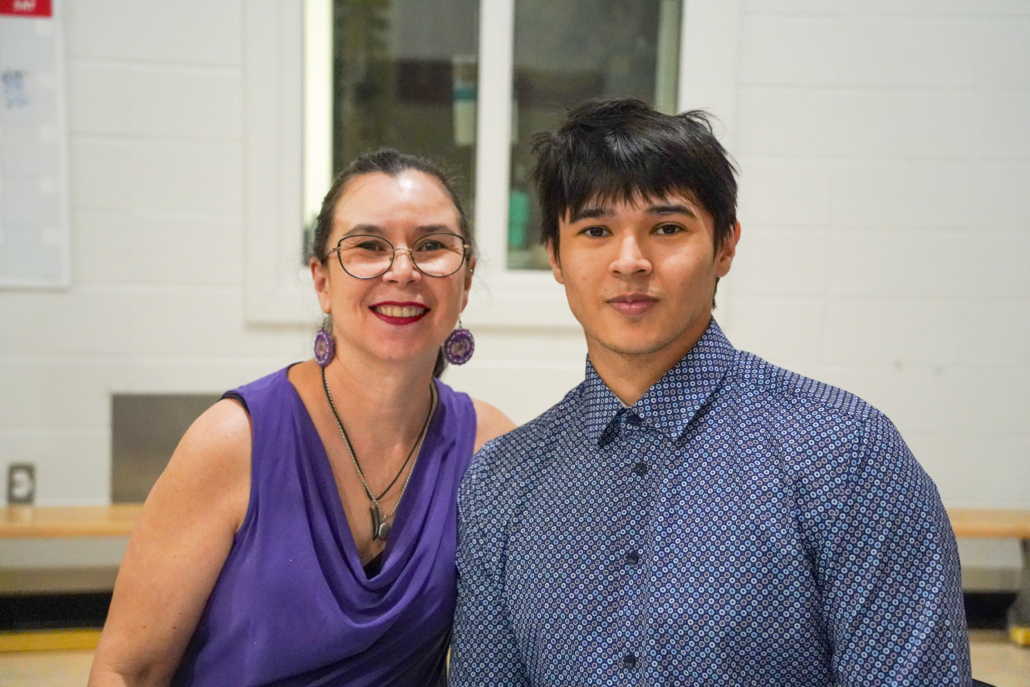
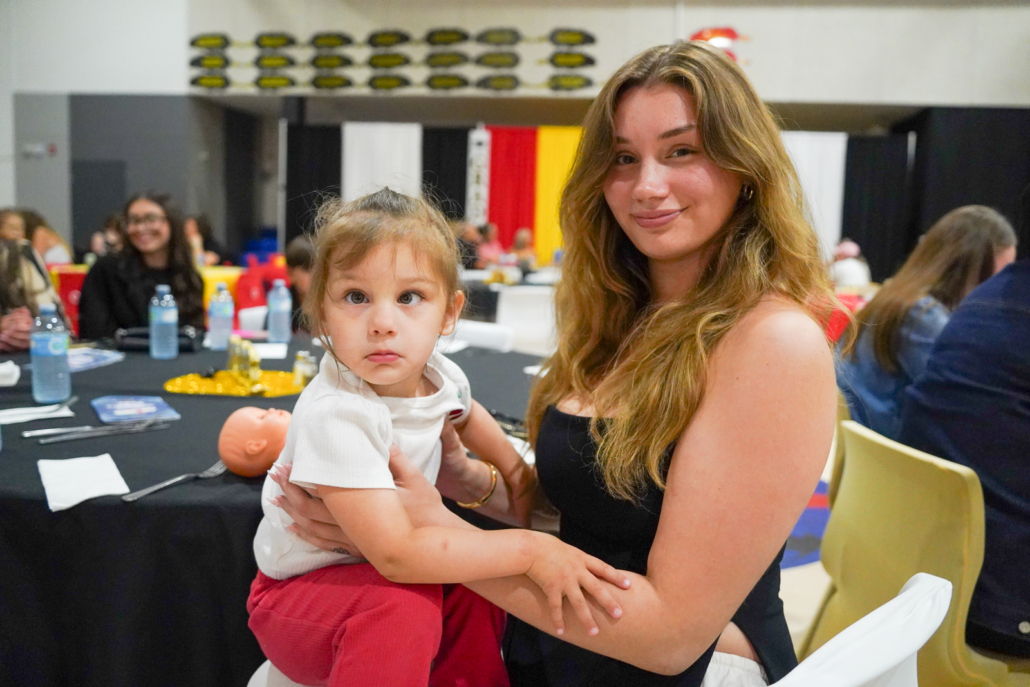
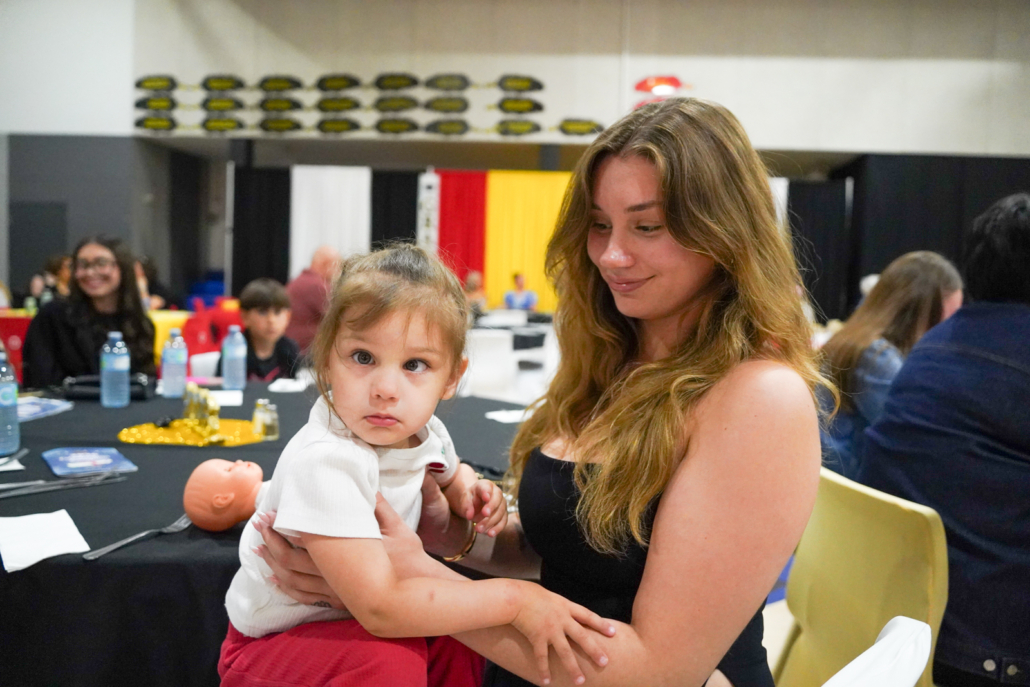
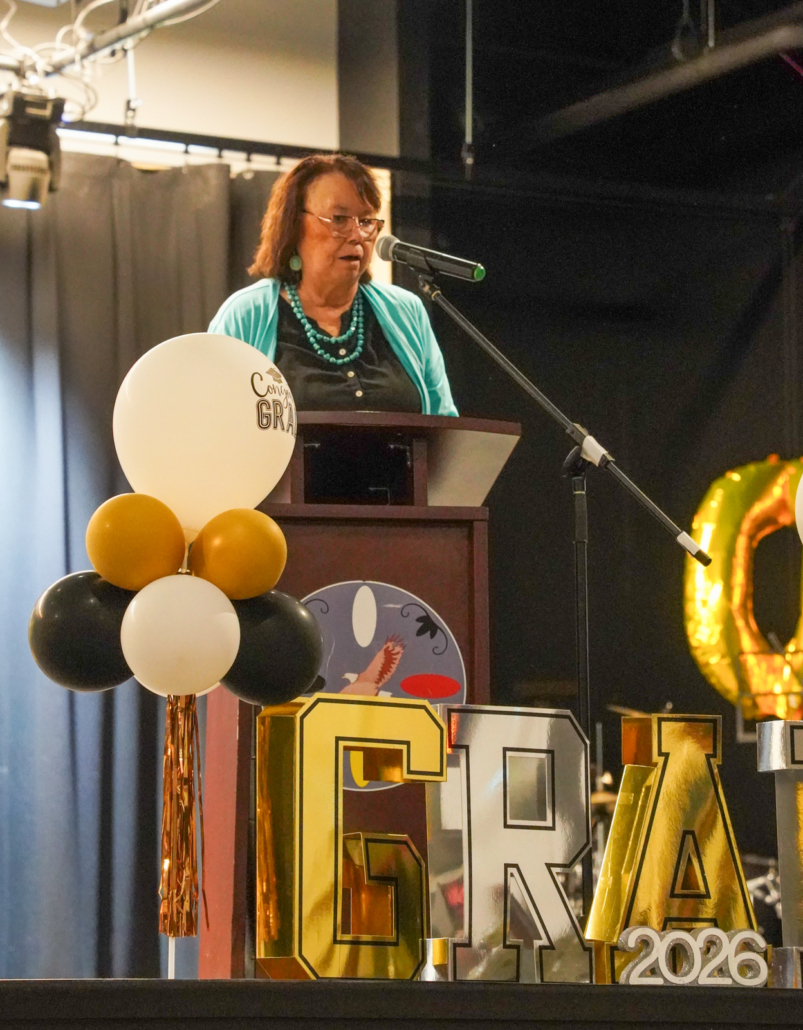

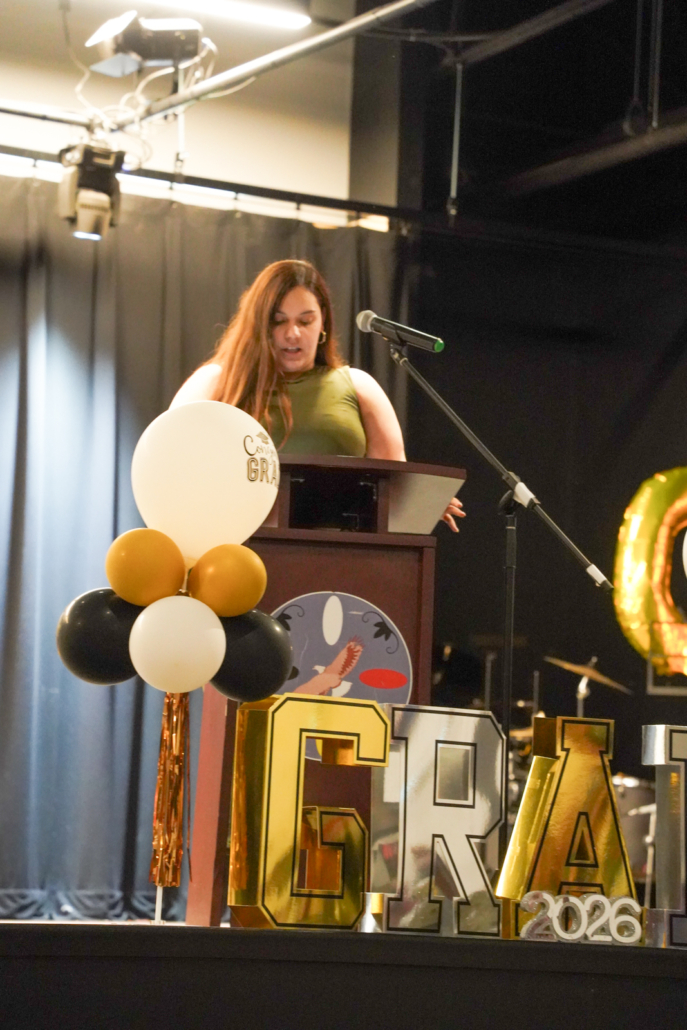
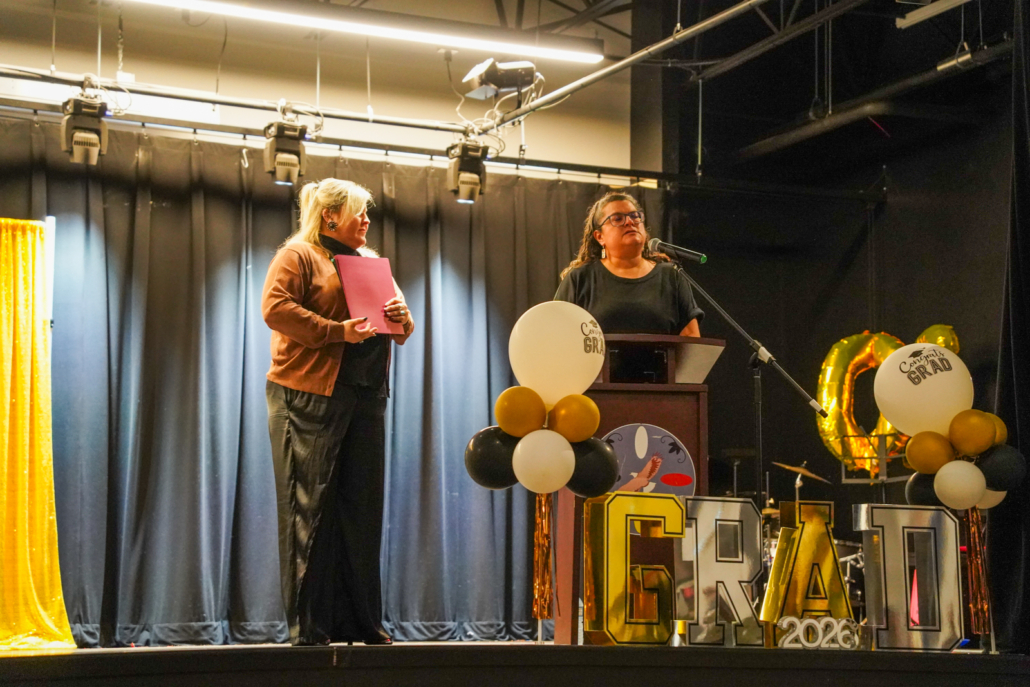

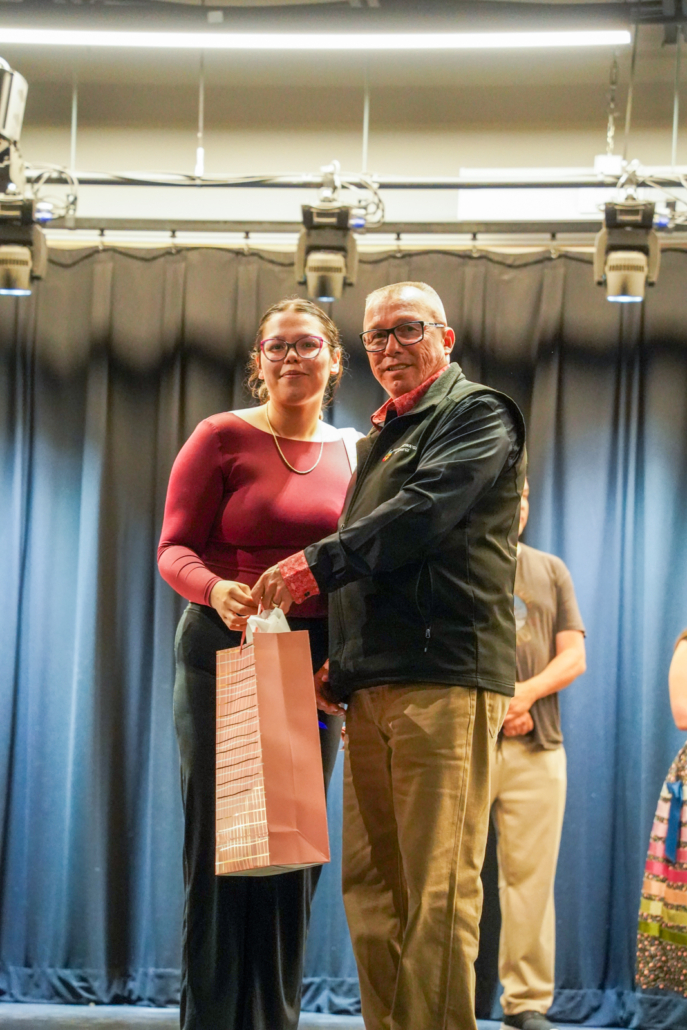
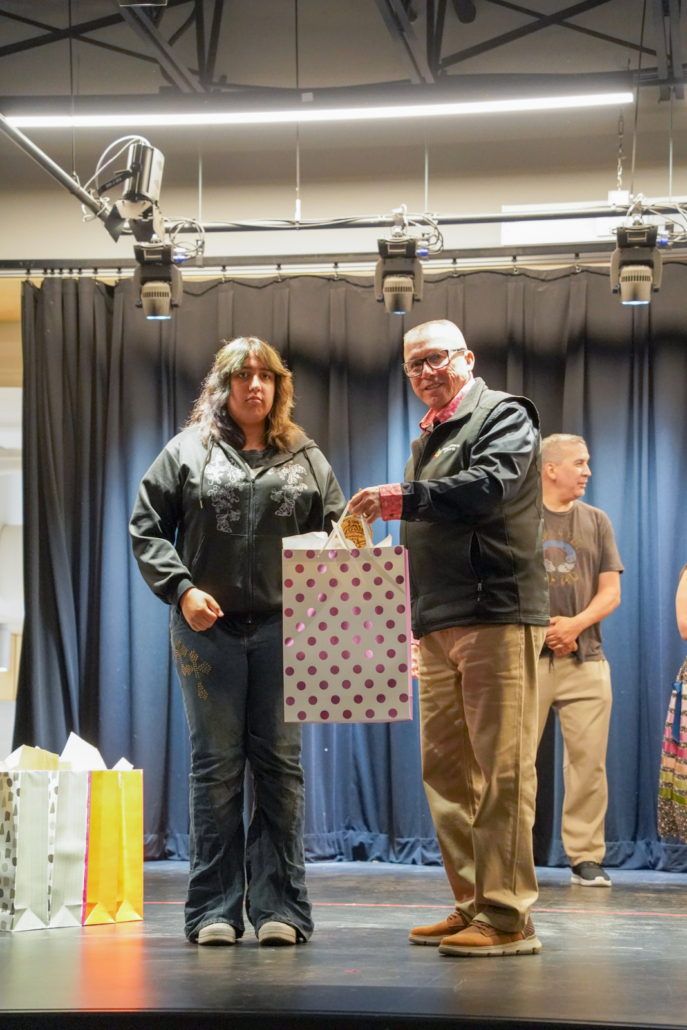
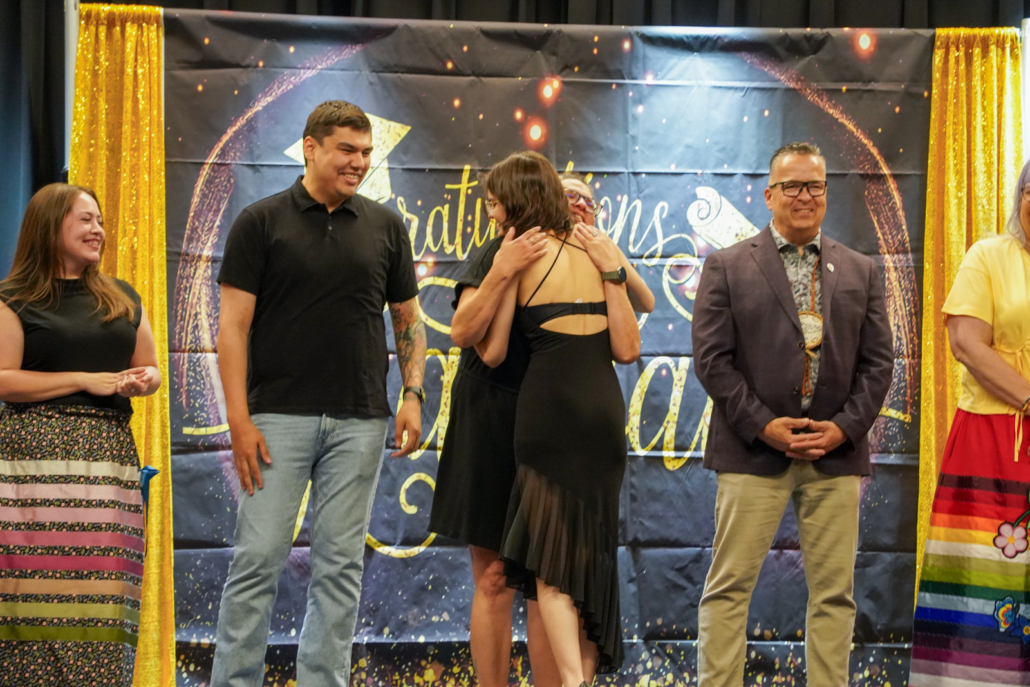
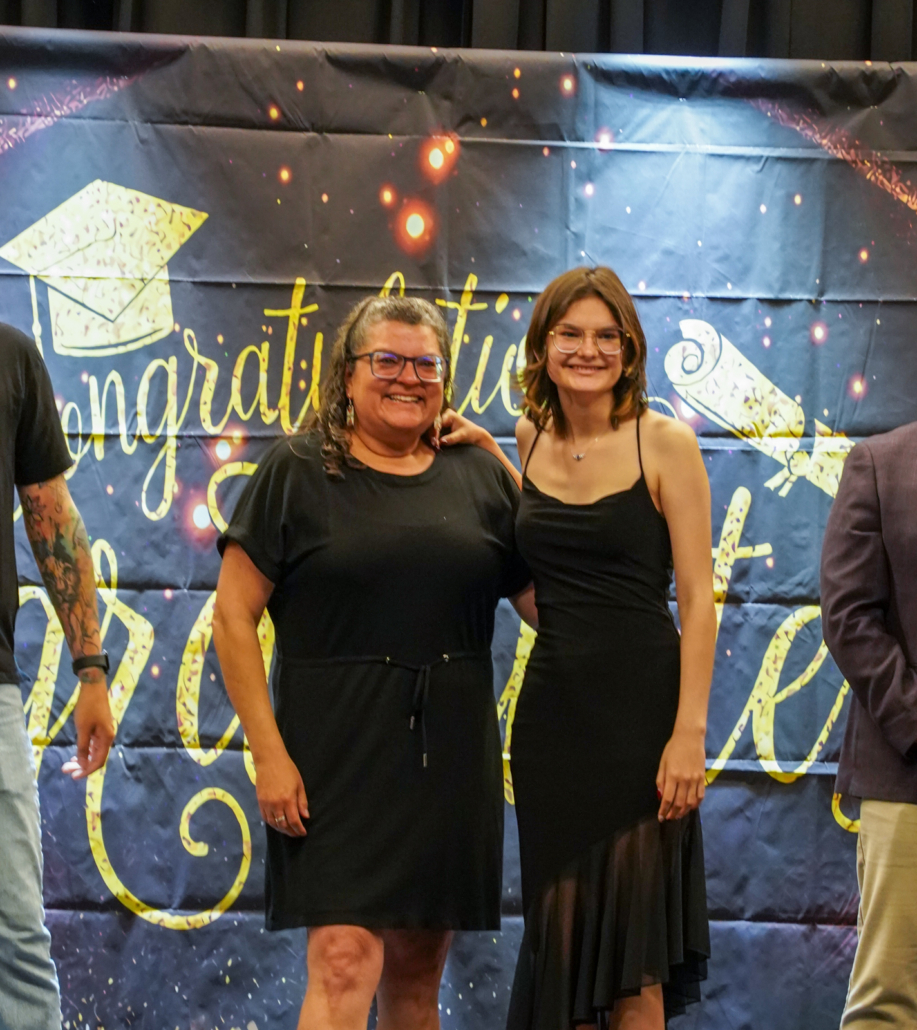
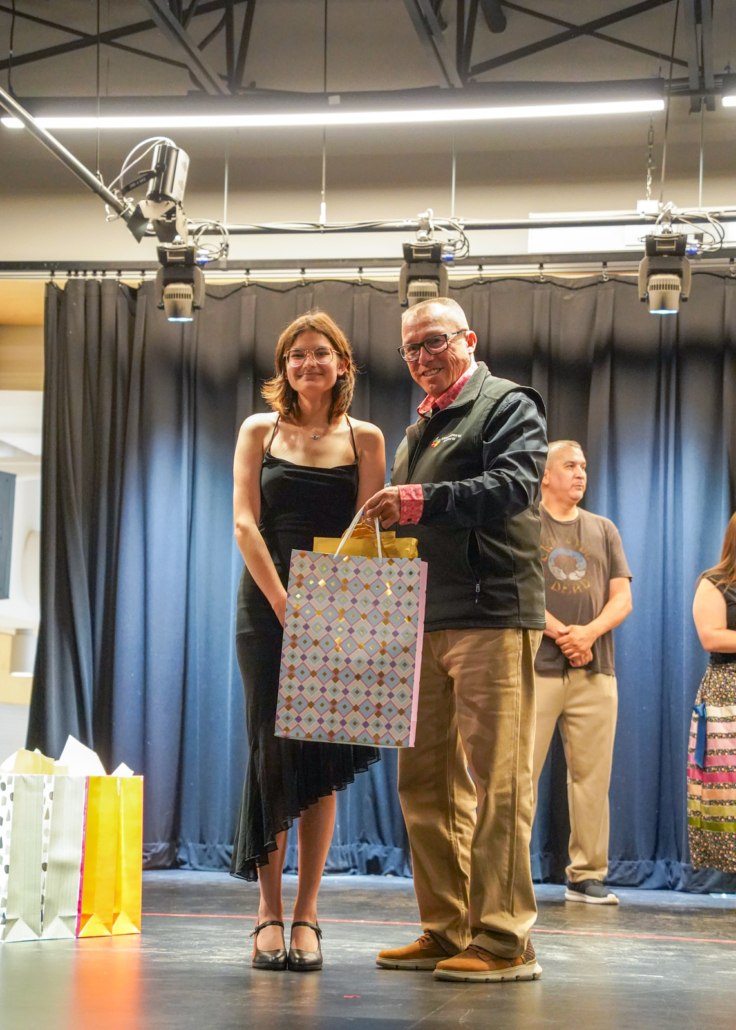

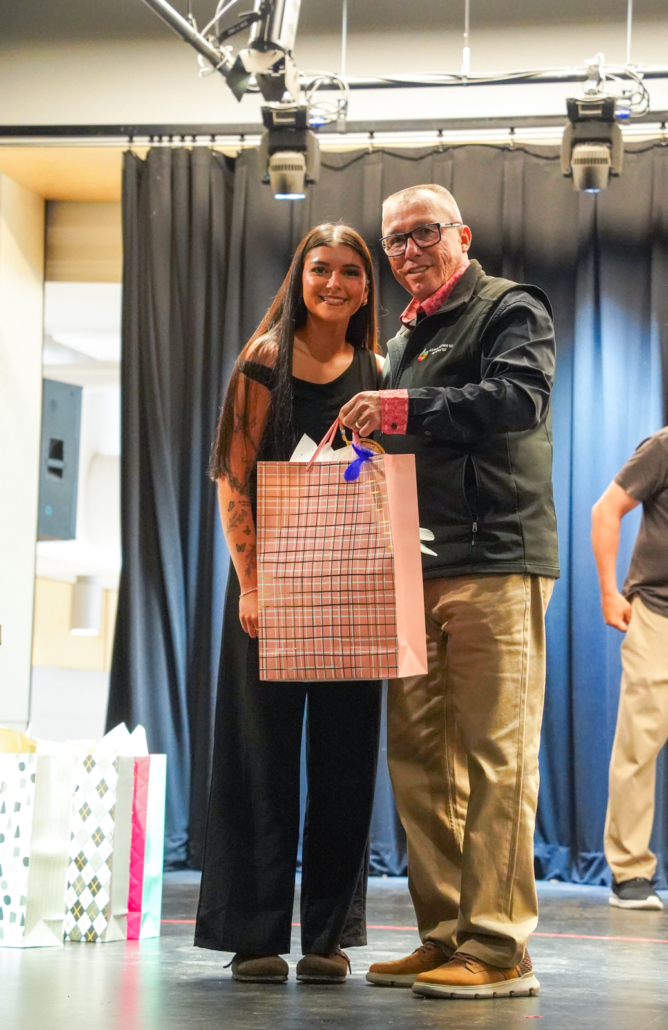
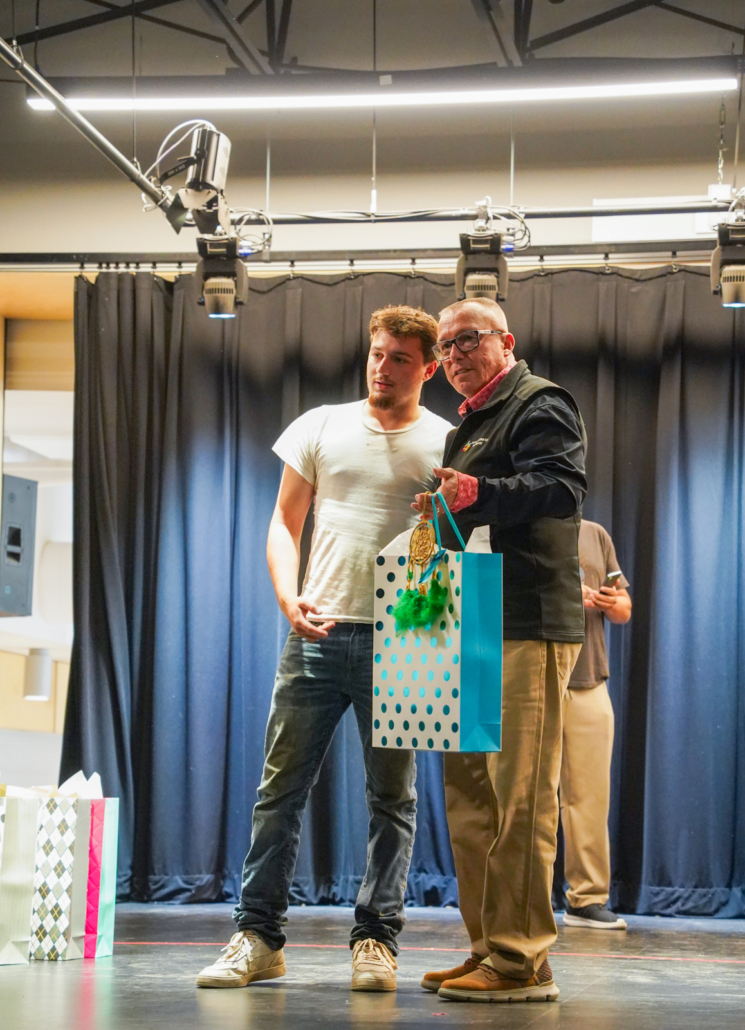
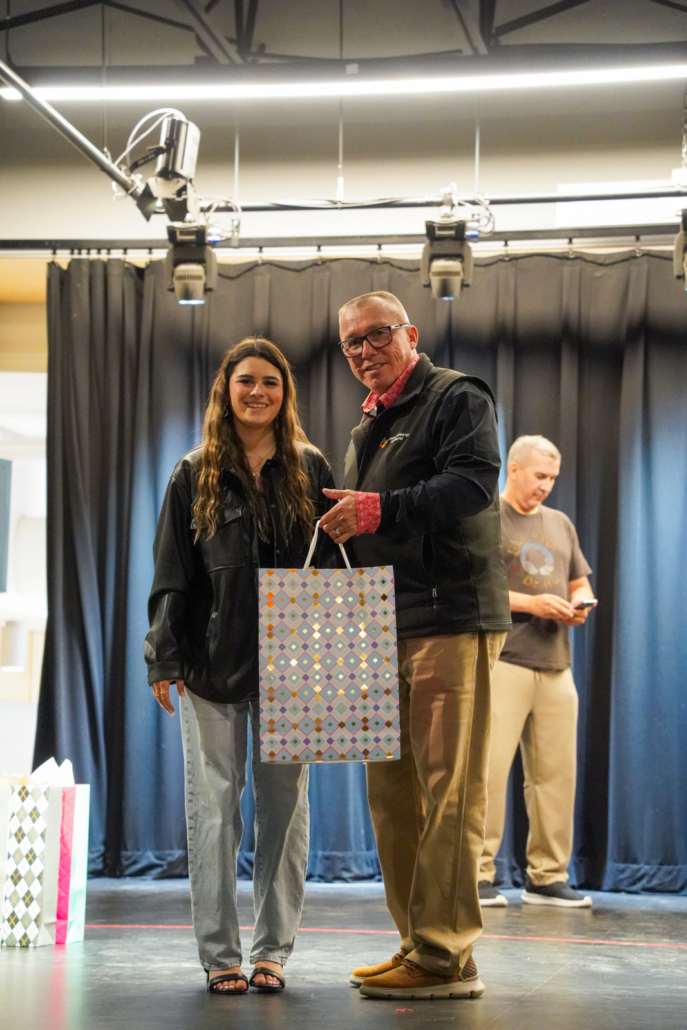
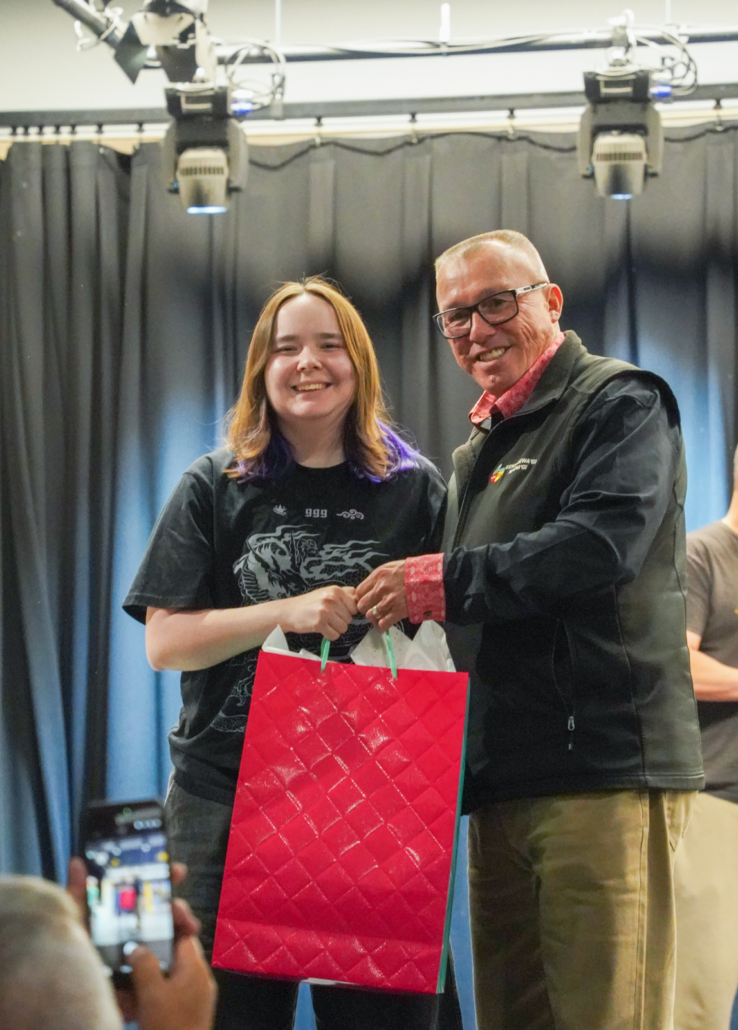


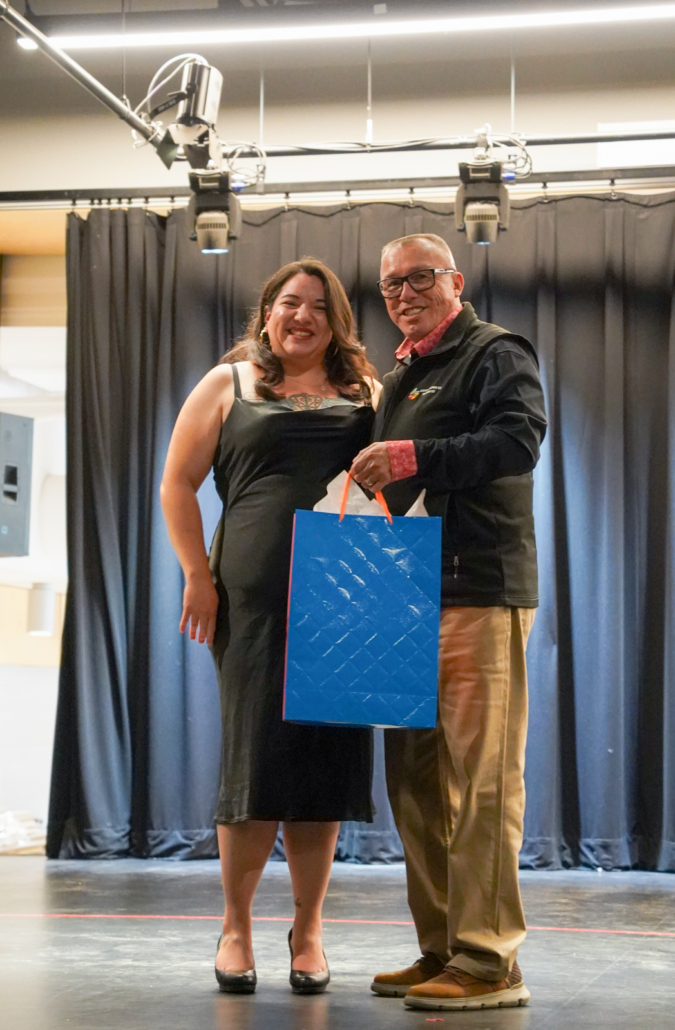
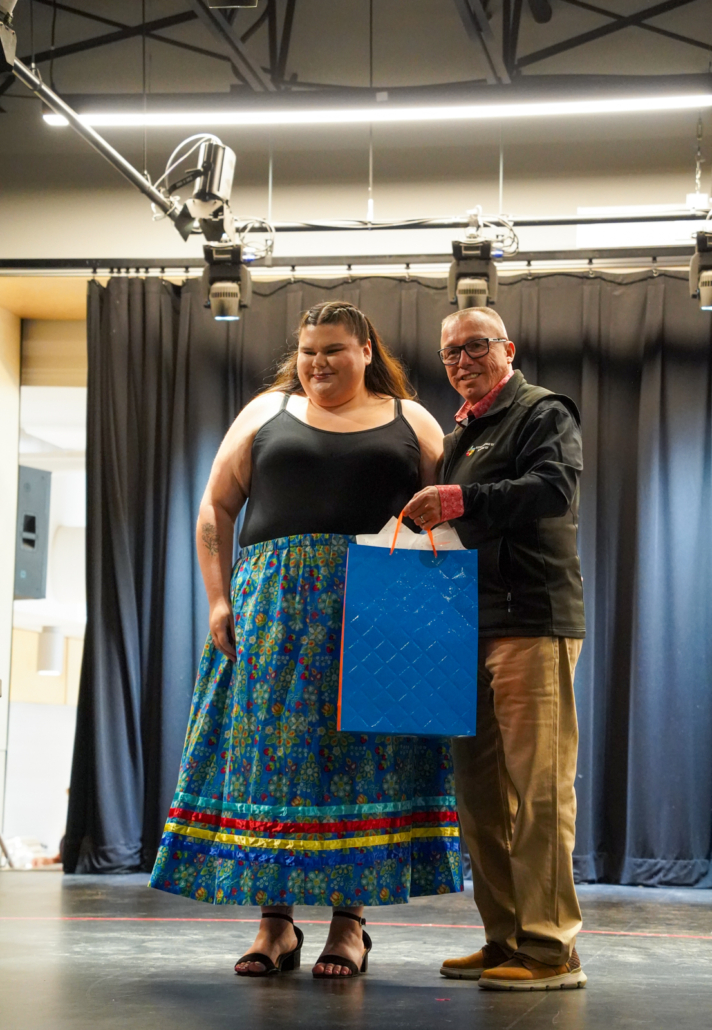
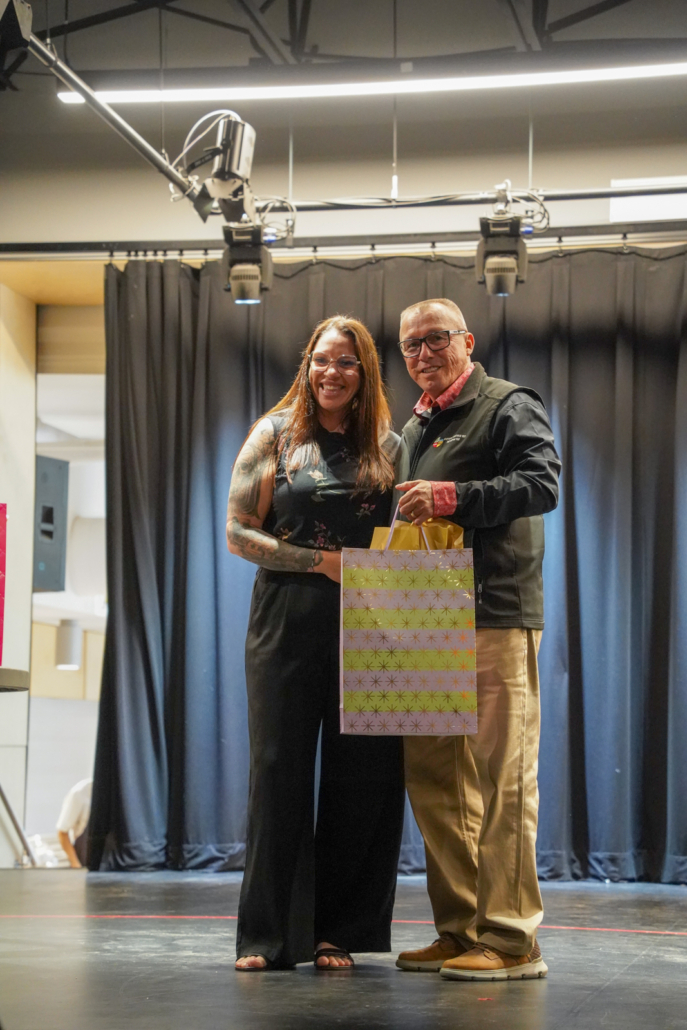
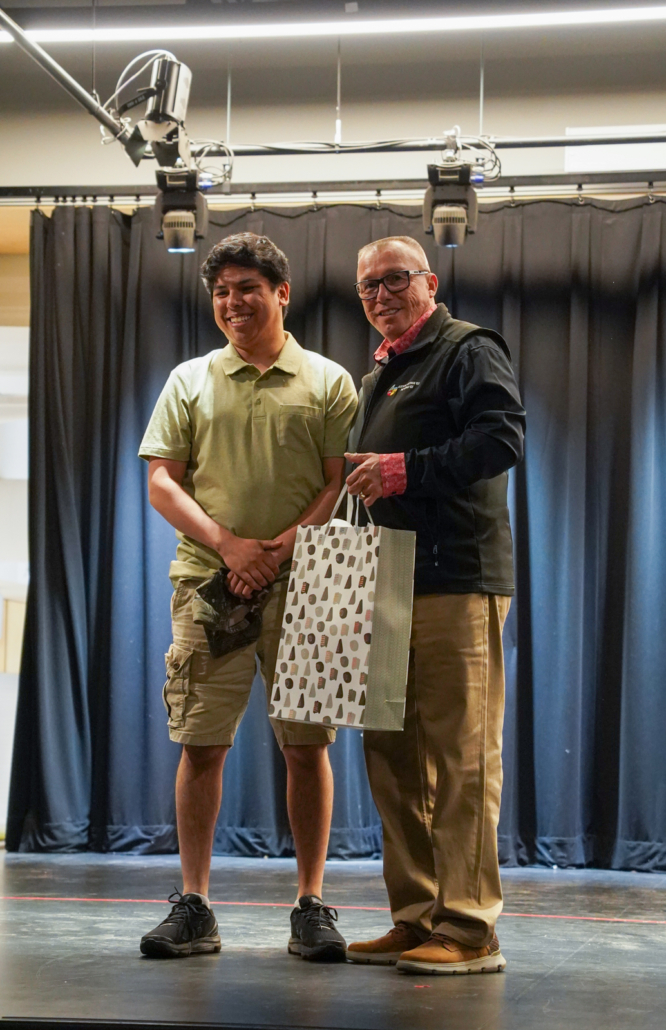
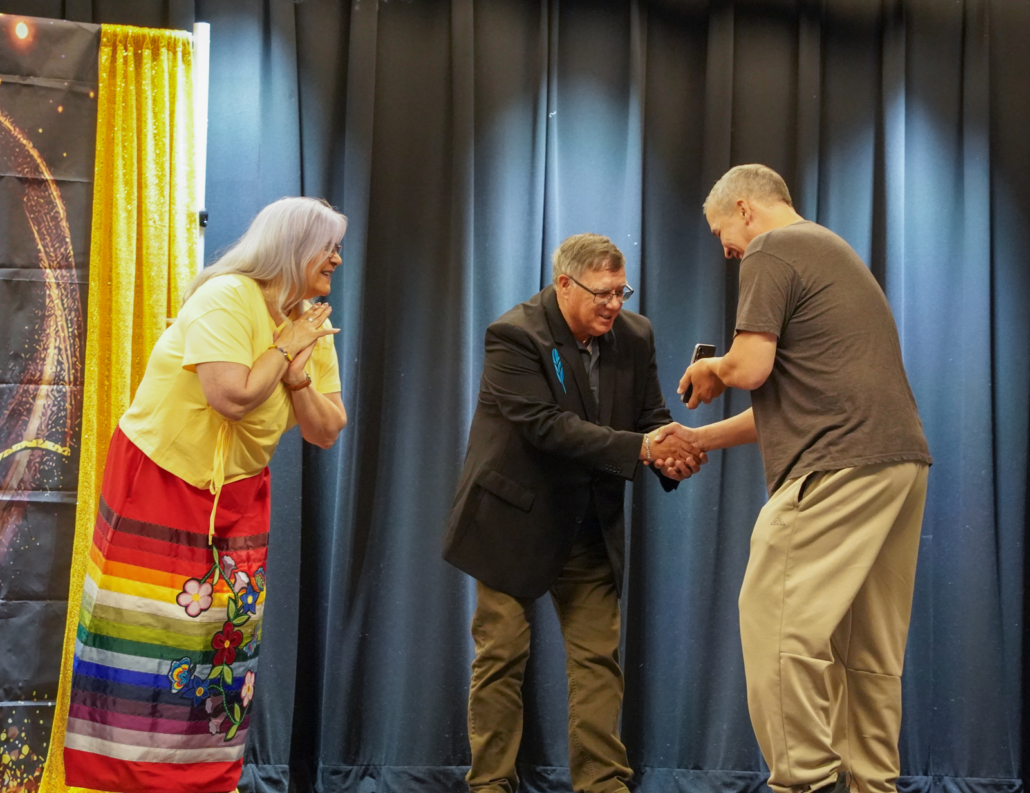
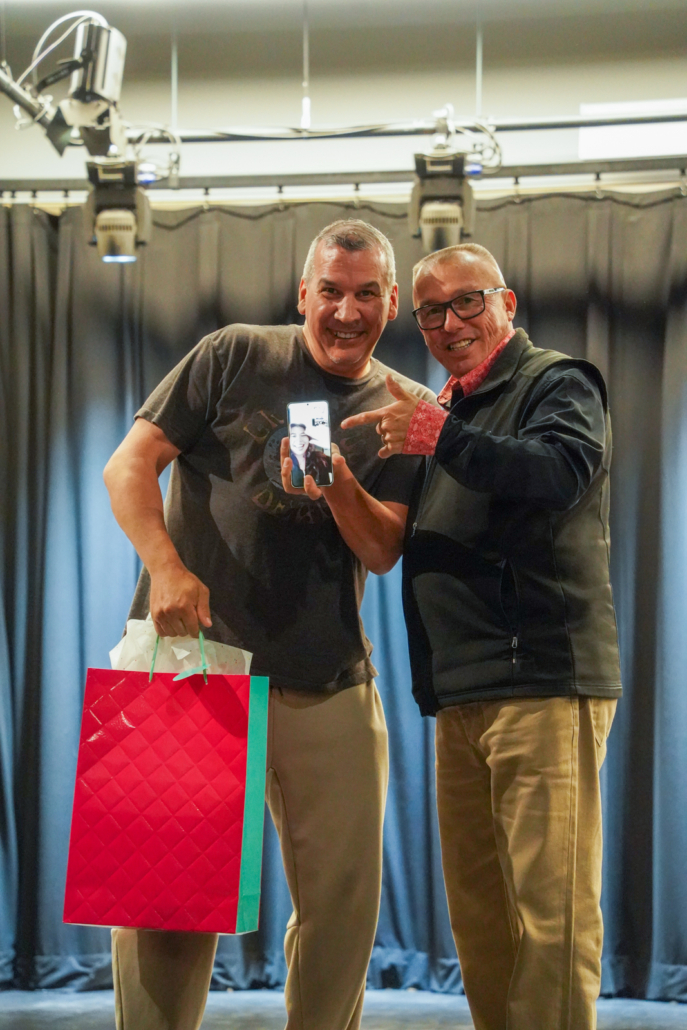
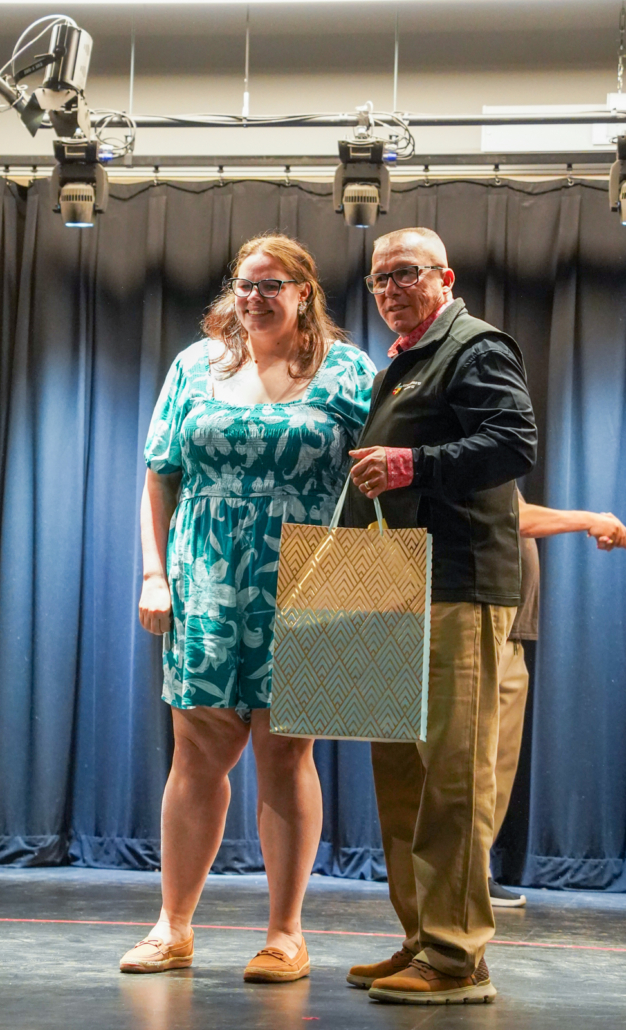
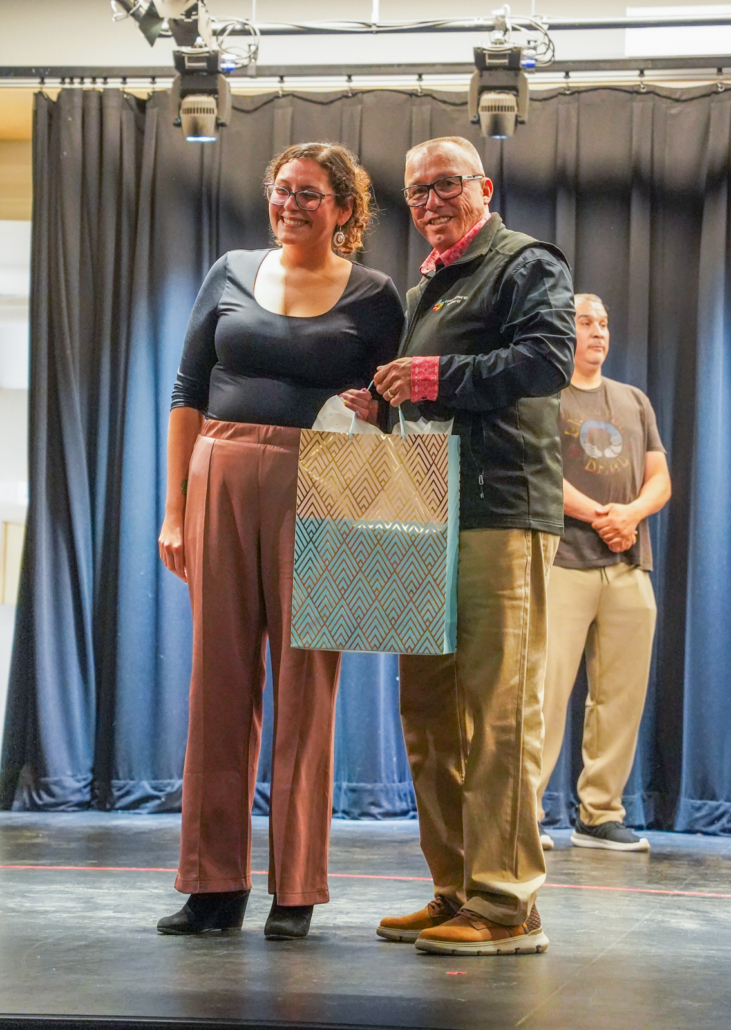
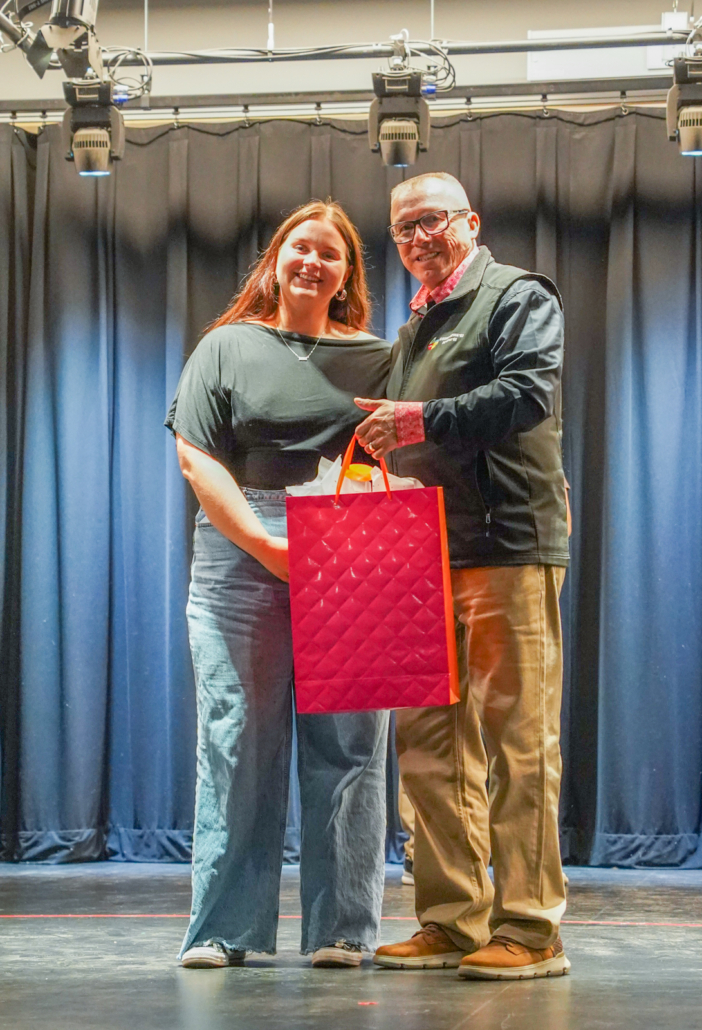

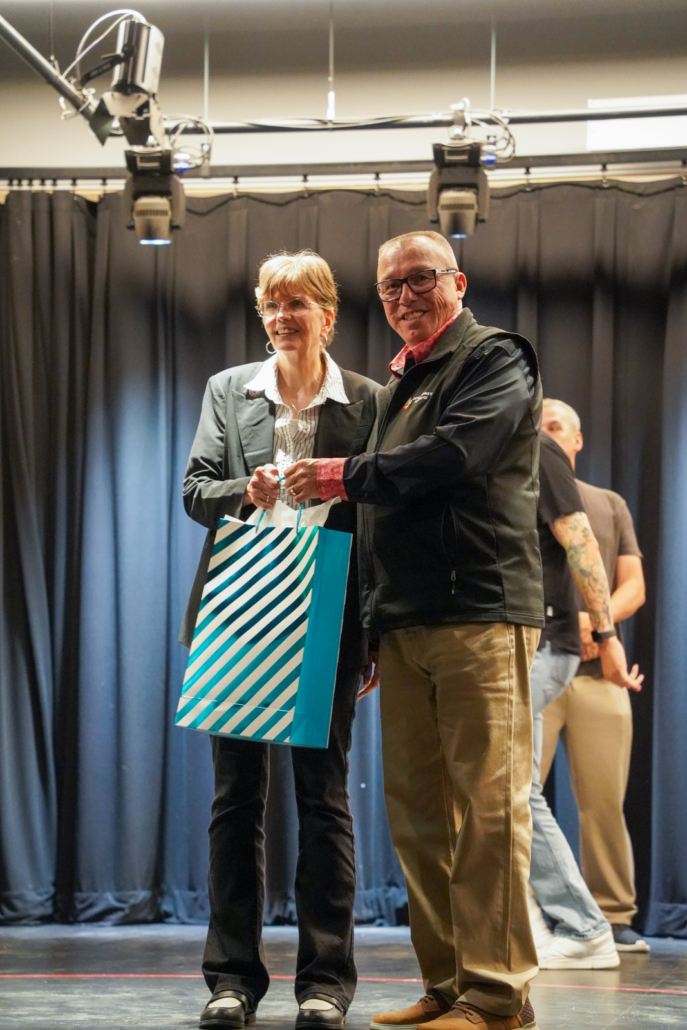
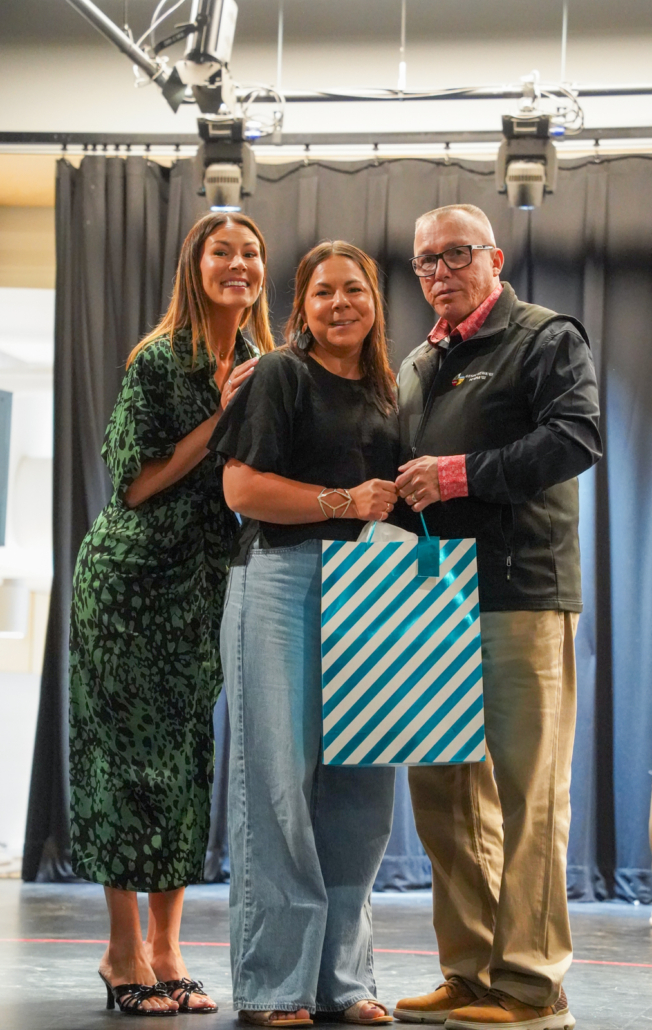
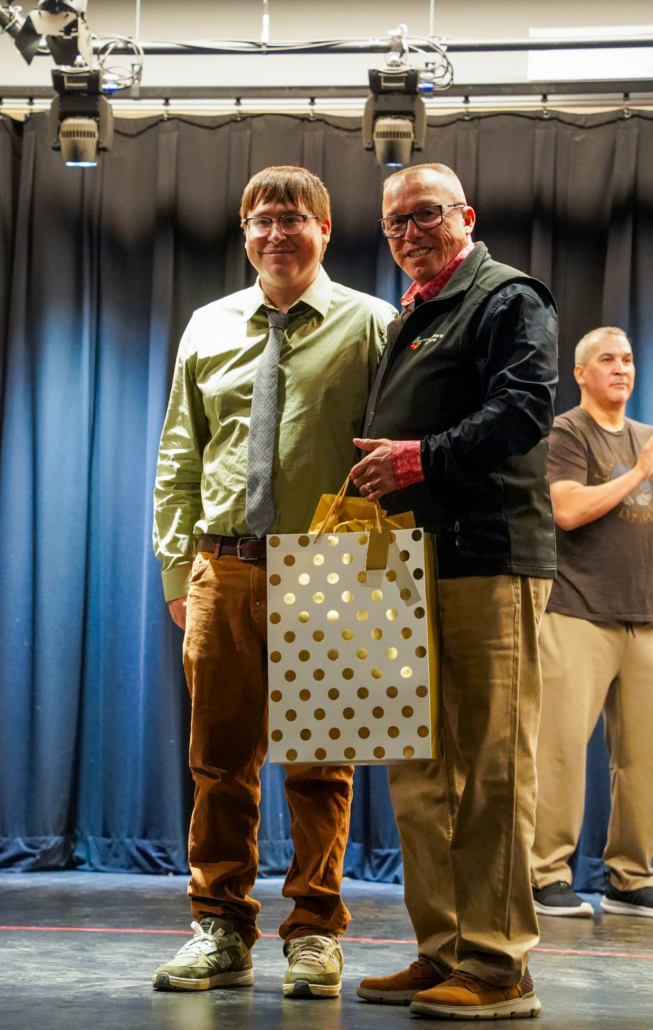
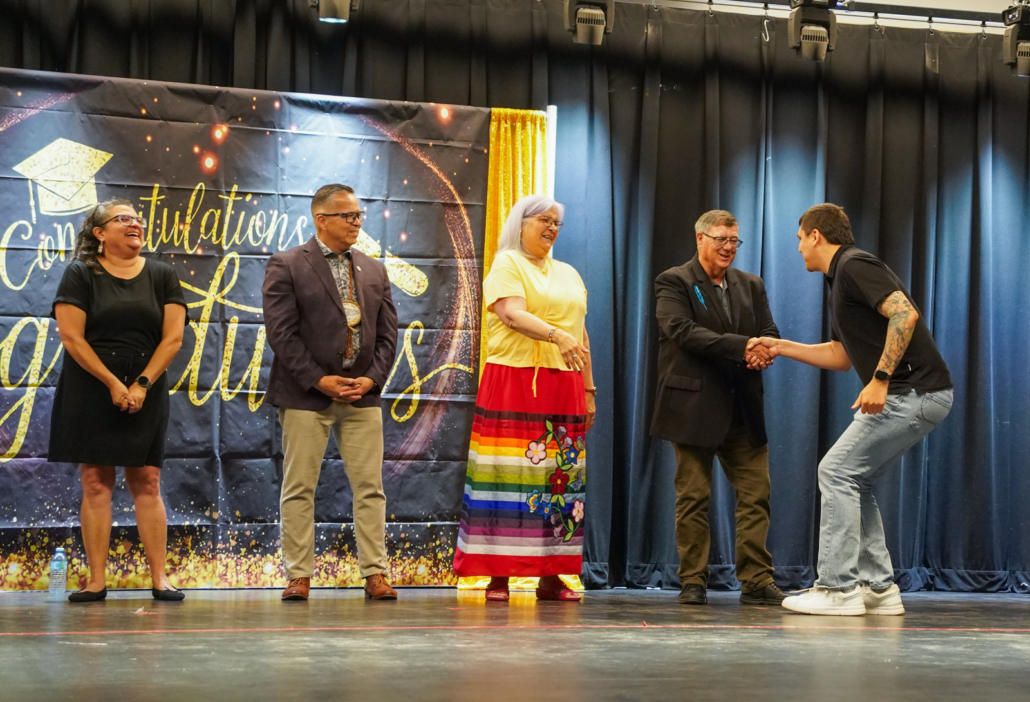
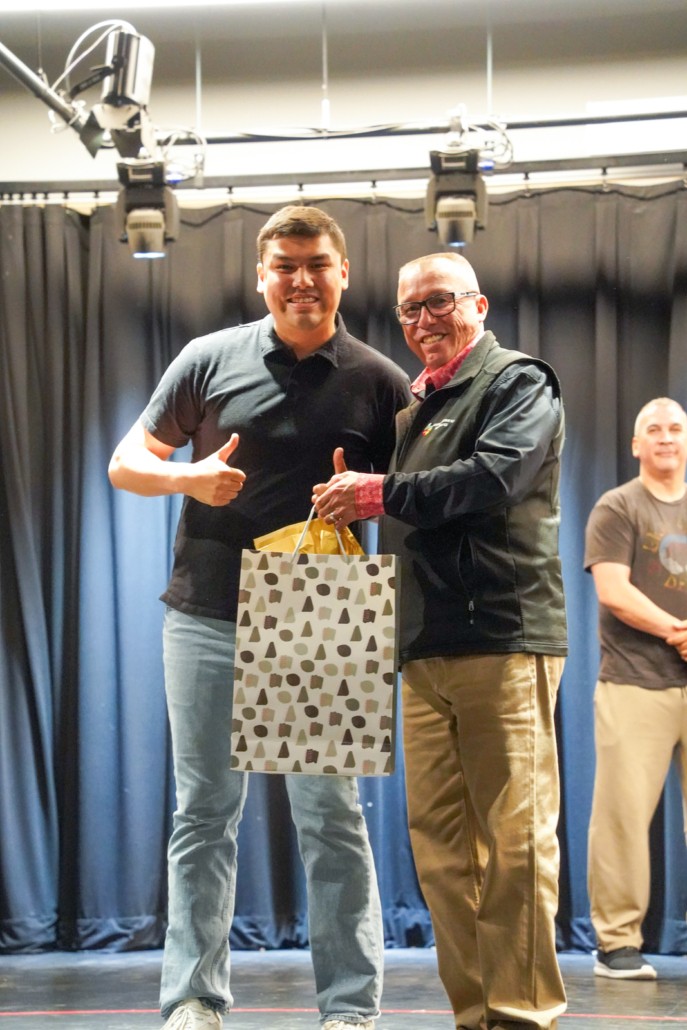
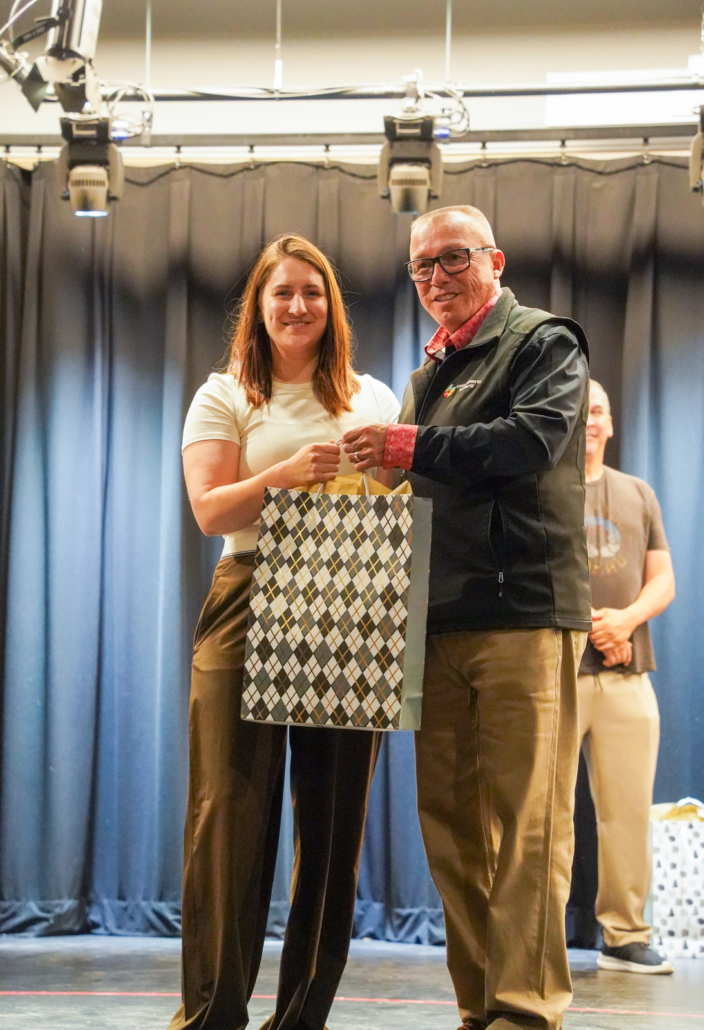
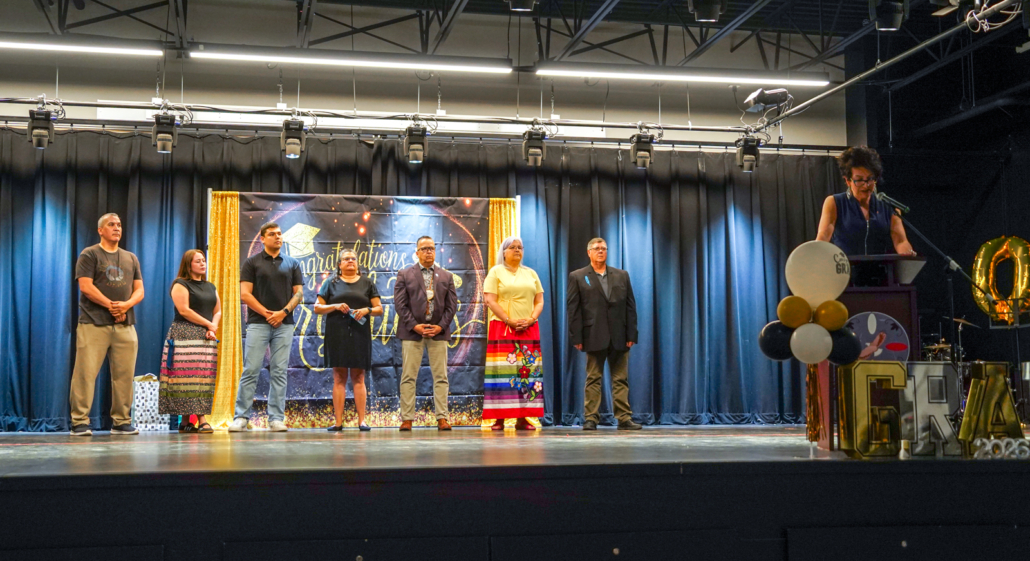


Jayda Hartlin is the Language and Activities Coordinator at the Waqatasg Elders Home. With a love for planning and coordinating activities, she was confident that this position was a perfect fit.
Hartlin first became familiar with Waqatasg while visiting her grandfather before his passing. The experience left a lasting impression and ultimately inspired her to apply when the position became available.
“When I was coming here for his last days, it was different walking in here. I’ve never been in a nursing home, but walking into Waqatasg, this doesn’t feel like a nursing home. It feels very comforting, very welcoming. During that time, they offered us to go eat in the dining room, and seeing the residents all together and seeing everyone connected was very nice. So, when the job came up, I wanted to try it, to see what it was like over there, what kind of environment, but so far, it’s been lovely. It’s a beautiful building; everyone is very kind and helping me out”
To include language lessons with the residents, Hartlin asks the students in the Mi’gmaq immersion program to come in and speak with the Elders and looks to incorporate the Revitalization program to visit as well. Residents have also enjoyed a wide range of events, including lunch with the Listuguj Police Department, bingo, crafts with Lita Isaac, and visits from Alaqsite’w Gitpu School (AGS) students. The residents’ favorite activity by far is painting. Their creativity is on full display in a small gallery of artwork that welcomes visitors as they enter Waqatasg. Upcoming activities include summer outings around the community, live music performances, and monthly Pokeno games that are open to community participation.
The positive impact of these activities has been evident. Hartlin has noticed improvements in the residents’ overall well-being, especially when they have opportunities to spend time with the youth, share stories, and remain connected to the community.
She has also found the conversations personally rewarding. Listening to Elders share memories, whether they are talking about their careers, spending time on the river, or growing up in Listuguj, these conversations have given Hartlin a deeper appreciation and a reconnection to the community’s history and the importance of preserving those stories for future generations.
By Ivy Grenier
As the community of Listuguj continues to grow and evolve, the Listuguj Mi’gmaq Government’s Capital and Infrastructure Directorate is taking on many new developments this next year, ranging from repairs and expansions to multiple new spaces. These projects aim to bring the future and an above standard feel to the community. Here are some of the ongoing and upcoming projects in the community.
Expansion of the Alaqsite’w Gitpu School means ongoing growth for both students and teachers. Construction begins by removing the existing trailers, aiming to create functional and efficient areas for educational activities and support services. Included in the expansion are office spaces for staff and teachers, a conference room, and two new classrooms.
Capital and Infrastructure is collaborating with the dioceses to begin construction on a new church in August. The cost of the project will be covered through insurance money obtained from the diocese from the fire in 2021. Located where the Saint Anne’s Church was on Riverside West, this new space will serve as a Catholic Church while remaining open and welcoming for all.
Commitment to growth continues through the twenty-one housing units in the plans for the 2026-2027 year, including several duplexes and triplexes.
Through the Haven House initiative, there will be several new units for transitional housing. This represents an important step for the community, creating a secure and safe environment for women and children impacted by domestic violence.
Another project for community growth is the Listuguj Mi’gmaq Development Center. They are working independently and will be expanding their current facilities to support additional programs, training opportunities, and to enhance operational capacity. Included in the extension are four office spaces and four classrooms. Construction on this project is not managed by Capital and Infrastructure.
Construction has already begun on a new two-story Band Office on Caplin Road. This new office provides spaces for private offices, open workspaces, conference rooms, storage areas, and council chambers.
The development of a new roadway within the community is underway. Atlantic Drive will run parallel to Pacific Drive on the east side. The project will support the construction of more than fifty residential units. The roadway will include sidewalks, paving, and curbs to support safe and accessible transportation.
The Listuguj Community Social Services Directorate oversees the Muin Ji’j afterschool program and will need a dedicated facility to support program delivery. The proposed building includes three classrooms, a janitorial area, washrooms, and kitchen to meet operational and program needs.
The Listuguj Community Social Services Directorate is also proposing to develop the Gathering our Roots project. An outdoor space connected to their building to serve as a safe and supportive area to meet with clients. The space will be organized into multiple sections connected by a main pathway. The main space will consist of a gazebo, a BBQ area, and a meeting space. This space is intended for client meetings, workshops, and group activities. A playground will be built to provide a safe and engaging environment for children accompanying clients. Traditional Space will be dedicated to cultural practices and healing. These spaces will be shared with the Muin Ji’j program, supporting both program delivery and family participation. These spaces will enhance engagement, promote well-being, and support cultural programming for the community.
These upcoming projects are essential in the community to foster growth and expansion for current residents and future generations. We are grateful for the continued efforts and support of everyone involved in the development of our ever-growing community
By Ivy Grenier
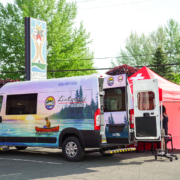
The Listuguj Mi’gmaq Government Chief and Council believe prevention is key to breaking the cycle of addiction. They are also looking beyond both prevention and enforcement and are committed to supporting families and individuals affected by the epidemic of addictions.
To expand our reach of the preventative mental health programs and the support needed to break the cycle of addictions, the Listuguj Community Health Services (LCHS) purchased a Community Outreach Van. Qualified Outreach Workers will be hired by the Listuguj Community Social Services Directorate (LCSSD) to provide these services.
This Community Outreach Van builds upon the work of the Listuguj Wellness Renewal Initiative (LWRI) aimed at engaging with our youth and community members to promote open, supportive communication, and de-stigmatize the conversations around mental health and substance misuse.
Mobile Mental Health counselling is a proven method of bringing mental health support to people in communities to overcome barriers like transportation or stigma. Services through the Community Outreach Van will include in-person counselling, workshops and resource distribution in a private and comfortable environment.
“We will continue to work together to address the addiction situation in our community. This Community Outreach Van is an opportunity for community members to come in and talk with us, through the outreach worker. It is our goal to provide them with the resource information available IN our community”. Director of Listuguj Community Health Services, Donna Metallic.
Stay tuned for more information and schedules updates as we move closer to launching this valuable resource in Listuguj.
By Listuguj Community Health Services
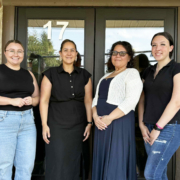
helping to grow the community and improve quality of life. The department aims to support local businesses, create jobs and infrastructure, boost tourism, and advance Mi’gmaw land and agricultural opportunities.
At the end of May, Loni Vicaire became the new General Manager of Economic Development. She is joined by team members Tamara Jacques, Julianne Wysote, and summer student Wasueg Nicholas. Together, they bring valuable experience and knowledge, along with a strong connection to Listuguj’s goals and values.
The department oversees the community garden and greenhouse, the Post Office, and the Chipper, while also managing files such as the Per Capita Distribution and other community programs.
Looking ahead, the team is developing a strategic plan with clear budgets and timelines. Exciting projects are already underway, including new modular greenhouses to strengthen food sovereignty, a potential backyard gardening initiative, and exploring business opportunities in the new Listuguj Hills development for residential, commercial, and industrial growth. They are also seeking ways to expand tourism to showcase the beauty of Listuguj’s lands and waters.
In addition, Economic Development is preparing to relaunch the LMG business grant program, which will provide funding and support to local entrepreneurs.
Be sure to keep an eye out for upcoming Economic Development events and initiatives! We can’t wait to see what they have in store for the future!
By Economic Development and Ann Marie Jacques
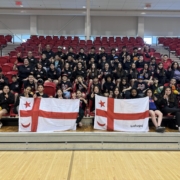
Congratulations to all the athletes at Alaqsite’w Gitpu School who participated in the FNEC Inter-School Games from May 23 to 26 at the Universite Laval, Quebec.
Boys 16-18 Basketball – 1st Place Champions
Boys 13-15 Basketball – 2nd Place
Boys 10-12 Basketball – 1st Place Champions – Undefeated for a second season.
Girls 13-15 Volleyball – 4th Place
Thank you to all the coaches, parents, chaperones, and volunteers who made this possible. The community is so proud of the athletes and their hard work and dedication to sports.
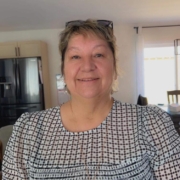
The Listuguj Community Health Services Directorate offers several different programs and resources to Listuguj community members, including Medical Transportation.
Keetha Metallic has recently taken on the role of Medical Transportation Coordinator as of June 10th this year. She works alongside Christina Gedeon, who is also Medical Transportation Coordinator.
Medical Transportation is available for community members who are attending medical appointments in and out of the community. Metallic said, “If it’s a local appointment, it would be great if they could let us know 72 hours prior so we can make the arrangements. For long trips, it would be good if they could notify us a week or two before because we have to coordinate our drivers.” As of right now, Medical Transportation has three drivers in Listuguj.
Medical appointments that require travel, hotel stays, etc., can be eligible for reimbursement, and individuals may be asked to hold onto their receipts. Metallic and Gedeon will arrange the accommodations ahead of time. There is a set rate for mileage and meals.
If you would like information on this resource in the community, please contact the Health Center at 418-788-2155.
Please note that on July 1st, all Listuguj Mi’gmaq Government offices will be closed for the day. Individuals who utilize Medical Transportation are asked to arrange for other means of transportation on this day.
By Ann Marie Jacques

It was in 2021 when Vicky Metallic first had the idea to create Metallic Publishing – a Mi’gmaw owned business with an aim to publish and distribute Mi’gmaw language books and other related language educational material for schools and students across Gespe’gewa’gi, as well as for the general public.
Vicky has long been passionate about reading and writing. She was raised speaking Mi’gmaw as her first language by her parents Mary Ann and Frank Metallic. In 2018, she enrolled in an intensive 2-year Mi’gmaw literacy training program at LETE (Listuguj Education, Training & Development), where she was introduced how to read and write in the language by her instructor and aunt Janice Vicaire. It was during this time that she developed an interest in, and realized the potential of, Mi’gmaw language creative writing, and had planned to help create curriculum content for the school. However, life made a sudden change.
The time between 2018 and 2021 was significant for her. Suffering the huge personal loss of her partner Mark, it prompted her to reflect and re-evaluate how she really wanted to be spending her time. During her break from work, she knew it was time to go about her interests a little differently. With an entrepreneurial spirit, experience in proposal writing, and strong support from her family, she set out on a slightly new career path as an independent publisher.
“It feels great to be able to give what I never had as a child. Growing up, I was only exposed to the language in my home from my immediate and some extended family. Looking back, I think how significant it would have been to see children’s books and tv shows in our language. Not seeing my language reflected anywhere has always made me feel like an outsider. With Metallic Publishing, I hope to change that. I want to provide a sense of belonging.”
In December 2022, Vicky was notified that her funding application to Canadian Heritage was successful. This funding is being used to create language learning content for social media. Videos are uploaded weekly to Metallic Publishing’s Facebook page titled “Gesatm egiljei”, which means, “I like to read”, and includes a combination of introductory and intermediate language lessons that are easily accessible to the public.
It’s an exciting time for Metallic Publishing. The business is also set to launch its first Mi’gmaw language book, titled U’j’ji’jg, a translation from Robert Munsch’s Blackflies, in early spring.
To view the language content, or to purchase a copy of U’j’ji’jg, you may contact Vicky Metallic through Facebook, or by email at metallic.publishing@gmail.com
By Third Party

Back in January, a Call for Tender was issued for a new bus loading zone at Alaqsite’w Gitpu School. After receiving some bids, the construction of the new bus loading is set to begin in June/July after school is done. The project will be funded by Indigenous Services Canada.
“The school bus loading zone and parking lot will include a designated area for the bus loading and another designated area for parents to pick up their kids. The bus loading area will also be equipped with electrical chargers,” said the General Manager of Capital and Infrastructure, Bassem Abdrabou.
This update to the parking lot will increase the safety in this area, by allowing a smoother pick-up/drop-off, and help minimize the traffic during peak times.
The project is expected to be completed before the school year begins this September.
By Ann Marie Jacques
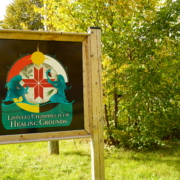
Chad Gedeon is a Councillor here at the Listuguj Mi’gmaq Government, and works in the Culture and Language department. When he got back into politics in 2018, he knew right away that he wanted his focus to be on revitalizing the culture and language in the community. The first project he took on was the creation of the Etlinpisulti’gw Healing Grounds. In the beginning, the area on Bordeaux Road only consisted of a teepee, and after community engagements, and discussions with elders and residential school survivors, Gedeon took the lead on making the grounds what they are today. A place of healing, outdoor community gatherings, ceremonies, and teachings. It’s a place where people can just sit outside and be at peace.
Gedeon’s next project is the Turtle Lodge. He said, “The Turtle Lodge will be a place of healing, where we will practice our language more, where ceremonies can be formed, where we can practice our teachings, share our stories and culture. We will have a room for elders and residential school survivors. There will be a kitchen for feasts after ceremonies. There will be workshop rooms for drum making, basket making, learning about medicine making, and more.” At this time, ground-breaking for the new Turtle Lodge is expected Spring of this year.
Not only are these healing resources beneficial to individuals, but also to various departments in the community, such as Social Services. With many people battling mental illness and addiction, having a place like the healing grounds, or the Turtle Lodge, is a useful tool for departments to recommend individuals take part in to begin or continue their healing process.
Gedeon believes these healing resources are a way for the community to change their way of thinking. To help encourage the preservation of the language and culture, and to learn the tools the Mi’gmaq people once had before. He said, “Before with our ancestors, everyone had a role in the community, the basket makers, the gatherers, the fishers, it was a balance, and we lost that balance once modernization kicked in.”
A lot of people in the community of Listuguj practice spirituality and everyone practices it in their own unique way. “To me, spirituality is the connection with our ancestors, our teaches, and Mother Earth,” said Gedeon. If you are looking to learn more about spirituality and healing in the community, reach out to knowledge-keepers and elders for more insight. Take part in the various ceremonies and gatherings at the Etlinpisulti’gw Healing Grounds and other facilities in the community, and eventually, the new Turtle Lodge will be another alternative for your spiritual journey.
By Ann Marie Jacques
 Formerly titled the Nujignua'tegeg - The Wi'gatign is a multi media community newsletter for Listuguj First Nation.
Find our printed issues within the community. We print once a month.