
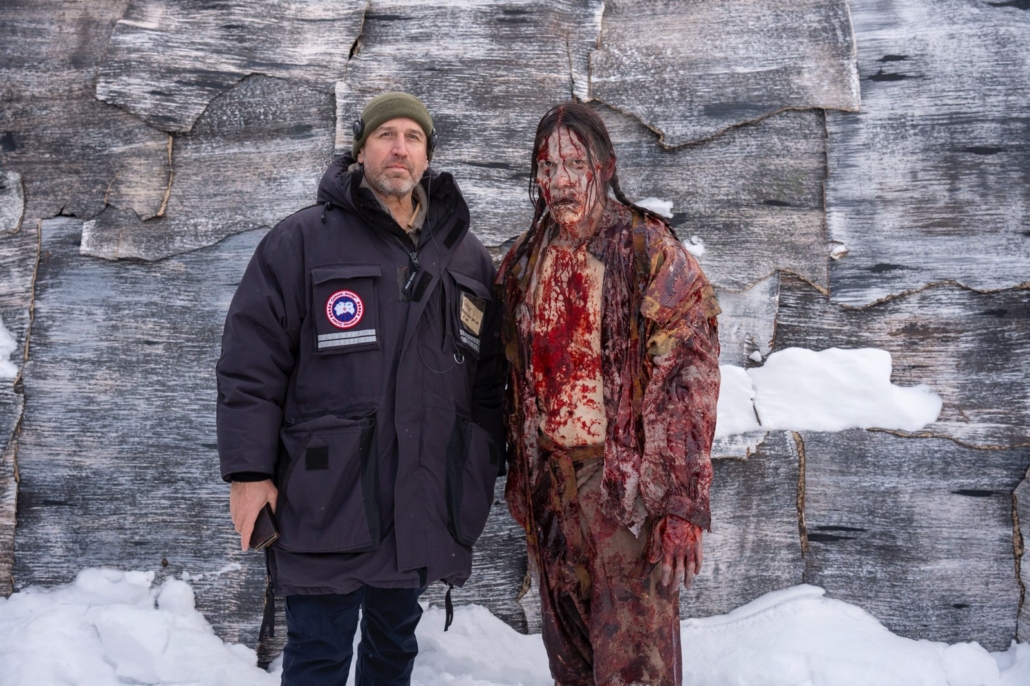
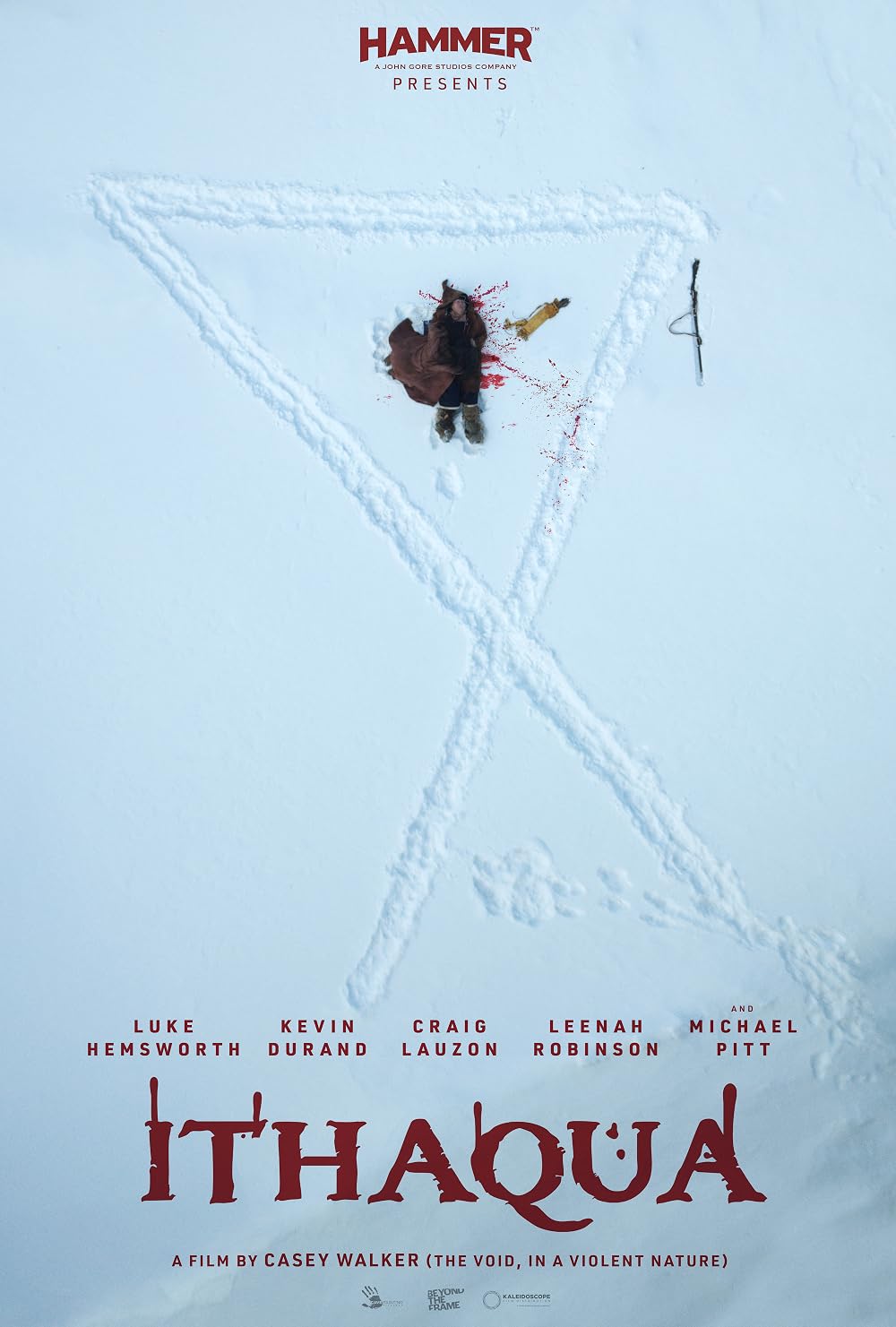
ITHAQUA: Peter Vicaire’s Decade-Long Journey
“ITHAQUA is a period horror movie. In 1821, during the decline of the fur trade, an American mercenary struggles to unite the frozen survivors of a famine-stricken outpost plagued by a dark force that leaves its victims with an insatiable hunger.”
Peter Vicaire takes on the horror genre with the newest film, ITHAQUA. Taking on the roles of co-writer and producer on the latest film, first had its premiere at Fright Fest in London, England, in August. What started as a project in 2014, became an over ten-year-long journey to begin filming, has now been taken around the world. From France to Spain, to Vancouver, and on its way to Finland and the Bahamas, ITHAQUA has been well received globally, bringing thoughts of a future sequel.
Vicaire shares how ITHAQUA came to be.
“Pascal Trottier, my (sometimes) writing partner, and I had written a different period horror film called WARPATHS (1600s fur trappers hunted by giants of Iroquois mythology) but with a much larger budget in mind. We had sent that script to a producer in Toronto who liked it but thought the budget was too high. However, he knew Casey Walker, a director/producer out of Toronto, was looking for a writer to rewrite his wendigo script, so we connected that way and were brought on board the project.
Casey’s story was based on the Ojibwe wendigo myth, a cannibalistic beast that dwells in the icy north. We Mi’gmaq have our own version of the wendigo called the Jenu. There have been several wendigo movies out there already, so for ITHAQUA we were looking for a fresh twist. We did this by incorporating the mythos of pulp-horror writer H.P. Lovecraft into the story, melding the two.”
Vicaire spent the entire twenty-seven filming days on set in Thunder Bay, Ontario, in January of last year. Filming was predominantly done outside and at night, facing sometimes up to negative forty-five-degree temperatures. “Potentially dangerous? Yeah. Still super fun? Yeah. When you see the movie, you’ll see this isn’t some Hollywood CGI cold; it’s the real deal,” stated Vicaire.
While taking on the producing role on set, Vicaire ensured that Indigenous voices were represented fairly, ensuring accuracy and respect for the culture. The film dialogue includes English, French, and Ojibwe; much care and effort was put into accurate pronunciations. “We had speakers record dialogue for the actors to reference and use. We also had big poster boards with phonetic spellings behind the camera while shooting incase they needed a little help remembering. We also sent the script to an Ojibwe academic professor to see if we were on the right track on how we presented his people.” Vicaire shows great care for not only the writing aspects but also Indigenous representation in the film.
Vicaire has a large library of available scripts. “Other than the ITHAQUA sequel, I’m most excited about the last script I wrote, THE STUMP WITCH. It’s a Mi’gmaw horror film, based on our own skite’gmuj – spirit. It flips the script on the old “Indian burial ground” cliché because the burial ground is on the reserve and the people being haunted are Mi’gmaw. When a young Mi’gmaw woman moves from the city to her reserve for the first time, a vengeful spirit terrorizes her family when they can’t communicate in Mi’gmaw.”
The distributor of the film currently determines where the film gets played. Vicaire hopes to bring it to North Shore Cinema in Campbellton for the community. “I just hope people have a good time, appreciate the build-up, tension, scares and the beautiful scenery we were able to capture. If it leads them to digging deeper into the wendigo (Jenu) creature myths and perhaps even the literature of the H.P. Lovecraft mythos, then even better!”
By Ivy Grenier
 Formerly titled the Nujignua'tegeg - The Wi'gatign is a multi media community newsletter for Listuguj First Nation.


Leave a Reply
Want to join the discussion?Feel free to contribute!