
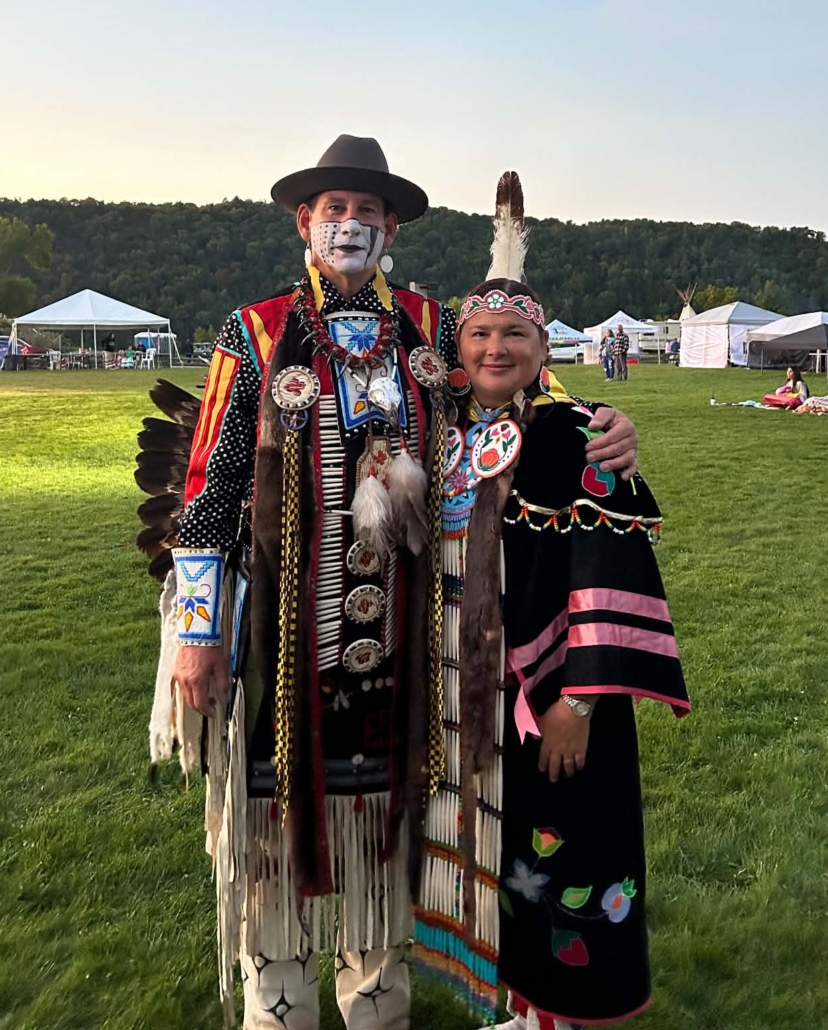
In The Circle Together: Bobbi Madahbee and Derek Barnaby, Golden Age Head Dancers
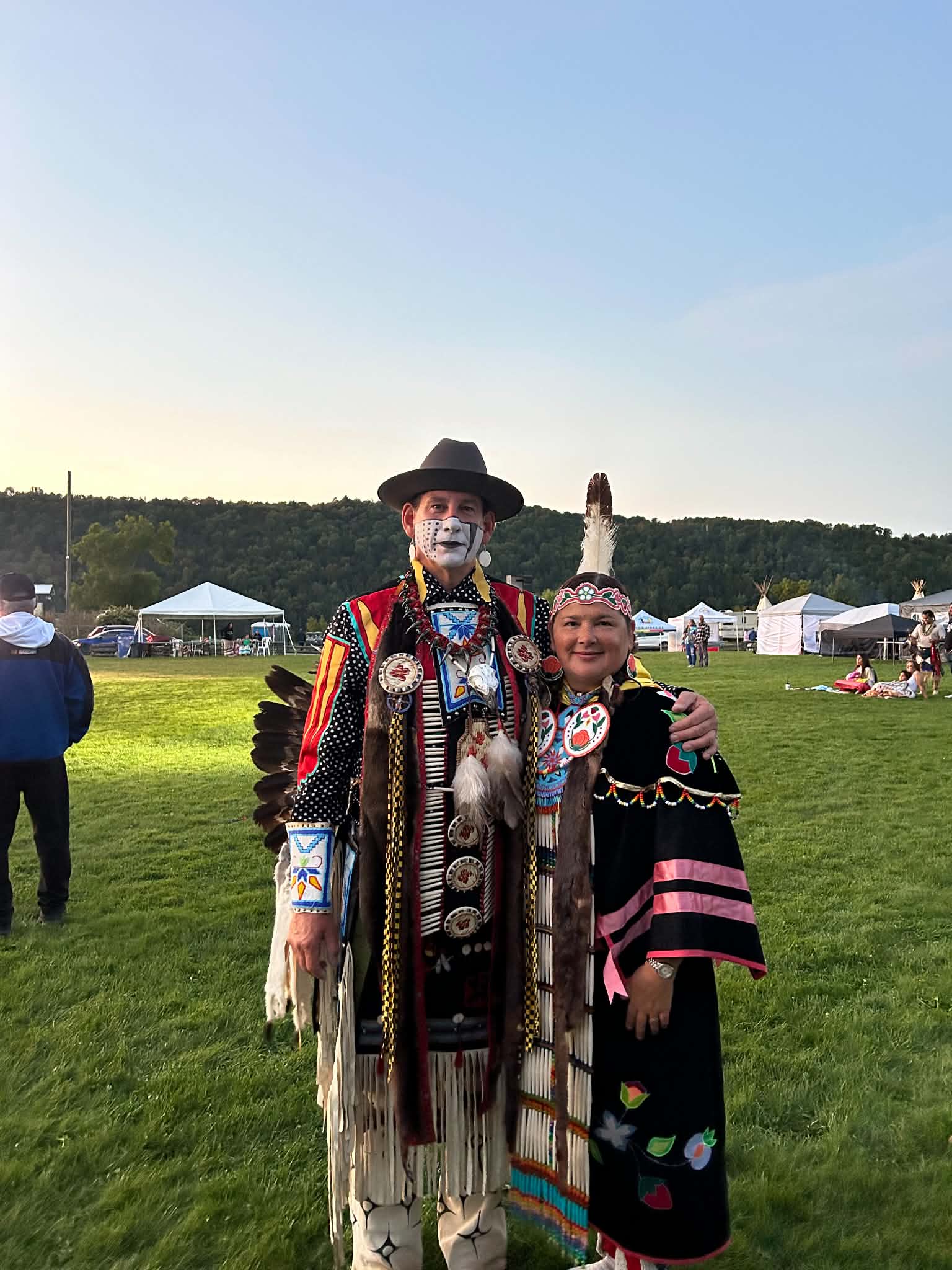
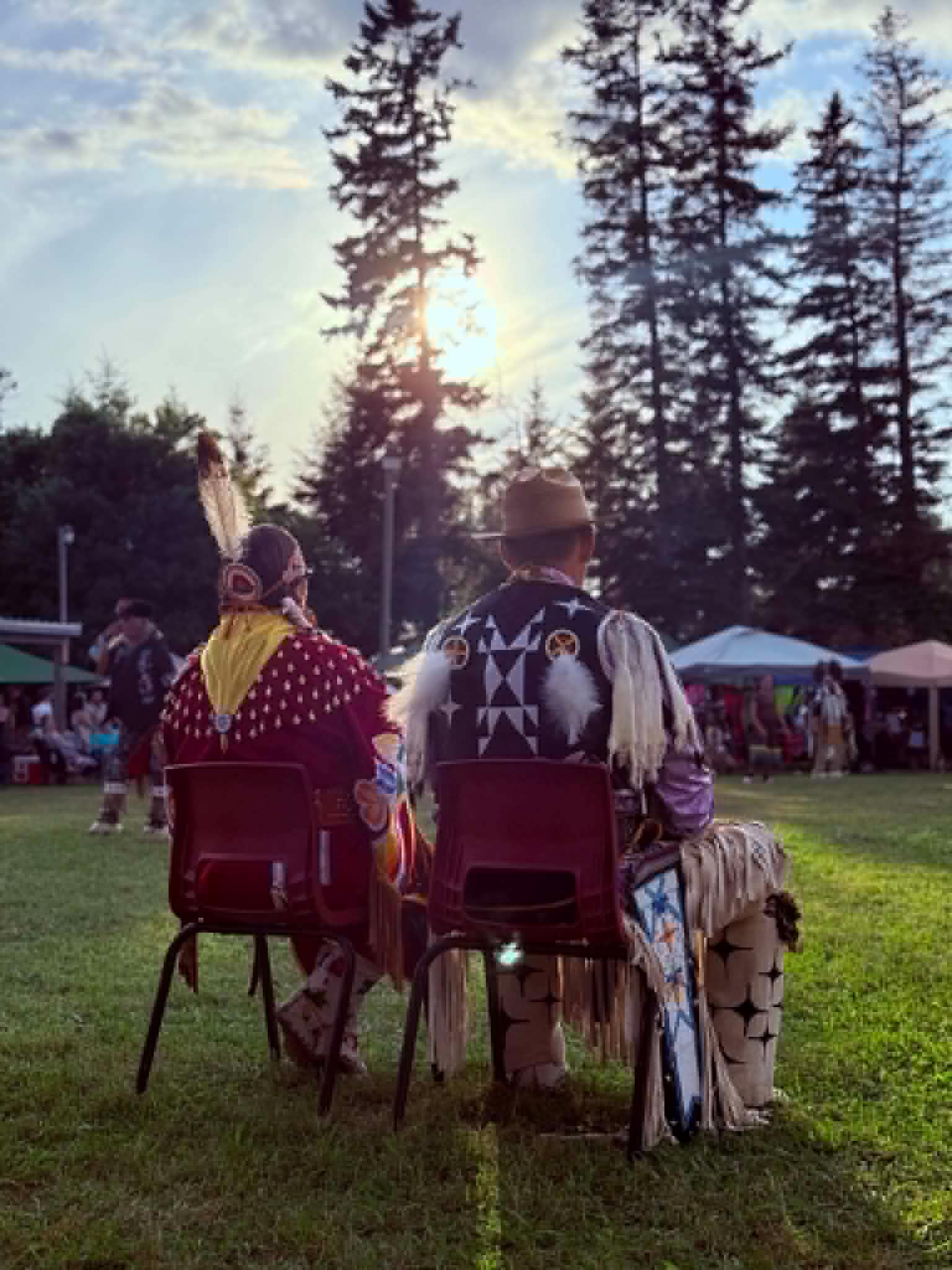
For Bobbi Madahbee and Derek Barnaby, dancing is more than a tradition. It is a lifelong journey of learning, sharing, and connecting with culture. This year, the couple took on the title of Golden Age Head Dancers together at Listuguj’s 34th Annual Powwow, marking another chapter in their decades of dancing.
Bobbbi Madahbee, originally from Aundeck Omni Kaning, First Nation has been a Women’s Traditional Dancer for the past twenty-nine years. As a child, she regularly attended powwows and would dance for fun, often following her cousin around the grounds. It was later, in her early twenties, when she entered the Miss Indian World Pageant that Mahdabee received her first full regalia and began dancing more seriously.
Through the guidance of her cousin and mentor, Dawn Madahbee, Bobbi learned the fundamentals of traditional dancing. “She not only taught me to dance, but she taught me about the teachings in dancing, the protocols. It’s not just dancing. There’s teachings that go along with it.” Throughout her dancing career, she has remained a Women’s Traditional dancer. Being asked to be head dancer of the Golden Age category is an honor she accepts with humility. “I was a little taken aback when I was asked to be Golden Age, not realizing how old you’re getting,” she said with a laugh. “But I’m very honored to accept that role. It’s a duty I take very seriously as a humble position in the powwow.”
Derek Barnaby from Listuguj has been a men’s Traditional Dancer for the past thirty-six years, beginning his journey when he was twenty-one. Over the years, he has learned from dancers and teachers throughout North America, including his first mentor, Irving Hill. Barnaby explored other styles of dance, including hoop dancing. His interest in hoop dancing lasted for several years, as he learned not only the movements but also the stories and teachings connected to the style of dance. Eventually, he returned to his true passion for Men’s Traditional dance and continued with it throughout his dancing career.
At fifty-five, Barnaby now finds himself among the longest-running dancers in the community. “Thirty-six years of dancing, and now you’re in a category where you’re with all these other men who have been dancing forever. I’ve never stopped. I’ve maintained it. I’ve always been interested in more stories and more history, just understanding every part about it.”
For Barnaby, becoming a Golden Age dancer is not simply about how long he has danced. It is about what comes with those years of experience: knowledge, responsibility, and the opportunity to help others. “I’m not an elder, but I have knowledge. The way I was taught was about protocol, about following the guidelines, making sure that you’re doing things
respectfully, and passing that knowledge on.” That responsibility for sharing knowledge is something both dancers take seriously, particularly when it comes to youth.
Madahbee believes sharing teachings is one of the ways traditions remain alive. Through her work in education, she has opportunities to share with the youth. “That’s how we still have our teachings—it’s all about sharing. That’s the way we keep it alive and keep the pride and share and hope to build youth pride and identity and become a part of the circle.
Barnaby acknowledges the importance of cultural revitalization. He speaks about the generations in which language, culture, traditions, values, and family structures were restricted or taken away. Over the past thirty-six years, his journey has involved re-learning ceremonies and traditional practices. “Now we’re starting to regrow it. You see it a lot with the younger generation that are picking up dance.” Barnaby shares that cultural knowledge should be shared freely with those who want to learn. “There’s no price tag on it. If someone really wants to do it, and they come over and ask me to share something, I’m more than happy and more than proud to share that experience.”
Being named Golden Age Head Dancers together makes this year’s powwow particularly meaningful. Barnaby shares his passion for this momentous occasion for their family: “It’s really awesome that we get to do this as a family. Our kids are here as well. It’s Bobbi’s first time actually being a head dancer. At a Golden Age, she’s gone through so many things, and I’ve gone through so many things. We’ve gone through so many things together for us to be here sharing that experience, being in front of the community, in front of our families and friends it’s incredible.” Madahbee adds, “It’s an honor. I’ve earned my stripes.”
Madahbee hopes their family’s example will encourage others to find their own place within the Powwow circle. “Another thing is to hopefully inspire others to want to come out, to join the circle, and to want to dance and share.”
For Bobbi and Derek, the Golden Age role represents more than the decades they spent dancing. It represents the knowledge gathered along the way, the people who taught them, the family they have built around the powwow, and the responsibility to ensure those teachings continue. As they step into this role, they do so not only as experienced dancers, but as teachers, parents, mentors, and members of the community, aiming to help carry traditions and teachings forward for future generations.
By: Ivy Grenier
 Formerly titled the Nujignua'tegeg - The Wi'gatign is a multi media community newsletter for Listuguj First Nation.

Leave a Reply
Want to join the discussion?Feel free to contribute!