
Migwite’tm 2023

Chief Martin
Migwite’tm 2023 Speech
June 11, 2023


It’s inspiring to see Listuguj come together to honor our people who were involved in the 1981 raid. This year as the previous years, the commemoration carries a meaningful name: “Today we honor the day we became stronger.” When the rights of our Mi’gmaw Nation were challenged, our people stood together to defend our fishing rights. They did this for all our people and our future generations.

In 1981, when our rights were challenged by the government, our people stood together once again to defend our fishing rights. As we stood for our rights, we also stood together for the rights of our future generations. Strength grew strong within our community on June 11, 1981.  Not only did we receive support from our Canadian First Nations communities we also received support from our first nation communities within the US.

We truly became one Nation.

The 81 raid was another test of character for our nation, now we move forward and celebrate with strength, affirmation, and assertiveness for our people. We will never surrender our inherited rights as first nations for ourselves and our future generations. We will continue to fish by respecting and honoring Plamu as taught by our ancestors.

I would like to thank everyone who made this Migwite’tm commemoration possible: the organizers, the walkers and the sponsors.

Thank you for everyone’s’ help and support in making our community stronger.


Wela’lin

We Remember
In light of today, we gather to remember,
The scars that have lightened over time
Still, the stories remain vivid and true.
Despite the healing and fortuity of growth
We ruminate the actions we’ve had to subdue.
We try to fathom this sacred feeling
That flows through our blood,
Like the salmon that run the streams.
An unexplainable mystery that can’t be seen.
But we remember how,
On June 11, 1981,
The people were made aware.
By the juddering sounds of helicopters above
And wailing speed boats splashing through the Restigouche river; stunned
Our people while the Surete began to demand and shove.
They came in the night without any sight
They came with their weapon’s at Listuguj First Nation
They came for destruction with strict instruction…
To cut the fishing nets
Seize the salmon with many threats,
Violate the Treaty of Peace and Friendship.
They slipped through history
And attempted to rip
The essence of our being they thought could shatter,
But what they held really didn’t matter.
A human shield of residents were forming
Because they would not allow the intruders to yield our right
And stood in their way
Despite the government’s warning
Through the thick of it we remember,
The time it took to fix our nets,
Anticipating the moment to challenge
their laws once more and renounce
We would resist and do what was true…and fight!
To prove salvation is always the goal rather than unhinge
With all our might.
Today I ask that you remember,
Through the rivers and streams
The salmon symbolize our right to the land
A regalia of life and hope,
For First Nation people to cope.
We are the key,
To preserving nature’s beauty,
For all to enjoy and see,
A profound emotional experience
In a world that’s sustainable through coexistence
Truly.
So today we honor,
And celebrate
The day we got stronger!

By: Carley Wysote
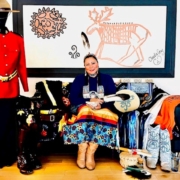
Indigenous Representation in the RCMP

The National Police Federation recently published a new book, “Why We Serve: Stories

of Today’s RCMP Members – Celebrating 150 Years.” The book celebrates 150 RCMP

members across the country. One of those members is Listuguj’s own, Mandy Barnaby.

Barnaby has had several reputable careers in the community. She was the coordinator of Listuguj’s Youth Centre, now known as the Listuguj Youth and Family Centre, she worked auxiliary in the Listuguj Police Department, and she worked in the Listuguj Social Services Directorate. When asked why she decided to pursue a career with the RCMP, Barnaby replied, “My own childhood traumas, and my own dealings with social service and the police. My ownyouth and childhood really influenced my decision to get into grassroot work.”

Barnaby completed police training in Regina, Saskatchewan. When she joined the RCMP in 2010, she expressed that being close to Listuguj, and maintaining cultural ties was important to her and her family. After being assured there would be Mi’gmaq postings available in New Brunswick, Barnaby was posted in Baddeck, Nova Scotia. After six months, she was transferred to Wagmatcook for the next six months, then to Elsipogtog, NB, where she worked for seven years. From Elsipogtog, she was then posted to Lennox Island in Prince Edward Island.

From the get-go, Barnaby noticed a lack of Indigenous representation in the RCMP –especially Indigenous women. “When I joined, in all of the RCMP, I think there were eight Mi’gmaq women,” she said. She noticed that being a visibly Indigenous person quickly came with its challenges and she was often not treated with the same level of respect as non-Indigenous officers. From the early stages of her career in the RCMP, Barnaby states there has been many offensive behaviors and comments from other members and upper management within the organization. At first, she looked past them and excused these behaviors just to focus on her job. As an Indigenous constable, Barnaby said it has been challenging to cope with the racial climate that comes with incidents that are racially motivated or rights driven. She has held the belief that through representation and education attitudes within the organization can change. She has always incorporated her cultural knowledge and ceremony in her approach when responding to calls. She would often carry medicines and do talking circles to help de-escalate situations, this approach encourages respect and communication that has always had positive outcomes.

While the RCMP does portray itself as diverse and accepting, the organization does have a long way to go. Barnaby referred to the organization as “archaic” stating that it is built on a hierarchical pyramid structure. Unfortunately, this organizational structure focuses on protecting authority and less on accountability. She said, “The promotion criteria goes from providing competencies that focus on quality service to instances that you have demonstrated that you can discipline or find mistakes your coworkers have made” This is when Barnaby says it can lead to a hyper focus on minority members or women.

While Barnaby has gone through some negative experiences with the RCMP, she has stated that she has met a lot of members who have great attitudes and love to serve. She believes that as the younger generations get into policing, there is hope for change. Barnaby said “Younger people tend to be more open-minded, accepting and have likely been exposed to historical truths, social inclusion, racial equality, gender identity and many other major issues that impact our country”

For Indigenous women considering a career in policing, Barnaby said to always trust your gut. If it feels like racism or sexism, it’s important to honor your instincts and speak up, stand up for yourself because if you doubt yourself or keep overlooking these instances, the negative impact it will have on your self-worth or self-esteem are not worth it going unaddressed. Make sure to connect yourself to Elders, the Community and all resources in every Indigenous Community you may serve. Barnaby stressed the importance of Indigenous representation, especially the need for Indigenous women in all fields of justice.  She said, “If you want to serve, our communities desperately need our people for justice,”

While she has been addressing her own experience with systemic racism, Barnaby is waiting for another transfer to start a new chapter in her career. She is determined to create change through service within the RCMP and aims to finish her career with pride. Barnaby is passionate about justice and looks forward to continuing to serve in a culturally sensitive way.

Thank you for your service, Mandy Barnaby,

By Ann Marie Jacques and Mandy Barnaby

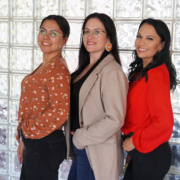
Meet the Culture and Language Revitalization Team – Audrey Isaac and Mary-Beth Wysote

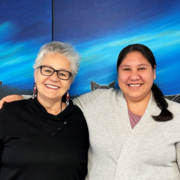
The Listuguj Mi’gmaq Government would like to introduce Culture Coordinator, Audrey Isaac and Mi’gmaw Revitalization Coordinator, Mary-Beth Wysote. They are both new to their roles on the revitalization team, but among their impressive educational, cultural, and artistic backgrounds, they already have plenty of ideas when it comes to revitalizing culture and language in the community.

Isaac is from Listuguj and has twin daughters, Missy, and Vanessa. She has several years of experience in business and event planning. She has been doing freelance work with the Listuguj Mi’gmaq Government and has coordinated and volunteered with many groups in the community, like the annual Pow Wow. She loves painting, writing, drumming, and practicing cultural spiritualism. “My passion is healing and culture,” said Isaac. The Listuguj Mi’gmaq Government reached out to Isaac specifically to take on the role of Culture Coordinator in the community.

Wysote is also from Listuguj. Her parents are John-Loren Wysote (Blue) and Meredith Bernard from Gesgapegiag.  She is passionate when it comes to arts and attended the New Brunswick College of Craft and Design for the Aboriginal Visual Arts Program where she studied Black Ash Basketry. She had the inspiration to learn her language and joined the Mi’gmaq Adult Immersion Program, and from here she assisted family members in learning the language and volunteered at Alaqsite’w Gitpu School helping students learn. Wysote is currently enrolled in the Cape Breton University Bachelor of Arts Community Studies program.

The team has started off strong in their roles and has been brainstorming many projects and programs for Mi’gmaw and Culture Revitalization. Their first project is the Mi’gmawei Mimajuaqan event happening on July 1st in Gesgapegiag. This event is an opportunity to share, celebrate and learn. This event is expected to continue for the next couple of years.

Other projects that are in motion are the Mi’gmaq Mentor Apprentice program which is expected to start back up in the Fall. Language Home Kits that contain resources to start learning the language (Dictionaries, flashcards, etc.) and stories in the Wi’gatign featuring Mi’gmaq speakers in the community.

The program is about celebrating and embracing culture and language. It’s about making it a more natural, everyday part of our lives. Isaac said, “It’s connecting our communities, revitalizing our culture, and bringing it back.” The program is not a political initiative, it’s strictly cultural and it’s about encouraging others. Wysote said, “I think for some people it might be intimidating to want to learn Mi’gmaq or want to learn their culture, so what we want to do is make it more accessible to as many people as we can in the community.”

We look forward to seeing what the team has in store for future programs and events in the community!

By Ann Marie Jacques

LOCAL BUSINESS OWNER – CHELSEA LEE-ANNE CULLINS

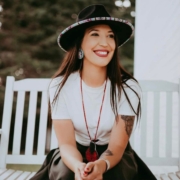
Chelsea Lee-Anne Cullins (Germain) is originally from Listuguj, and now resides in Millville, New Brunswick.  While working at the Mi’kmaq-Wolastoqey Centre in Fredericton, Cullins redesigned the centre’s website, and this kickstarted her drive to create her business, Claw Connections. The name “Claw Connections” has a special meaning behind it. The title, CLAW comes from Cullin’s initials, “Chelsea Lee-Ann” and the last two letters come from Cullin’s children’s initials. The logo was designed by local Listuguj artist, Griffin Germain.

Claw Connections helps develop Indigenous resources online through creating and collaborating with Indigenous businesses, website development, and helping businesses establish and maintain an online presence. The business really developed during the COVID-19 pandemic. Cullins said, “Connecting with people, and chatting with people, I found there weren’t any Indigenous resources that were available online – especially during that time period when everyone began navigating online.” Cullins is creating a tool where people can search for Indigenous resources easier, when using social media may not be an option. She also mentioned having these resources accessible to elders is very important.

She said the first real collaboration with Claw Connections was the project “Traveling the Wabanaki Way.” From here she has taken on many other significant projects, such as the New Brunswick First Nation Child Welfare Jurisdiction, Listuguj’s MMA club The Vault, and more. Most recently were two events and workshops with the Mi’kmaq Wolastoqiyik Association of Social Workers.

Cullins said she is excited to be an entrepreneur as an Indigenous woman. She loves helping businesses connect with their clients. She appreciates and learns a lot from the businesses she collaborates with. “I get to be a part of a glimpse into these businesses, and I can take away the teachings they’re sharing,” said Cullins.

The process of collaborating with Claw Connections is very easy and productive. Clients will reach out to Cullins and provide information about their business or anything else they’re looking to promote. Cullins will connect and go over the client’s needs and wants to pertain to their business and come up with a plan on helping client’s grow their business online and reach larger audiences.

On top of being a business owner, Cullins has recently started a new position at the Department of Aboriginal Affairs as the Indigenous Navigator. She has also been accepted to VanArts (Vancouver Institute of Media Arts) this fall for Website Development and 3D design. She is very excited to further her expertise in the field.

“The whole purpose of Claw Connections was just to highlight Indigenous businesses,” said Cullins. If you are interested in giving your business an online boost or inquiring about the many services available at Claw Connections, visit clawconnections.com. and contact Chelsea Lee-Ann Cullins.

By Ann Marie Jacques

20 Year Staff Celebration

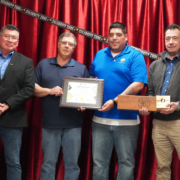
On May 25th, the Listuguj Mi’gmaq Government held a Staff Appreciation Dinner celebrating staff who served the LMG for 20 years or more.

Congratulations to the following staff:

Public Security
Sharon Barnaby
Jacob Mitchell

Chipper Operations
Henry Metallic

Capital and Infrastructure
John Metallic

Social Services
Tina Caplin
Tanya Isaac
Tierra Ritchie

Health
Jennifer Caplin
Valery Jacques
Bonnie Isaac
Donna V. Metallic


Education
Derek Barnaby
Karla Condo
Jean Isaac
Suzie Isaac
Tammy Isaac
Bobbi Madahbee
Patsy Mallaley
Naomi Marchand


To see all photos from the celebration, visit LMG’s Facebook page.


By Ann Marie Jacques

Starting Kids Off on the Right Foot Since 2021.

Erwin Molley has many roles in the community. He is a Councillor for the Listuguj Mi’gmaq Government, he is a Male Mentor with the Listuguj Community Social Services Directorate, he runs a basketball program, and he is also head of the non-profit organization, Kicks for Kids.

Kicks for Kids began in 2021, and it provides athletic footwear for youth in the community, free of charge.  “It started with basketball. I noticed some kids just didn’t have the proper shoes,” said Molley.  The organization offers a wide variety of footwear such as basketball shoes, soccer and baseball cleats, skateboard shoes, dance shoes, and more. The organization has also received donations of non-athletic shoes that are still in mint condition that can be worn on more special occasions, like graduation ceremonies. Molley provides footwear for community members who are currently not residing in Listuguj. Individuals can purchase reasonably priced sports footwear, provide Molley with proof of the purchase, and can get reimbursed.

Kicks for Kids gives all children in the community an equal opportunity to take part in sports.  Having this resource may take some financial stress off families. Some families have multiple children who are enrolled in sports, and shoes can run $50-$90.  While it is a free service for all children, Molley does encourage youth to show they are committed to a sport and are dedicated when it comes to attending practices and games before opting for free footwear.

Having the proper footwear when playing sports leads to more confidence in our youth. It allows them to live more healthy and active lifestyles. Playing sports is beneficial and helps develop sportsmanship and teamwork skills, and Kicks for Kids assists children in achieving this.

The program is non-profit, and Molley volunteers his time to ensure the footwear is always stocked up for the community. “It has to be an ongoing, steady thing because everybody’s feet grow,” laughed Molley. When it comes to the program itself, Molley receives support and donations from several sources, such as small businesses, branches of the Listuguj Mi’gmaq Government, and the public in general.

If you or your child would like a free pair of shoes to participate in sports, you can reach out to Erwin Molley via Facebook, or stop into the Youth Centre to inquire. As of recently there is an official Kicks for Kids page that provides information and updates.

By Ann Marie Jacques

Chief’s Corner with Chief Scott Martin – May 2023

We are six months into the term, and I am optimistic about how we have moved forward with Chief and Council’s commitment to supporting the community. Earlier this month we held a Staff Appreciation Dinner for employees celebrating 20 years of service in Listuguj. The community would not be what it is today without the efforts of our hard-working employees. On behalf of Chief and Council, we thank you for your years of service.

“Jordan’s Principle Ensures Equity for First Nation’s Children” – Indigenous Services Canada

Jordan’s Principle (JP) comes from the story of a First Nation boy named Jordan River Anderson. He was from Norway House Cree Nation in Manitoba and was born with severe medical issues that would require at-home health care. The province of Manitoba and the federal government could not determine who would be financially responsible for his at-home care. His life was spent in the hospital because an agreement could not be made regarding his at-home care. This dispute ultimately led to the passing of Jordan Anderson at the age of five years old. He wasn’t given the opportunity to go home to his family and loved ones. Jordan’s Principle was developed to ensure a situation like this wouldn’t happen again. It states that any public service ordinarily available to all other children must be made available to First Nations children minimizing delay, denial, and disruption. Listuguj adopted Jordan’s Principle under the Listuguj Community Health Services Directorate (LCHS) in 2017.

In the community, three employees working for LCHS specialize in JP. Sara Swasson, MA is the Jordan’s Principle Manager, Kara Metallic, ECE is the Jordan’s Principle Assistant, and Teeka Dedam is the Intervention Support Worker. Not only do they work specifically for JP, they are also responsible for various LCHS events in the community such as Healthy Breakfasts, Lunch and Learns, and more.

Sara Swasson said, “Jordan’s Principle is to make sure our children have access to all essential services, needs, and supports in a timely manner, and trying to eliminate barriers.”

Listuguj has implemented specific policies and procedures that have been created to fit the needs of the community. The services are for First Nation children 0-18 years of age, living on or off the reserve. As stated in the policy, a child will need to meet one of the following criteria to be eligible:

  • Is registered or eligible to be registered under the Indian Act with the Listuguj First Nation (Band #051);
  • Has one parent or guardian who is registered or eligible to be registered under the Indian Act;
  • Must reside on, or within a 5KM radius of the community.

There are many financial and support services available. These include various health services, such as diagnostic assessments and screenings, mobility aids, orthodontic care, optometry, speech therapy, medical supplies and equipment, and more. Social and educational tools, products, and services are available as well. Other things that could be approved on a case-by-case basis are household and family items and services such as emergency housing accommodations, housing modifications, temporary food and clothing allowance, assistive technology, and more.

The initial step for someone looking to receive services is to reach out to the Listuguj Health Centre. “They reach out to us, and we will give them the forms to fill out to let us know what their request is, and we go from there,” said Metallic. The staff will then work closely with the family or guardian, the school, and the professionals involved in the case to ensure they have gathered all the information and supporting documents. Once the case is finalized, it will be sent off to Jordan’s Principle in Quebec to decide. If they approve the request, it is sent back to the staff here in Listuguj to fulfill, if not, it is then escalated to Jordan’s Principle in Ottawa.

LCHS would like to note, that while Jordan’s Principle is a helpful resource available to community members, it is important for parents, guardians, and family members to be aware of pre-existing resources that the JP team can assist you with before applying for services. Swasson said, “It’s about navigating the existing programs and services available in and around the community, and then if not available, that’s when we can begin the process to submit an application.” In some cases, an individual will need to prove that they have explored other avenues and were denied before having access to Jordan’s Principle services.

When it comes to a child’s development, early intervention is key. There are several resources for children available in the community. One of these is an Occupational Therapist. An Occupational Therapist from New Richmond visits Listuguj frequently and provides regular assessments to children at Alaqsite’w Gitpu School, Head Start, and the Mawo’ltijig Mijjuaji’jg Child Care Centre, as well as at-home visits and assessments. The Occupational Therapist will evaluate several things with the children, such as fine and gross motor skills, sensory needs, developmental milestones, and more. After these assessments, they will then report back to the family/guardians, teaching staff, and health center staff with recommendations on the next steps for any children that are showing delays or that could benefit from a service offered. There is also a Speech Language Pathologist in the community available to assess children and provide tools and tips to the family/guardians and will let them know if any other services or tools could help the children with their daily activities and livelihood in general. These types of assessments can guide the team working with the child’s family to help the child reach developmental milestones.  

Overall, Jordan’s Principle is extremely beneficial to many children and families in the community of Listuguj. It’s all about doing what is best for the children, as they are our future and the next generation. “We want to give them the best outcome in life,” said Metallic. It was created to give all First Nation children access to resources to increase their overall well-being. It’s not hard to see that Listuguj takes pride in its children and assists and supports families in times of need. Teeka Dedam said, “We like to see the children in the community benefitting from the services they’re able to access through JP.”  If you would like to have information on Jordan’s Principle, or would like to inquire if your child could benefit from any of the services and tools offered, please reach out to the Listuguj Community Health Services at (418) 788-2155 or stop by the Health Centre at 6 Pacific Drive to make an appointment.

By Ann Marie Jacques and LCHS

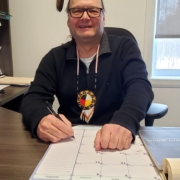
Get to Know Michael Martin – Knowledge Keeper at Listuguj Community Social Services

Michael Martin has taken on the role of Knowledge Keeper/Addictions Worker for the Listuguj Community Social Services Directorate (LCSSD) for roughly three months but has held this position in the community for several years. He is well known in Listuguj for offering his guidance and advice to community members who are interested in receiving cultural support and teachings.

Martin offers a variety of these  teachings in the form of stories, medicines, ceremonies, sweat lodges, and more. “I’ve been around traditional medicine people and knowledge keepers for over 30 years, and this is what I contribute and bring back to the community, and those who want to learn,” said Martin. He passes on his life experience and knowledge to people of all generations.  In Listuguj and other Indigenous communities, there is a lot of intergenerational trauma that leads to addictions and mental health issues. Martin tries to address these issues through counseling, support, and cultural knowledge. While he does focus mostly on spiritual and cultural treatments, he has other resources when it comes to treatments, such as Western medicine and doctors.  

Since he began at LCSSD, he has seen success throughout the community.  During the month of May, he held Traditional Lunch and Learns at LCSSD, and he plans on holding more in the future. After every Lunch and Learn he gathers feedback from participants to help improve future Lunch and Learn sessions, and to acquire information on what topics could be discussed and taught.  In the future, he plans on focusing on trauma and addictions, and would like to extend his teachings to young women who have children, who are struggling with addictions. He also plans on offering workshops at the Listuguj Mi’gmaq Development Centre (LMDC) and sweat lodges at the Gignu. Martin said, “I believe even if one person comes to seek some teachings, or knowledge from me, it’s a plus.”

Martin expressed that the LCSSD offers a wide variety of services and resources for everyone. There are lots of positive success stories that come out of LCSSD, and he wants to let everyone know they are always welcome. If an individual is unsure of what type of resource they need, someone at LCSSD can direct them. Martin ended the interview with the following: “Don’t ever tell people that there are no services or help here. There is help for you.”

If you’d like more information on Michael Martin’s services, or any other programs or services at Listuguj Community Social Services, at 418-788-3039 or visit them at 2 GEF Street.

By Ann Marie Jacques